Support CleanTechnica’s work through a Substack subscription, on Patreon, or on Stripe. Help us produce all the original, high-quality content we publish week after week despite the challenges of AI deleting content, anti-social media, inflation and other obstacles.
Data from the US Federal Election Commission revealed this week that Elon Musk has donated at least $445 million to Republican-aligned committees and political action groups since last year. Interestingly, it seems that Musk’s deep influence is not enough and he is worried.
If Democrats win strongly in the midterm elections on Tuesday, Musk insists that American democracy will come to an “end.”
“This would result in the United States becoming a permanent one-party state and the end of democracy in any meaningful sense of the word,” Musk wrote Friday on X. “All that is needed to ensure this does not happen is 51 Republican senators in 2029.”
The CEO of Tesla and SpaceX has a long history of engaging in political exchanges. Their companies receive billions in federal contracts. The once climate-is-everything advocate now leans heavily on oil and fossil fuels. His DOGE actions may have caused a manpower shortage at regulatory agencies that were scrutinizing his businesses.
But now Musk appears distraught that new Democratic power in Congress could make him a target of investigations after the midterm elections.
And your fears may be well-founded. Musk’s brazen attempts to influence election results are receiving much recent analysis and condemnation.
“I am concerned about what Musk’s impulsive bullying is doing and has made others more vulnerable than me,” former Labor Secretary Robert Reich wrote earlier this month after Musk exclaimed, “Prison for Reich.” Such extreme comments are part of Musk’s lifelong pattern, Reich continued, in which he “has been threatened, racially denigrated, and pushed around (people) his entire life.”
Reich added that he is concerned about voters whom Musk has been “inundating with TV ads for Republican candidates,” as well as “federal workers who have been harmed by his so-called Department of Government Efficiency, Americans who have been harmed by his wanton destruction of public services, and people around the world who are worse off due to cuts to USAID fueled by Elon’s DOGE.”
Musk’s American PAC has contributed to 43 elections for the US House and Senate, and that influx of cash has funded large amounts of television commercials, digital ads, text messages and billboards. It’s almost easy to forget that Musk became persona non grata with Trump and the Republican Party last year.
America PAC stands for “secure borders, safe cities, free speech, sensible spending, a fair justice system and self-protection,” according to its website.
These goals may seem fair and reasonable to many voters, but the majority of American PAC money goes to attacking the ads. Musk routinely cross-posts America PAC’s harmful content to his more than 200 million followers on X, the social media site he owns and whose social comments he controls.
Ezra Klein, co-author of Abundancerecently interviewed Quinn Slobodian, a professor of international history at Boston University. Slobodian interprets Musk’s midterm campaign finance measures as “a demonstration of his own power to make or break candidates, as he wishes,” which, in turn, is a way to “tighten that control over the media and the messaging ecosystem and get ahead of what he says would be a regulatory wave that would accompany a Democratic majority.”
Why are such media messages – even those based on false premises – so compelling in the run-up to the 2026 US midterm elections? Voters often base their own political decisions on false information and images rather than reality. Social historian Heather Cox Richardson explains that many of these techniques paint scenarios of a chaotic society and destroy the “ability of individuals to make sense of the world.” Some media consumers “turn to a strongman who promises to create order.” Others will become so tired that they simply refuse to fight back. The path of least resistance is to succumb to manipulation and “give control of your government to an authoritarian.”
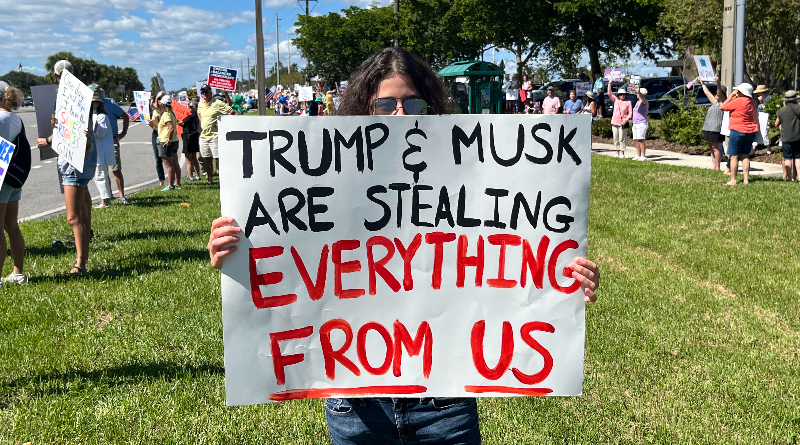
Musk’s attack ads are having the opposite effect
In Texas alone, America PAC has provided more than $33 million to Ken Paxton’s Senate campaign. Additionally, Musk donated a $168 million contribution to the Senate Leadership Fund, which diverts money to Paxton’s campaign.
“Elon Musk wants our land. He wants our water. He wants our tax dollars,” James Talarico, the Texas Democratic Senate candidate, said at a recent rally. “He wants his own United States senator.” Talarico’s comments were backed by loud boos from the crowd.
At a rally at the University of Texas, Talarico said Musk was trying to “stop the movement we are building in our state.” Instead, he offered that his own campaign is “funded by 1.3 million people who have donated their hard-earned money.” Instead of corporate PAC money, Talarico has relied on small donations.
The day before, Talarico’s campaign released a digital ad accusing Paxton of being a mere pawn of Musk. “Let’s remind Elon: Texas is not for sale.”
Interestingly, Democratic candidates in Texas and elsewhere in the United States are holding their own: Many races are too close to call, even with Musk’s influence and campaign finance imbalances helping Republicans.
Sign up for CleanTechnica’s Weekly Substack to get in-depth analysis and high-level recaps from Zach and Scott, subscribe to our daily newsletter, and follow us on Google News.
Do you have any tips for CleanTechnica? Do you want to advertise? Want to suggest a guest for our CleanTech Talk podcast? Contact us here.
Subscribe to our daily newsletter to receive 10-15 new cleantech stories per day. Or sign up to receive our weekly newsletter on the week’s top stories if the daily grind is too much.
CleanTechnica uses affiliate links. See our policy here.
CleanTechnica Comment Policy