Support CleanTechnica’s work through a Substack subscription, on Patreon, or on Stripe. Help us produce all the original, high-quality content we publish week after week despite the challenges of AI deleting content, anti-social media, inflation and other obstacles.
Diesel costs high, electrification of freight transport too slow
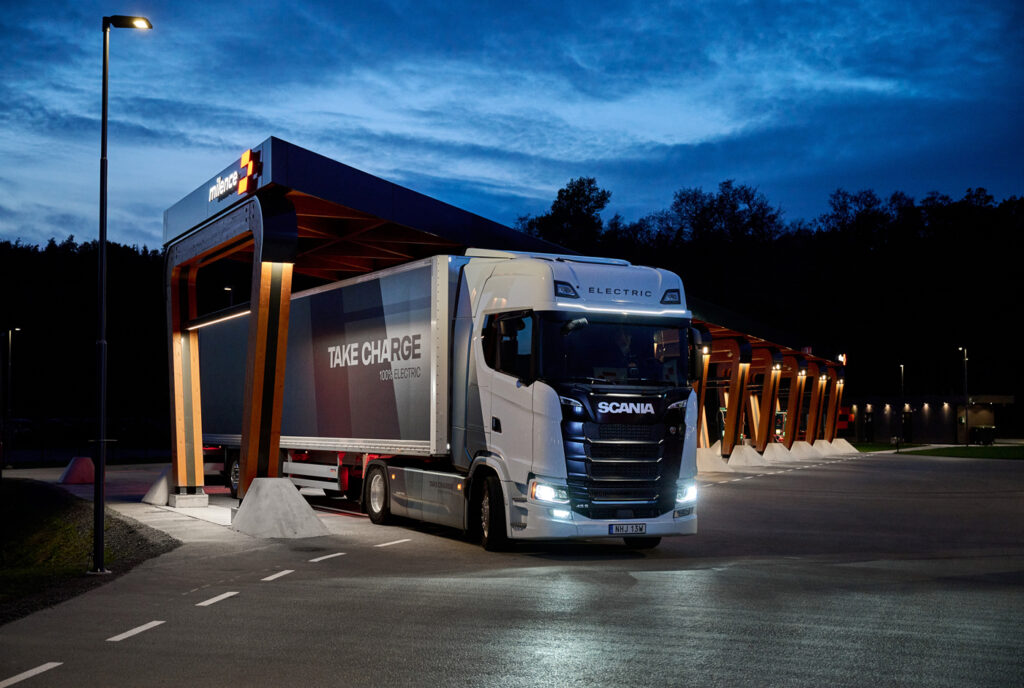
Europe is going through difficult times lately, with skyrocketing oil prices affecting economies. Fuel costs, particularly diesel, are driving growing interest in truck electrification. Europe has been urging truck manufacturers to move towards electric trucks and they have responded with a variety of electric semi-trailers from many manufacturers. Europe is a group of sovereign countries with many standards. The European Union is a political and economic union of 27 states in that area. It issued directives urging action and imposing sanctions. In response to European Union directives, the companies have formed EV100, a coalition of corporations responding to the need. In a recent article, Steve Hanley wrote about Europe electric truck manufacturers difficulties in expanding truck electrification. Here is a quote from the story: “in a letter According to EU Commission President Ursula von der Leyen, the main concern, in her opinion, is to expand the charging infrastructure for heavy trucks in Europe. “There is no shortage of electric trucks in Europe. The expansion could be faster if it were not for charging infrastructure. Manufacturers complain of “an alarming delay” in the conditions necessary to boost market entry. In Europe, the electrification of trucks is not working as well as in China, where More than 90% of the world’s electric trucks. reside. The differences between China and the EU show some of the reasons why truck electrification is slower in Europe. How did China succeed where the EU failed? China turned electric trucks into a charging system, not a vehicle category.
Transportation Planning Accelerates Electric Transportation Infrastructure
Energy is an important factor in the electrical grid infrastructure. Charging electric trucks requires a lot of energy. The maximum power determines how much infrastructure is necessary. In network planning, the annual peak power determines how much capital equipment is needed. Reducing peak energy demand is a critical factor for electric truck infrastructure. Figure 1 shows a method of reducing power called path padding. Schedule outings in high-traffic corridors at regularly spaced intervals. Corridors such as those between ports and warehouses are the target of these practices. These brokers typically route trucks in a round-trip chain. Filling routes with scheduled trips can reduce energy demand compared to random trip scheduling. the article Battery swapping uses fewer batteries than you think is dedicated to analysis and planning methods that can lead to lower peak energy demand. Planning has other benefits, such as greater truck charging capacity with the same number of batteries. Part of the solution to slowing the development of electric truck infrastructure is to plan truck infrastructure and usage practices to reduce charging energy load. Given the pressing and long-standing need due to the diesel fuel cost crisis, grid power improvement demands need to be reprioritized. Demands for energy upgrades in data centers, such as transformers for substations, should be reorganized and prioritized in the face of the diesel crisis.
For charging systems, charging is not an afterthought. Could the exchange help?
In two articles, Michael Barnard outlined the issues. Vehicles are not a transportation system. What does Europe have now? It has an EU Commission that interacts with a coalition, EV100. The problem is that there are many trucks available, but who is in charge of the infrastructure? You can’t have electric trucks without charging facilities, but, as the coalition complains, “significant improvements to charging infrastructure, a reduction in carbon dioxide-based tolls and a coherent policy framework are urgently needed.” There are so many stakeholders (including the commission, vehicle manufacturers and freight companies in several countries) that no one is in charge of the infrastructure, and without it, nothing moves. It needs a unity of purpose and action.
If China is succeeding, why not adopt its strategy? Perhaps the answer is right under everyone’s noses. As Michael says, “the policy connects vehicles to corridors, depots, service areas, networks and charging use cases rather than treating sales targets as sufficient.” CATL He offered Europe a system, not a vehicle. This is a “turnkey” solution. It is a well thought out system, which includes the use of methods and practices, not a system in which everything is free for all. That kind of stability and predictability is what EV100 leaders are looking for. This isn’t a trade-or-nothing scenario. Different techniques are applied to various use cases. Interchange should be planned for high-usage freight corridors and other suitable applications. Swap trucks can also do fast loading or slow loading, providing flexibility and a trucking system that includes smaller trucks, not just semi-trailers.
What does all this have to do with the slow progress of Europe’s infrastructure? Simply put, electric trucks place high charging demands on the grid. Trucks can have megawatt-hour batteries that require a charge of megawatts of energy to charge in one hour. Reducing grid power demand can reduce grid infrastructure upgrade costs and leverage capital investment for faster deployment.
“The process of connecting megawatt charging equipment to the grid can take several years, delaying implementation even when operators and infrastructure providers are willing to invest.” The need for megawatt charging equipment is reduced by accelerating the development of sharing networks instead of trucks with fixed batteries that must be charged with fast chargers. “Swaptopus is easy to misinterpret as a quirky name for another electric truck infrastructure project. This is a newly formed joint venture between Octopus Energy and CATL, created to develop automated battery swapping centers for heavy trucks across Europe.” Unlike China’s government, which played a role in encouraging standards and infrastructure cooperation, Europe has a more flexible arrangement between many countries with varying standards. Europe is learning the slow and hard way. where battery change is most necessary.
Each truck application has a different optimization. It means that there must be different approaches to adapt freight operations in heavy traffic corridors. Quoting Michael Barnard, “Freight operators often run repeated routes between ports, factories, distribution centers and logistics centers. Those patterns provide known traffic, known stopping points, and relatively predictable electricity demand. An exchange center can be placed around an existing freight flow rather than waiting for enough unrelated trucks to eventually pass through.”
Freight corridors are a tailor-made scenario for battery swapping. Real trucking solutions include a mix of vehicle types and infrastructure, from small, local deliveries to large, long-distance loads; and from overnight trickle charging to mid-power charging and battery swapping, all used together to accelerate the electrification of heavy trucks. With a wide variety of charging and vehicle options and charging use cases focused on coordination to avoid peak energy demands, the path forward becomes easier. School buses do not need expensive high-power fast charging. Lower power chargers may be the solution. Local delivery may use a combination of overnight and mid-power charging. Heavy truck shipping needs to be coordinated more carefully to avoid demand spikes and network upgrade costs. A combination of medium power sharing and charging stations along with planned use cases can successfully reduce electric power needs for freight transportation and transportation system capital expenditures to accelerate transportation electrification.
Conclusion
The transformation and conversion from diesel to electric charging systems requires coordination and planning between government agencies and coalitions of corporations, cities, government agencies and planners. Transportation is a basic system for societies and the economy. Coordination between groups at all levels results in practices, use cases and infrastructure that produce benefits for everyone. Network expansion and construction can take years. For Europe to implement freight truck electrification, more structure and planning is needed to minimize grid power requirements, accelerate implementation, and maximize capital investment results. The transportation system, practices and infrastructure must be planned for optimal results.
Sign up for CleanTechnica’s Weekly Substack to get in-depth analysis and high-level recaps from Zach and Scott, subscribe to our daily newsletter, and follow us on Google News.
Do you have any tips for CleanTechnica? Do you want to advertise? Want to suggest a guest for our CleanTech Talk podcast? Contact us here.
Subscribe to our daily newsletter to receive 10-15 new cleantech stories per day. Or sign up to receive our weekly newsletter on the week’s top stories if the daily grind is too much.
CleanTechnica uses affiliate links. See our policy here.
CleanTechnica Comment Policy