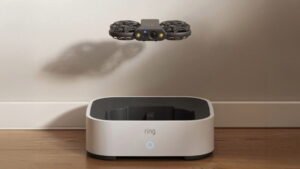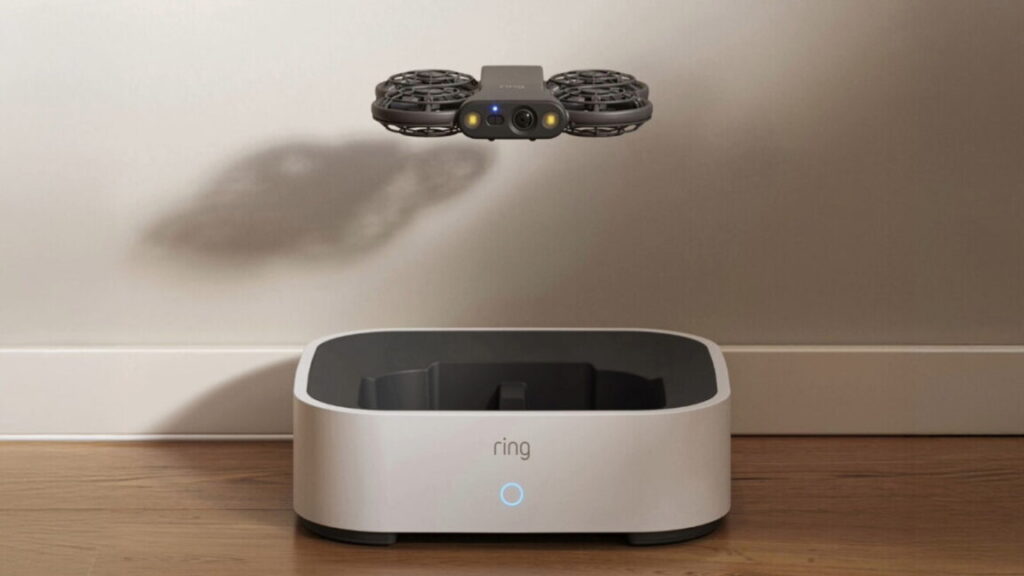
Integrated camera capability includes a 148-degree field of view and 360-degree rotation with 2K video resolution. Two LED lights also activate in low-light conditions to help illuminate the scene for the drone’s video camera.
However, the drone is limited to just 8 minutes of flight when operating on a “new, fully charged battery under controlled conditions,” according to the product description. It comes with a docking station for charging.
Another warning in the product description is that the Ring Drone Cam may experience degraded performance when navigating in environments with reflective surfaces such as “polished marble or wet tile,” matte white walls without any elements, or transparent surfaces such as frameless glass and mirrors.
Still, Amazon touts the drone as an “autonomous way to monitor your home that has never existed before,” whether the customer is away or at home. The Ring Drone can be controlled directly from the interactive Alexa Home Map that shows all of a customer’s Amazon-linked devices.
roving robot
Meanwhile, Amazon has introduced the $1,000 Ring Rover Cam as “an autonomous security robot designed for businesses.” This product is now available for pre-order for those who so desire and is scheduled to begin shipping to customers on December 16, 2026.
The company described the Ring Rover as inspired by customer feedback about another invitation-only beta product, the Amazon Astro robot designed for home monitoring.
The Ring Rover can live stream and record in up to 4K video resolution when on patrol or while performing a 360-degree scan at a designated location. Videos triggered by doorbells, motion events, and “Live View” events are stored in the cloud for sharing and playback for up to 180 days.
Like the Ring Drone, the Ring Rover can automatically respond to alerts from connected Ring devices by following its pre-programmed patrol points. But the wheeled robot is only designed to operate in a single-story indoor environment because it lacks stair-climbing capabilities.
Amazon’s product description also warns that the Rover is not compatible with “curved edges, recessed areas, floor transitions longer than 1.375 inches (3.5 centimeters), and glossy black floors.”