Support CleanTechnica’s work through a Substack subscription, on Patreon, or on Stripe. Help us produce all the original, high-quality content we publish week after week despite the challenges of AI deleting content, anti-social media, inflation and other obstacles.
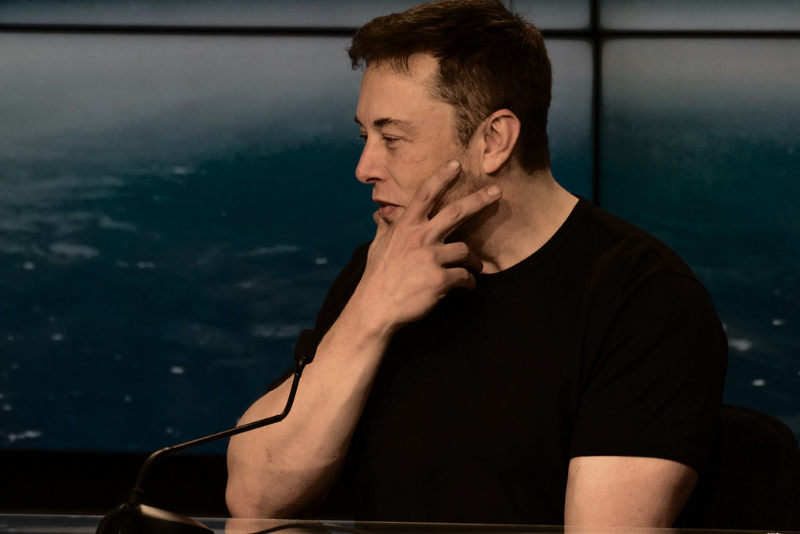
Elon Musk, CEO of SpaceX and Tesla, recently said at the DealBook Summit that “the number of lives saved” thanks to Starlink connectivity “may be in the hundreds.”
Do you want to get the numbers right? Musk asked host Andrew Ross Sorkin, editor of DealBook, a daily business and policy report from The New York Times. “It’s all over the Internet. You just have to do a search.”
It was a flippant comment out of place, considering Ukraine has suffered repeated disruptions to its access to Starshield, SpaceX’s military version of Starlink.
In an editorial following President Donald J. Trump’s meeting this week with Russian President Putin and Chinese President Xi, former Secretary of State Hillary Clinton reminds readers that, according to Ukrainian President Volodymyr Zelensky, Ukraine’s access to American early warning intelligence about upcoming Russian missile attacks has been fractured, and Ukraine’s access to the Starshield service remains limited.
Starshield helps Ukraine shoot down Russian attack drones. Limited access to Starshield means increased Ukrainian deaths as the country fights Russian aggression, the opposite of Musk’s general claim about lives saved by his technology.
Musk addressed restrictions on the Ukrainian military’s access to the SpaceX satellite communications network during the Deal Book Summit. He said Starlink was never intended to be used for offensive attacks in war.
Historian and activist Rebecca Solnit refuses to dismiss Musk’s handling of Ukrainian airspace as mere commerce. Elon Musk “has made much of his obscene pile of money from the US government with SpaceX and StarLink,” Solnit points out. “They have given him power that should never belong to individuals, as evidenced by his return to manipulating StarLink in ways that harm Ukraine’s efforts in the war with Russia.”
Rep. Jim Himes (D-CT), the ranking Democrat on the House Intelligence Committee, wrote to Elon Musk with a formal request “that senior SpaceX officials meet with me to explain the Starshield service disruptions in Ukraine in October 2026.”
Himes points out that SpaceX, Musk’s company, is “a Service purchased by the US government established through a contract between the US government and SpaceX.” Himes wants to know “why those changes were made and whether they were made unilaterally by SpaceX or directed by a US government official.” Given that SpaceX has potentially modified a US government contract, “combined with its lack of response to congressional oversight,” Himes argues that “all contracts the US government has with Space
Reducing the controversy to everyday terms, Musk insisted during the DealBook Summit that Starlink’s design is “revolutionary” since it can be placed on a roof. “It solves the problem of reaching people who are in a building.” Sure, the service gaps continue, but Musk has a solution. “The missing piece of the puzzle” to make Starlink ubiquitous is an alternative to the metal roof, he suggested. The solution is “terrestrial… we can establish micro ground stations… a network that, perhaps, is linked with Starlink terminals. Instead of big cell towers everywhere.”
Elon Musk is one of the richest people in the world and has significant political influence. It controls the direction and pace of one of the most important satellite technologies that the United States and the world depend on, as former Secretary of Labor Robert Reich explains. Musk is one of the “new economy authoritarians,” Reich summarizes, and Musk has “unparalleled power over every aspect of the lives of Americans and millions of people around the world.”
Reich adds: “Democrats should investigate why Elon Musk funneled $500 million into the 2026 midterms. Was it because he wants to keep his satellite monopoly? His defense contracts?”
Musk has a lot on his mind these days. Sorkin reminded Musk that he had once said that his “mind was like a storm.”
Musk responded that, right now, “I feel relatively at peace.”
Sign up for CleanTechnica’s Weekly Substack to get in-depth analysis and high-level recaps from Zach and Scott, subscribe to our daily newsletter, and follow us on Google News.
Do you have any tips for CleanTechnica? Do you want to advertise? Want to suggest a guest for our CleanTech Talk podcast? Contact us here.
Subscribe to our daily newsletter to receive 10-15 new cleantech stories per day. Or sign up to receive our weekly newsletter on the week’s top stories if the daily grind is too much.
CleanTechnica uses affiliate links. See our policy here.
CleanTechnica Comment Policy