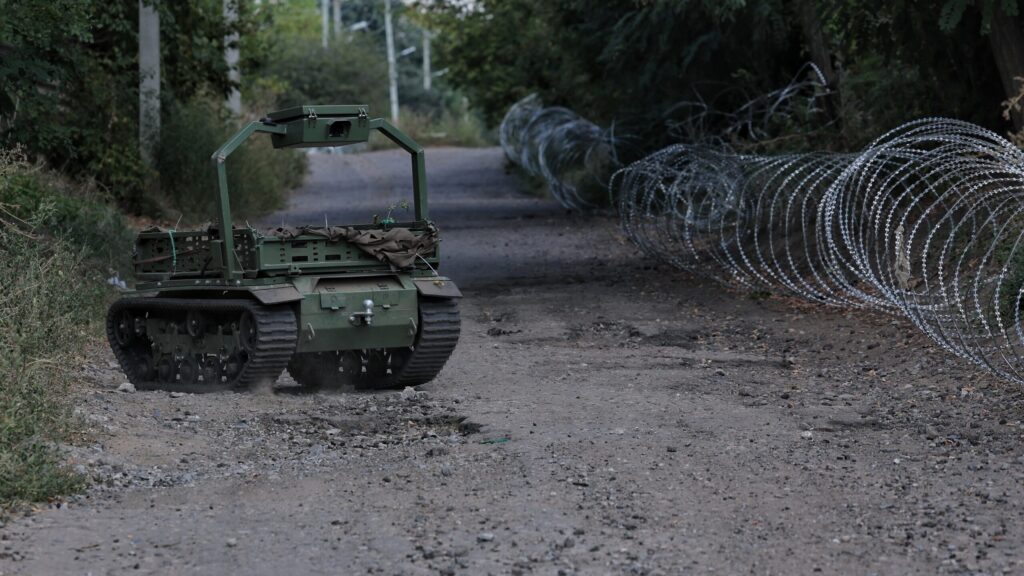
The latest battlefield uses of these robots have helped the Ukrainian military’s Operation Vivald recapture up to 96 square miles of territory. Operation Vivaldi also defeated Russian forces that were the northern part of a pincer movement attempting to encircle the cities of Ukraine’s “Fortress Belt” in eastern Ukraine, according to the Institute for the Study of War (ISW), a Washington, DC-based think tank.
The success of Vivaldi and the autumn season
Since its launch in May 2026, the Ukrainian Third Army Corps operation has practiced strict operational security that has long kept successful developments secret. That has helped mislead Russian leaders, whose operational awareness is also hampered by what ISW described as a “pervasive culture of lies within the Russian military” about the actual battlefield situation when things are not going well for Russia.
The success of Operation Vivaldi has also been made possible by Ukraine’s campaign of intermediate-range drone attacks against Russian fuel supplies, which has reduced the availability of diesel fuel for the generators that power Russian electronic warfare systems. At the same time, Ukraine’s own electronic warfare systems neutralized around 20,000 Russian drones.
Together, these factors have helped Ukraine achieve “tactical drone overmatch” and at the same time supported Ukrainian mechanized advances toward Lyman in Ukraine’s Donetsk Oblast, according to ISW’s assessment. Members of Russia’s elite drone unit, called Rubicon, were withdrawn from the region after Ukraine’s Third Army Corps inflicted losses on Russian drone pilots and the unit’s resources, according to The Kyiv Independent.
But the Russian military is still directing armored vehicles and drone units like Rubicon toward Dobropillya in Donetsk Oblast in preparation for future mechanized attacks this fall. Over the summer, the Russian military tested a new anti-drone protection system for its most modern tanks, but had limited success, although Ukrainian drones still overcame the tanks’ defenses.
The Russian military has also adapted many of the same drone warfare innovations used by Ukraine and sometimes developed its own as it continues to attack Ukrainian cities with missiles and drones. Russia has also escalated a “hybrid war” campaign against Europe, with recent examples including an explosive drone ship that appeared near a vital offshore gas site and an attempt to attack a Ukrainian cargo plane parked at Leipzig airport in Germany with a drone.