
The IMF contradicts Sánchez’s optimism and assures that Spanish GDP will grow only 2.1% this year
The IMF forecast for Spain is more pessimistic this year than that of the Organization for Economic Cooperation and Development (OECD), which at the beginning of June anticipated an expansion of 2.2% in 2026, but which for 2027 points to a growth of 1.7%, one tenth less than the Fund.
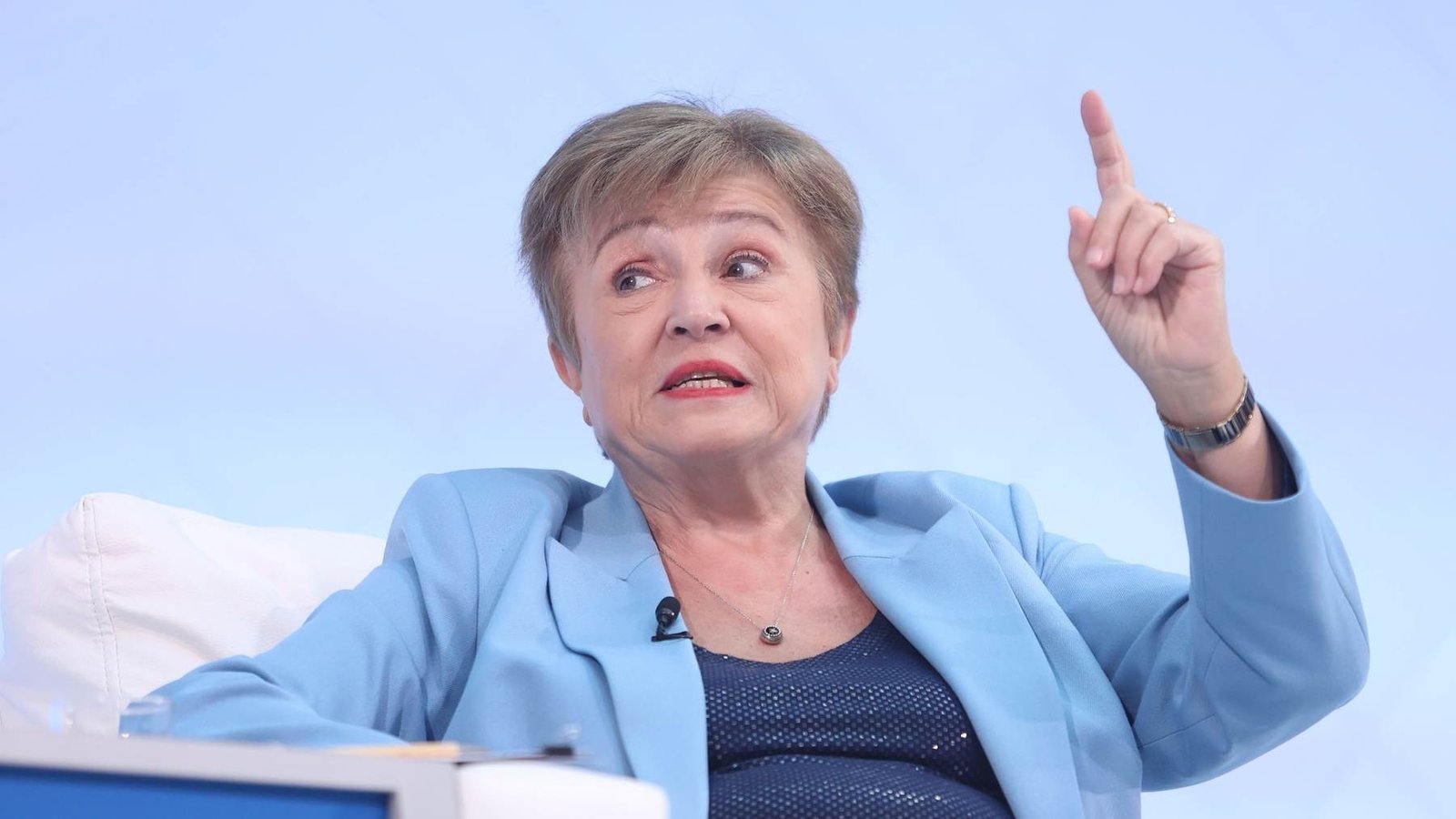
Likewise, the institution directed by Kristalina Georgieva has assured that its growth expectations for the Spanish economy are below those presumed by the Sánchez Government.
Specifically indicates that it will grow at a rate of 2.1%, which represents a slowdown of seven tenths andn comparison with the 2.8% expansion in 2025 and a forecast five tenths lower than that of the Spanish Executive (2.6%). Meanwhile, looking to 2027, it maintains the growth forecast of 1.8%.
Along the same lines, it is also below the forecast for Spain from the European Commission, which in May placed its growth forecast for Spain in 2026 at 2.4% and that for 2027 at 1.9%.
For its part, at the end of last June, the Spanish Government improved its Spanish GDP growth forecast for this year by four tenths, to 2.6%, and raised its estimate for 2027 by one tenth, to 2.2%, while for 2028 and 2029, it foresees a growth of 2.1% and 2%, respectively.
At the press conference to present the forecast update, Petya Koeva Brooks, deputy director of the IMF Research Department, highlighted in the case of Spain “better than expected” results in the first quarter and that some energy support measures offset the negative impact of the increase in energy prices.
“It should be noted that the high proportion of renewable energies has also contributed to Spain’s resilience,” commented the IMF official, who hopes that domestic demand will continue to drive the growth of the Spanish economy, although she has warned that the risks to this outlook are downward.
Regarding the forecasts for the euro zone, the IMF has once again revised downwards its expectations and some of its main economies, such as Germany and France.
Thus, the institution has cut its GDP growth forecast for the eurozone by two tenths, to 0.9% in 2026, while it has maintained the expectation for 2027 at 1.2%.
The reduction in the expected growth of the euro zone reflects the estimated weakening in the expansion of its two largest economies. Specifically, it has reduced the expected increase in Germany’s GDP to 0.7% in 2026 and 1% in 2027, cutting the previous forecast for this year by one tenth and that for next year by two.
As for France, the IMF’s new projections contemplate a growth rate this year of 0.6%, three tenths below that anticipated in April, while they have maintained the expected growth in 2027 at 0.9%. For its part, Italy has managed to maintain the growth forecast for each of the two years at 0.5%.