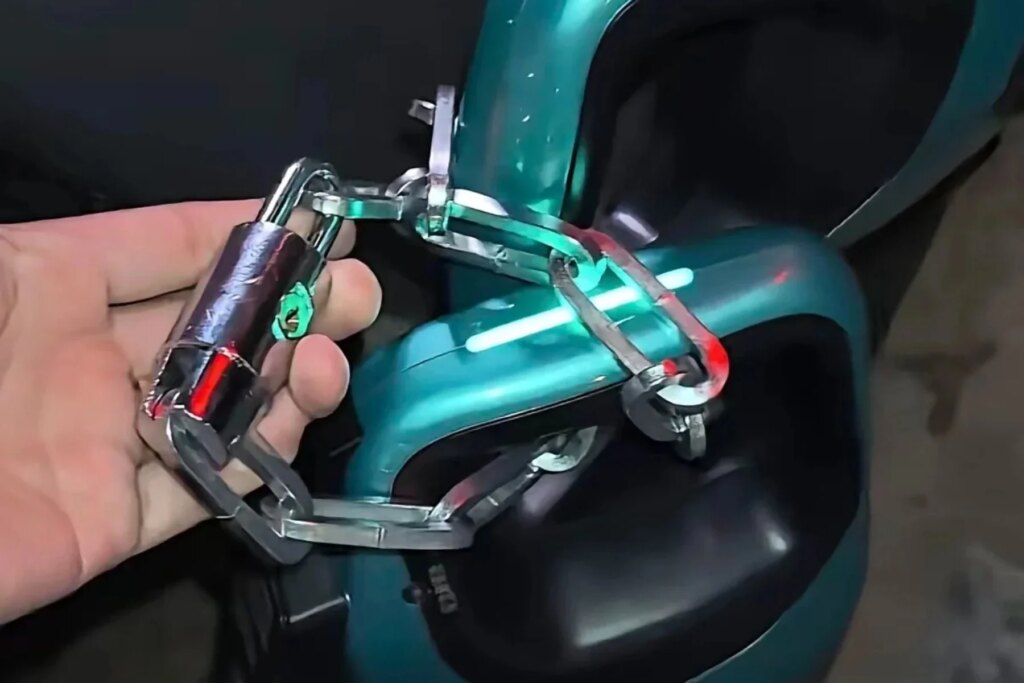
Photos of a tampered BYD Megawatt flash charger circulating on Chinese social media platforms have sparked discussions and speculation. Footage shows a thick chain wrapped around both charging connectors and secured with a padlock, preventing customers from using the station without risking damage to their vehicles. Meanwhile, the charging station itself showed no signs of damage: the screen was intact and the LED indicated a green light to indicate that it was ready for use.
While many on social media suspect competing brands behind the law, a commercial conflict within local charging infrastructure is seen as a more plausible explanation. A significant part of China’s cargo network operates under franchise systems.
Given the extremely low margins per kilowatt-hour in the fast charging sector (outside large cities, prices typically range from 1 to 1.5 yuan (approximately 0.13 to 0.20 euros), operators are trying to generate revenue through advertising or additional services, such as charging insurance against damage during the charging process. BYD’s aggressive expansion with its own high-performance chargers significantly increases pressure on independent suppliers.
Although Flash chargers provide the same charging speed for vehicles without this specific fast charging technology as other DC chargers, many EV drivers in China prefer BYD stations due to their modern and easy-to-use design. This diverts customers away from smaller, independent operators, even though they offer identical charging times.
The incident is part of a series of problems BYD has faced at its new Flash Charger locations. Recently, videos emerged showing children misusing the huge charging cables as swings.
In response, BYD announced plans to strengthen management at these sites, with a focus on preventing misuse and avoiding blocked charging points caused by internal combustion engine vehicles (“ICEing”) or unladen vehicles. Users in China were urged to systematically report violators through the official traffic police app.
Chinese online communities are also hotly debating whether these incidents may have been organized by content creators, as images of blocked or misused high-tech charging stations tend to generate high click-through rates.
carnewschina.com