Support CleanTechnica’s work through a Substack subscription, on Patreon, or on Stripe. Help us produce all the original, high-quality content we publish week after week despite the challenges of AI deleting content, anti-social media, inflation and other obstacles.
It’s not over until it’s over, but the proposed 500-megawatt, $1.5 billion Four Creeks wind farm in Peoria County, Illinois, just passed a key step in the approval process. The new milestone is another indication that the domestic wind industry will continue to play a key role in the United States’ energy transition, regardless of the topsy-turvy energy policy articulated by US President Donald Trump.
Trump’s war on wind farms
If you’re a little surprised to hear news about a new wind farm proposal in the US, join the club. The president has invested considerable time, energy, and taxpayer dollars in a Herculean effort to prevent new wind turbines from springing up across the United States on his watch. However, their efforts so far have met with only mixed success.
Offshore wind turbines continue to fly under the radar, even though virtually all offshore wind farms in the U.S. are subject to federal authority. Opportunities for wind energy also persist onshore, where the president’s direct authority is limited to projects on federal property.
Trump attempted to get around that hurdle in August 2025, when he weaponized an otherwise routine wind project review process that applies to projects on non-federal properties. The policy change left at least 155 onshore wind projects totaling 45 gigawatts in limbo, prompting a lawsuit from a coalition of clean energy organizations and wind energy developers.
In July of this year, attorneys general from 19 states intervened in support of the lawsuit. Participants included Arizona, California, Colorado, Connecticut, Delaware, the District of Columbia, Illinois, Maine, Massachusetts, Maryland, Michigan, Minnesota, Nevada, New Jersey, New Mexico, New York, Oregon, Rhode Island and Washington State.
Illinois Attorney General Kwame Raoul, who co-led the intervention, notes that federal law requires wind developers to submit proposals for wind turbines taller than 200 feet to the Federal Aviation Administration, which then refers the project to the Department of Defense to check for conflicts with military operations and related activities. Raoul further notes that the normal process involves collaborating on mitigation measures to resolve any conflict.
That all stopped in August 2025, when the Department of Defense abandoned its part of the process. “Officials stopped endorsing mitigation agreements, stopped sending completed agreements to developers for signature, and delayed or stopped communications with developers about mitigation,” Raoul explained in a news release in July.
The abrupt policy change affected at least nine wind projects in Illinois alone. According to Raoul’s office, the nine projects represent $4.3 billion in private investment, or more.
Wind farms continue to persist
Separately, on June 16 of this year the same coalition of state Attorneys General won the final resolution of a series of legal challenges to an Executive Order issued in January 2025, in which Trump ordered a halt to all federal approvals for wind projects.
The Defense Department’s lawsuit is going the same way, at least so far. On Aug. 6, a federal judge in the U.S. District Court for the District of Oregon ordered the Department of Defense to resume its normal wind turbine review process while the case continues its way through the courts.
The Defense Department has been delaying the process since then, reportedly approving just 11 projects since August. However, the US subsidiary of global clean energy developer Repsol has already seen the writing on the wall. On August 14, just a week after the Oregon decision was made, Repsol Renewables began filing paperwork for the proposed Four Creeks Wind project.
“Repsol Renewables has identified northwest Peoria County as suitable for wind development due to a robust wind resource, its proximity to the existing electric transmission system with available capacity, compatibility with existing land use, and minimal anticipated environmental impacts,” Repsol summarized, referring existing land use to Peoria County Code provisions that allow commercial wind farms in certain agricultural districts.
Although the wind farm covers a total of 27,000 acres on private land, each of the project’s 113 turbines will only represent less than one acre. Most of the land is dedicated to the necessary setbacks, as well as adequate spacing between the turbines.
money talks
Things are moving at a relatively fast pace so far. On Nov. 6, Peoria public radio station WCBU reported that the Peoria County Board’s land use committee recommended the Four Creeks project by a 6-3 vote. The project almost seemed dead in September when the Zoning Board of Appeals issued a 4-1 denial, but the Zoning Board also voted to include conditions for consideration by the full Peoria County Board at its Nov. 5 meeting. November. The County Board approved Four Creeks’ proposal in a split 12-5 vote along with a list of 36 restrictions primarily governing construction and operations.
Wind fans, don’t break out the champagne just yet. Repsol still has to apply for construction permits, and the entire process could take up to five years before the shovels hit the ground.
If Four Creeks comes to fruition, Repsol is prepared to pour more than $193 million into the coffers of Princeville, Brimfield, Williamsfield and Stark County school districts, with an additional $44.7 million in total property tax revenue for Peoria County and associated jurisdictions.
Repsol also draws attention to more than $69.4 million in total property tax revenue going to libraries, fire districts, Illinois Central College, local highway authorities and the Metropolitan Airport Authority, among other community resources.
Local landlords will also get millions of dollars in increasing lease payments.
Regarding objections to the new wind farm, WCBU reporter Joe Deacon highlighted comments from Peoria County Board member Terry Ruhland, who acknowledged those who spoke against the project at a public meeting.
“I don’t know how many people are in this room; I won’t even guess. But there are at least 179,000 people in Peoria County who are not in this room,” Rhuland said.
“Of those 179 [thousand]”For every school-age child who deserves the best education we can give them and for every family who is struggling to pay their utility bills, I am voting yes,” Ruhland added.
Perhaps Ruhland was also thinking about Laborers Local 165, which has been working with Repsol for more than a year on developing a local workforce for the project. At a hearing before the Zoning Board in September, union representative Dane Simpson stated that each wind turbine would represent approximately 3,000 hours of work.
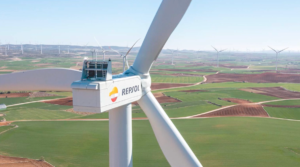
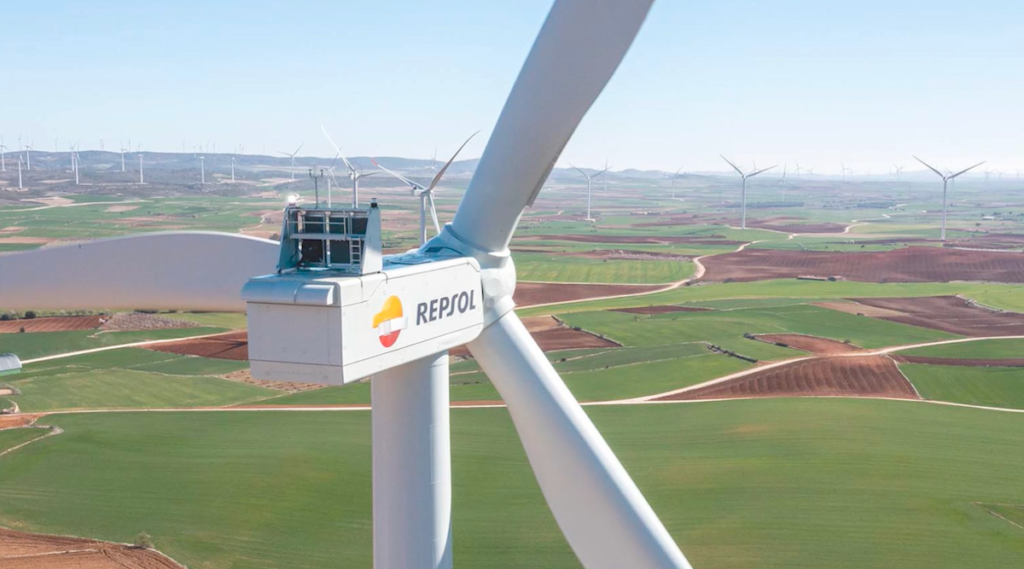
Image: Repsol, the global energy developer, is on track to build a 500-megawatt wind farm in Peoria County, Illinois, regardless of last year’s sharp U-turn in federal energy policy (screenshot, courtesy of Repsol).
Sign up for CleanTechnica’s Weekly Substack to get in-depth analysis and high-level recaps from Zach and Scott, subscribe to our daily newsletter, and follow us on Google News.
Do you have any tips for CleanTechnica? Do you want to advertise? Want to suggest a guest for our CleanTech Talk podcast? Contact us here.
Subscribe to our daily newsletter to receive 10-15 new cleantech stories per day. Or sign up to receive our weekly newsletter on the week’s top stories if the daily grind gets too much.
CleanTechnica uses affiliate links. See our policy here.
CleanTechnica Comment Policy