“Our message is clear,” said Heck. “Government’s collective action on climate change has stalled for the fifth year in a row.” Efforts to accelerate the transition away from fossil fuels have been undermined by new oil and gas drilling projects and governments “delaying, weakening or rolling back their climate policies.”
Even in the most optimistic scenario, and assuming existing policies and promises are fully implemented, global temperatures would rise 3.4° Fahrenheit above pre-industrial levels by 2100, a rise that climate scientists consider extremely dangerous.
While there has been progress in developing renewable energy sources, “the brutal truth is that these positive developments have not yet added up to change the curve quickly enough,” said Niklas Höhne, a researcher at the New Climate Institute. Developing new oil and gas projects is a bit like realizing your food is burning and then turning up the stove instead of turning it off, he added.
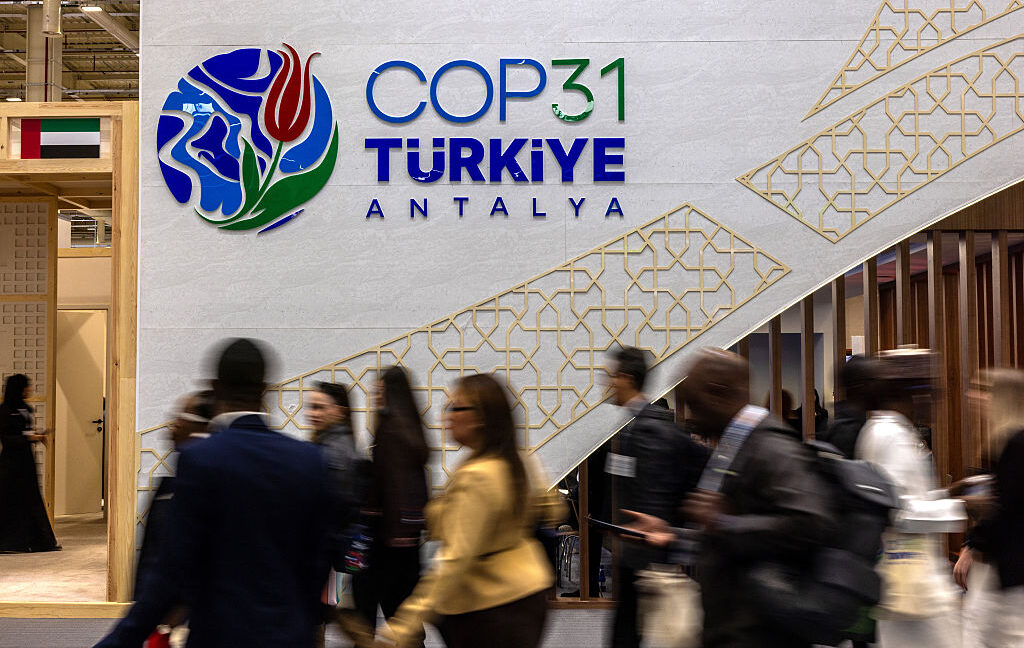
As he delved into the details of the current negotiations at COP31 on global renewable energy targets, he noted that the conference’s two hosts, Turkey and Australia, have so far opposed using the word “clean” in connection with electrification targets.
“This is very difficult to understand and the only explanation I can think of is their interest in fossil fuels,” Höhne said.
Australia is one of the world’s largest coal exporters and Turkey is a major coal consumer, with its energy sector still heavily dependent on the most climate-damaging fossil fuel. Although both countries are hosting this year’s climate conference, neither country has presented concrete plans to transition away from fossil fuels.
Bill Hare, the CEO of Climate Analytics, criticized wealthy developed countries for a lack of leadership on climate action and pointed out that European Union President Ursula von der Leyen mentioned nothing about moving away from fossil fuels in her speech at COP31 this week.
“Governments … face a difficult choice at this COP,” Hare said. If they continue to support fossil fuels, “it would cause insurmountable economic harm and irreparable loss to humanity and our ecosystems.”
Bob Berwyn is an Austria-based reporter who has been covering climate science and international climate policy for more than a decade. He previously covered the environment, endangered species and public lands for several Colorado newspapers and also worked as an editor and editorial assistant at community newspapers in the Colorado Rockies.
This story originally appeared on Inside Climate News.