We are always doomed
Nevertheless, the paper was widely cited and received considerable media coverage at the time. As Alan MacEachern, a historian at Western University, pointed out in The Conversation:
The end-of-the-world idea persisted in part because its predictions for future populations proved extremely accurate—at least for a while. His core equation produced forecasts that were better than those of most demographers in the 1970s and 1980s.
It was only around 1993 that this accuracy began to weaken and the world’s population began to lag behind projections – because the world began to do what von Foerster and his colleagues had recommended it do. Today the global birth rate is slightly less than half the rate in 1960.
Doomsday predictions are nothing new; They date back at least to the first century AD, when an ascetic sect interpreted the Jewish revolt against the Romans in 66–70 as a harbinger of the coming Messiah. The Christian religion has produced a lot of false predictions about the end times; One of its inventors was Martin Luther, who believed that the world would end in 1600 at the latest.
The Puritan minister Cotton Mather kept updating his predictions, first calling for the end in 1697, then 1716, then 1736. (He probably would have kept updating them if he hadn’t died in 1728.) My personal favorite is Mary Bateman, an English woman in Leeds who claimed in 1806 that her hen laid eggs marked “Christ is coming.” It was a fake: Bateman had actually used a caustic ink to etch the eggs before putting them back in the chickens.
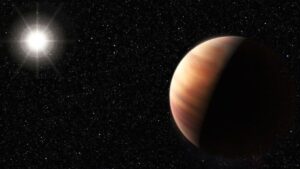
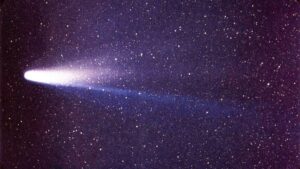
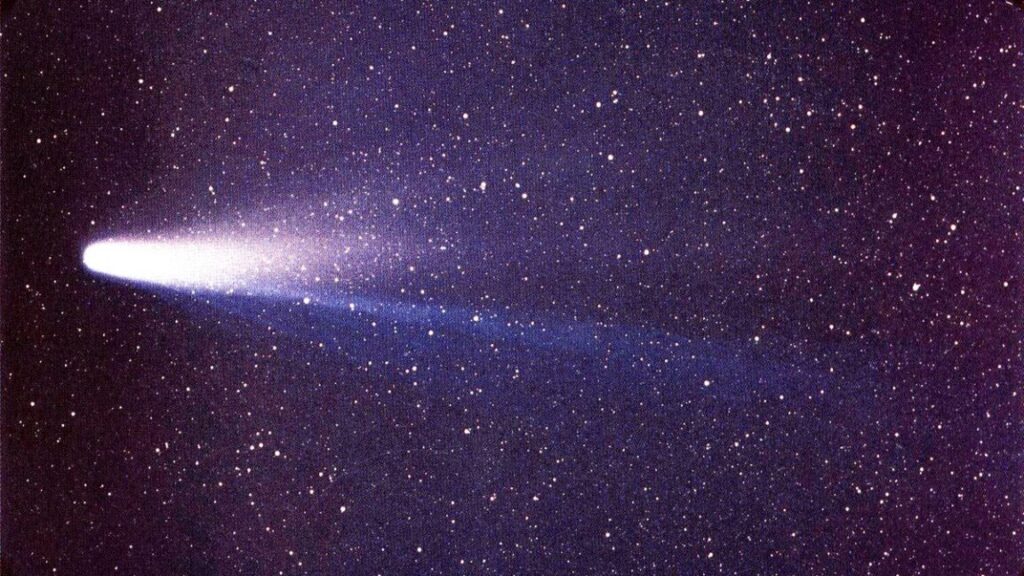
Astrologers have made a lot of doomsday predictions, usually involving rare planetary constellations and comets, but scientists haven’t been immune. For example, Jacob Bernoulli believed that the Earth would be destroyed by a comet on April 5, 1719. And in 1974, astrophysicist John Gribbin was a co-author The Jupiter effectwho predicted several catastrophes that would result from the combined gravity of aligned planets. (Gribbin has since distanced himself from this hypothesis.)
There has never been a successful doomsday prediction. So relax, once Microsoft is up and running again, we’ll probably all be fine – at least until 2060, which none other than Isaac Newton believed could herald the end of the world. Or maybe it won’t happen until 2129 or 2239 (based on interpretations of the Talmud) or 2280 (based on interpretations of the Quran). Or we can go by the prophecy of a mystic named Baba Vanga, who believed that the world would not end until the year 5078.
DOI: Science, 1960. 10.1126/science.132.3436.1291 (About DOIs).