The Apple Silicon iMac received its fourth update this month.
Every other Apple Silicon Mac has found a way forward over the last half decade: we got a more Pro design for the MacBook Pro, a smaller design for the Mac mini, and a Mac Studio that finally made Apple admit that it no longer wants to make the Mac Pro.
But the Apple Silicon iMac has always been more interested in looking back. It’s the slim iMac design with display on a stand via the original Bondi Blue G3 iMac. It’s a nice clean desktop, one I see all the time in small offices and on TV shows featuring small offices. Gone are the days when it was Apple’s main workstation.
So I wanted to write about this new iMac from the perspective of that entry-level iMac buyer, who chooses the iMac because it’s simple and then uses it until it breaks. What does a new iMac offer you if you’re upgrading from the M1 model or comparing it to an older refurbished M4 model? With no real external updates, what makes this version of iMac interesting?
The same friendly face
If you’ve never used an Apple Silicon-era iMac before, here’s a brief introduction.
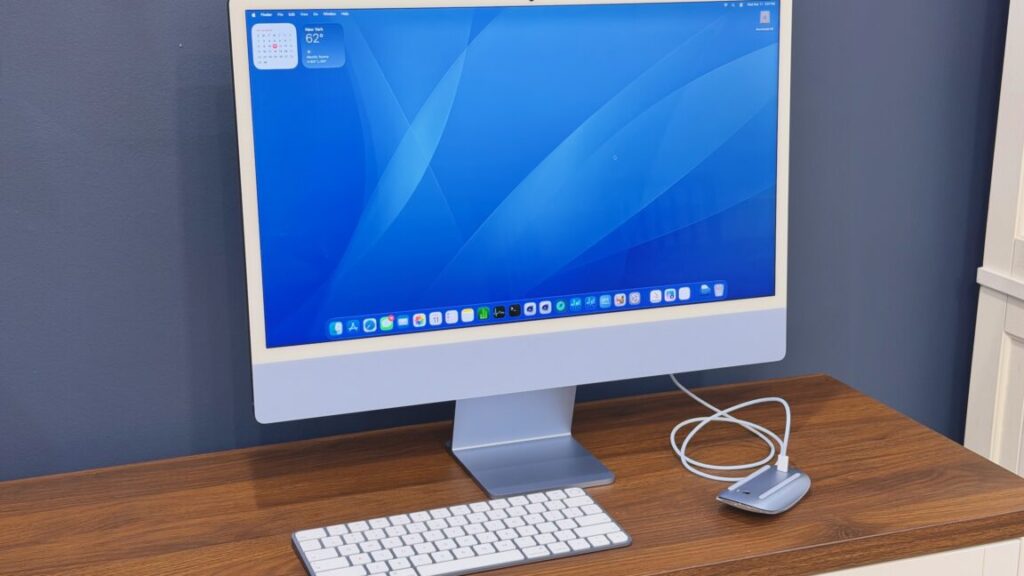
The new iMac is much thinner than older aluminum Intel models. Its front is primarily a large 24-inch screen, surrounded on all sides by a relatively thick white bezel (I still wish it was at least a little black). optionbut apparently Apple disagrees.)
White bezel aside, it’s by far Apple’s most colorful computer. iMacs ship with color-matched fronts, backs, stands, keyboards, mice, trackpads, and cables. Apple has tweaked the color offering and changed the tints of each specific color several times over the years, but the iMac M6 uses the same six color tints (plus silver) as the iMac M4.