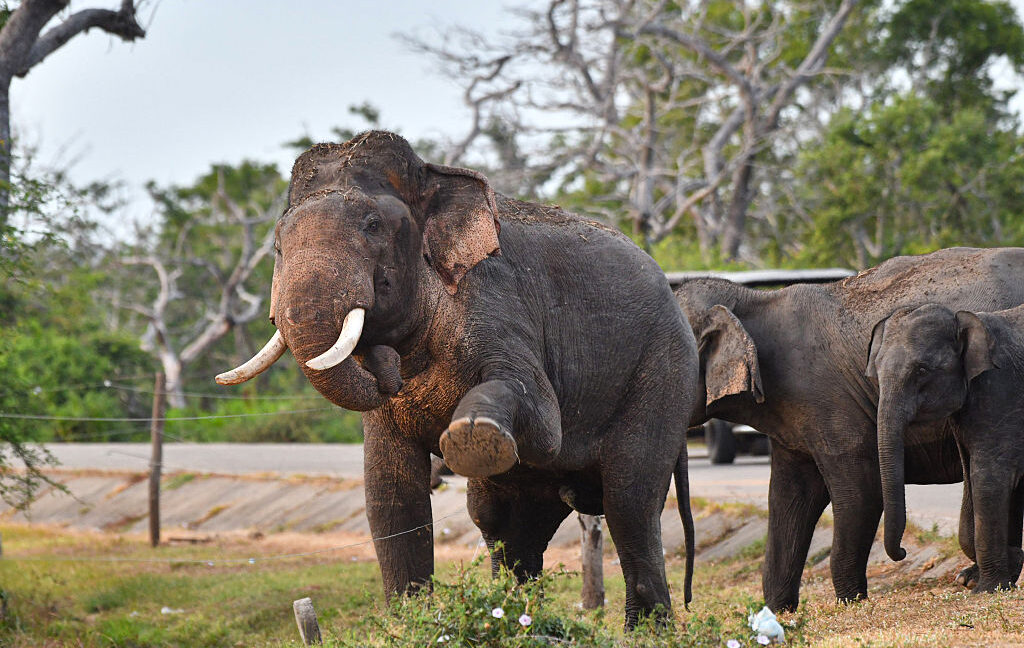
A shrinking population naturally leads to a smaller network, so the team checked to see if it was just a numbers game. They examined a population of 59 elephants that were seen each year of the study and which the team referred to as residents. “If it were just an artifact of the data, these core individuals should have fairly consistent relationships. But that’s not what we saw,” Madsen said. “They changed their relationships with each other even though they were still there.” These residents experienced fractures one to three years after the decline began.
Madsen suspects that some of the lost elephants held the groups together. “If you go to a town hall meeting, it might be the same group of people that come in all the time. However, you’re not friends with every single other person in that group,” she said. “Some key people who held these subgroups together may have been lost.”
The first connections to be broken were the weakest, the casual acquaintances. These weak relationships, says Madsen, could represent animals merely tolerating each other: “Tolerance is really important in a society, especially with large animals. If they come into conflict, it could be serious.” Researchers argue that these weak ties may still be important because they can carry information between communities.
De Silva associates this break with the disappearance of the grass. “The stronger the competition becomes, the smaller the social sphere becomes,” she said. “It’s like they value the quality of relationships over quantity.”
Flickering lights
Before the collapse, some network statistics fluctuated from year to year, which scientists of complex systems call flickering. “If you have a light bulb that’s about to die, it might start to flicker,” Madsen said. “It’s on, it’s off, it’s on, it’s off. And then suddenly it goes off.” If detected early, such signals could serve as early warning signs, she argues. “Hopefully park managers and conservationists can recognize this and intervene before the population collapses,” Madsen said.