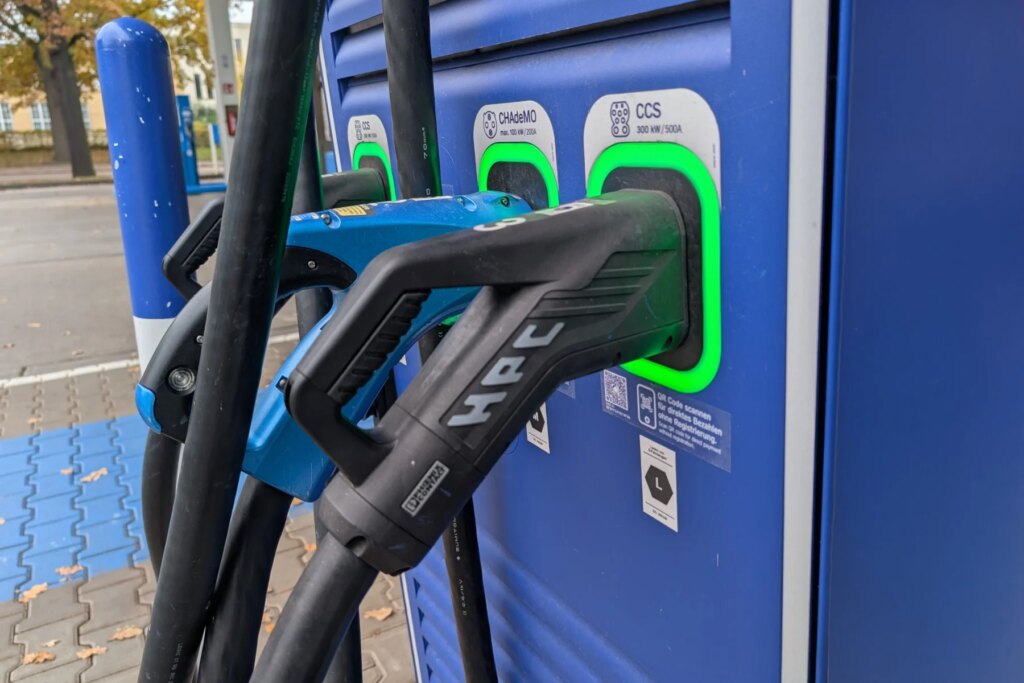
Electric mobility is growing, but the increasing number of electric vehicle registrations and the expansion of charging infrastructure mean that charging problems are also increasing. Germany currently has more than 218,000 publicly accessible charging points. Failed charging sessions, unexpected interruptions, or significantly lower-than-expected charging power frustrate EV drivers and cost the charging industry not only customer trust but also money. Identifying the causes of these charging problems is difficult because numerous companies and different hardware and software are involved in the charging process.
Therefore, under the umbrella of the German Automotive Industry Association (VDA), 29 companies and organizations (initially proposed by BMW) have developed a cross-sector approach to improving charging quality. The core team included BMW, Mercedes-Benz, Volkswagen and Škoda on the vehicle side, as well as Elli and Alpitronic on the charging ecosystem. Other stakeholders also participated in key discussions, including charging point operators (CPOs, e.g. EnBW, Ionity and EWE Go), e-mobility service providers (eMSPs, e.g. DCS), CPMS providers (e.g. Spirii, Monta and ChargeCloud) and charging station manufacturers (e.g. Kempower and ADS-TEC Energy).
The project has resulted in a ‘Yellow Book’ with more than 350 pages, titled: Qualitätsmanagement für das Ökosystem Laden (Quality Management for the Cargo Ecosystem), which was recently published in German as a discussion draft.
“The customer does not charge with individual companies, but within an ecosystem. For them, it does not matter which company or subsystem is responsible. They simply hope that the charging works, preferably on the first try,” explains Marcus Liertz, responsible for quality management of the charging ecosystem at the BMW Group and one of the initiators of the project, summarizing the motivation behind the initiative in an interview with electric.
But the seamless EV charging experience that drivers, OEMs, and the charging industry desire doesn’t happen automatically. It is often difficult to identify the root causes of errors due to the complexity of the ecosystem: “So far, we have not managed to put all the different perspectives on billing errors on the table,” explains Dr. Axel Sprenger, describing the fundamental problem. Sprenger, founder of Uscale, a market research company specializing in electric mobility, was also involved in the project and was especially responsible for the Yellow Book chapter on charging quality KPIs. He brings extensive experience, having worked at Mercedes-Benz for 15 years, including in development and quality management, before founding Uscale.
When no one knows who caused the error
In the old auto industry, quality problems could often be investigated within a single company or jointly with suppliers, while public charging is much more complex. Charging involves not only vehicle manufacturers (OEMs) and charging point operators (CPOs), but also other stakeholders, including charging station manufacturers, charging cable and plug producers, charging point management system (CPMS) providers, payment service providers, roaming platforms and mobility service providers (eMSP). Then there is the communication between the vehicle and the charging station, as well as the respective applications and backend systems.
An error detected by the CPO may not have originated there. Sprenger gives an example: a software problem at one vehicle manufacturer could lead to higher error rates at many charging infrastructure operators. Without the relevant information, CPOs might initially assume that the problem lies with their own systems, when in reality the vehicle manufacturer needs to address the root cause.
“And so everyone ends up working on problems they didn’t cause,” Sprenger says. This creates additional effort and can even lead to more problems if multiple parties make changes at different points in the system at the same time. As yet, there is no common basis for prioritizing errors, delineating their causes, and bringing responsible parties together.
According to data collected by Uscale, problems occur most frequently when connecting the charging cable, during authorization and when starting the charging session. Unexpected interruptions while charging or insufficient charging power are also common frustrations. These problems are especially annoying for drivers, reports Sprenger. For example, an electric vehicle driver could connect their vehicle to a charging station, assume that the charging process has begun, and discover upon returning that the session stopped after a few minutes.
Standardized metrics for cargo quality
How cargo quality should be measured is a central topic of the VDA project. “We don’t have a uniform measurement system. We don’t even know how cargo quality is defined,” Sprenger describes one of the key challenges. Without common definitions, metrics from different companies are hardly comparable.
The Yellow Book divides a charging process into several phases: from the vehicle approaching the charging station (Approach), to authentication and authorization, initialization, the actual energy transfer and, finally, disconnection and departure (Exit). The book proposes different key performance indicators (KPIs) for each step.
These include an authorization success rate, an authorization success rate (ASR), an initialization success rate (ISR), and a transaction success rate (TSR). Ultimately, these are combined into an overall upload success rate (CSR), which reflects the successful completion of the entire upload process. The proposal also includes a User Success Rate or Session Success Rate. After all, a user may make several attempts at different charging points or try different charging cards before successfully consuming power. Here is an overview of the KPIs:
It was also discussed within the project whether payment should be part of the quality measurement. While a proposal from consulting firm P3 Group argues that authorization should be excluded because the payment process is not part of the core technical collection function, Sprenger advocates including authorization. After all, payment processes and communication between the upload terminal and the backend can also prevent an upload session from taking place.
It is important to keep the number of KPIs manageable but meaningful. “A single type is not enough,” explains Sprenger, CEO of Uscale. Instead, you need a few central KPIs that different stakeholders can work with and that also provide insight into their respective areas of responsibility.
OCPP as a basis for KPI measurement
A key basis for measurement is the communication protocols between the systems involved. Sprenger highlights in particular the OCPP (Open Charge Point Protocol), through which numerous messages are exchanged between the charging station and the backend. Using these messages and defined checkpoints throughout the upload process, it is possible to track whether individual steps in the process were completed correctly.
“These checkpoints and messages can be used to determine whether these processes have been completed correctly and whether the customer is complying with them,” explains Sprenger. The challenge, however, is that the measurement signals are distributed among different stakeholders: the vehicle, the charging station, the backend or the payment terminal, each only capturing parts of the overall process.
“Harmonization does not mean that all contributors have to do the same thing. What matters is the methodology to relate their different contributions in such a way that cargo quality can be described, measured and improved together throughout the value chain,” explains BMW cargo expert Marcus Liertz, describing a key principle of the new quality management framework. The different responsibilities of the companies involved remain intact, but are linked through shared definitions, metrics and methods, Liertz adds.
Data sharing across company borders
Defining common KPIs is just the first step. To truly resolve errors, the companies involved must also exchange information. This is where another obstacle arises. While companies want to improve cargo quality, they are not necessarily willing to share their own data with other market participants. For example, a car manufacturer may not want to reveal its data to a competitor. Charging infrastructure operators also have little interest in sharing their internal information with other companies.
Sprenger sees an independent third party as a possible solution. Such an entity could access the relevant data through interfaces, calculate KPIs according to a uniform definition and then provide the results to the companies involved. Uscale itself offers to act as a service provider, with the central idea that measurement must be independent and transparent for all participants.
“Today, the situation is that they argue with each other instead of talking. First they argue and say to each other, ‘I didn’t cause the problem, you did,'” Sprenger explains. With independent measurements and joint error analysis, this discussion could become more objective. Additionally, comparing different data sets could reveal patterns, such as when specific vehicle models at certain charging stations or in specific system configurations frequently cause problems.
The Yellow Book could become an industry standard
The recently published Yellow Book (download PDF in English here) should initially function as a discussion and working document. The VDA has made the draft publicly available and invites the industry to submit comments and suggestions for improvements. Feedback can be collected until January 17, 2027 via this form (functional Excel table in German) and will then be incorporated into future developments.
The Yellow Book will be followed by a VDA Red Book. These Red Books represent standards and recommendations for the automotive industry. While they are not automatically binding, they can, for example, be included as requirements in contracts. The current Yellow Book aims, first of all, to establish a common basis on which the different market participants can agree.
Digital testing laboratory for cargo quality
The project group would also like to test the proposed processes in practice. Sprenger mentions the possibility of a digital test lab where inter-company bug resolution can be tested. Further development of the concept and a European perspective are also being considered.
According to Sprenger, founder of Uscale, the complexity of the charging ecosystem is likely to continue to grow. New business models and additional technical layers often only cover existing weaknesses rather than addressing their root causes. “All we’re doing is putting Band-Aids everywhere,” Sprenger says of past attempts to make complexity manageable for users. With the VDA project, the industry is taking a systematic approach to addressing root causes for the first time.