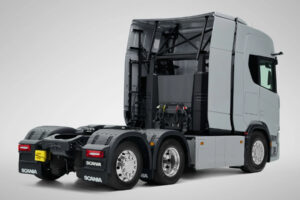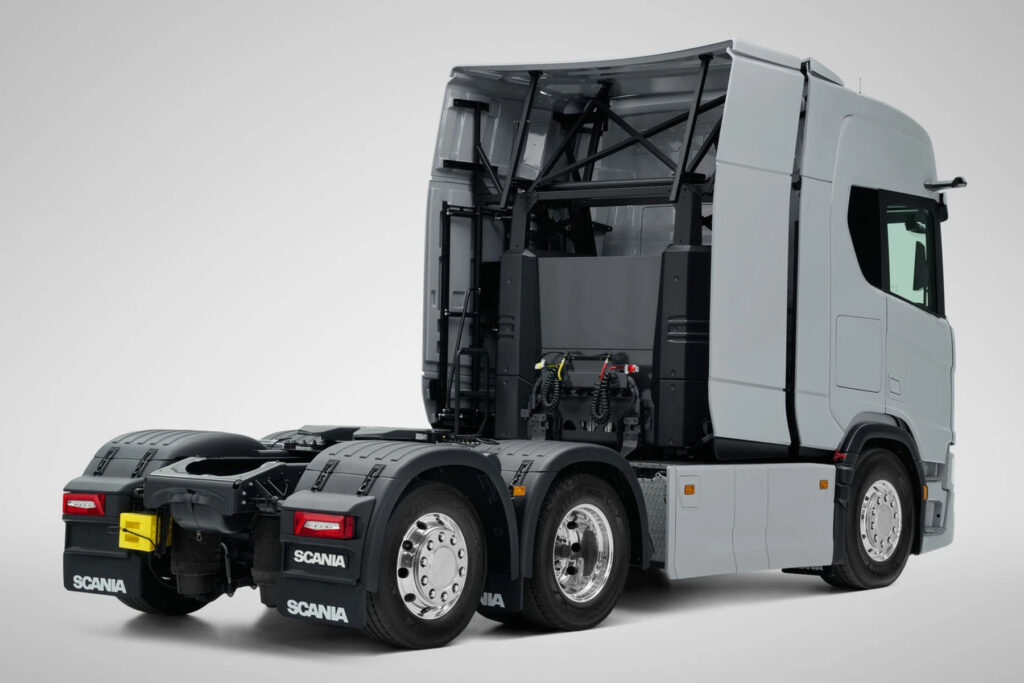
Jula Logistics has ordered a total of 40 electric trucks, all scheduled for delivery in 2027. The vehicles feature Scania’s new battery solution, which places additional battery packs behind the cab. Depending on the vehicle configuration and operating conditions, this technology allows a range of up to 720 km on a single charge, according to Scania.
Jula Logistics and Scania have been collaborating on the electrification of transport since 2021. After a joint analysis of transport needs, the first practical tests were carried out with battery electric trucks. To date, twelve Scania electric trucks operate mainly in regional transport.
With the new vehicles on order, Jula Logistics and EcoLink aim to electrify longer transport routes within Sweden, where diesel trucks have until now been used. Companies benefit from Scania’s approach of designing its electric trucks from the ground up to meet the demands of Scandinavian heavy transport with high gross combination weights. “It’s actually difficult for us to find routes that we can’t electrify,” said Rickard Bergqvist, business developer at Jula Logistics.
Jula Logistics also invests in energy infrastructure
In parallel with the expansion of its fleet of electric trucks, Jula Logistics has been investing in the necessary energy infrastructure for several years. This includes charging facilities, photovoltaic systems and battery storage. The company aligns its available power supply and charging capabilities with its growing fleet of electric trucks.
Jula Logistics has also electrified other parts of the transportation chain. Containers are transported to and from the port of Gothenburg by electric trains, and are handled at the terminal by electric stackers. In selected transports, battery electric trucks take over the next transport.
In its investment decisions, Jula Logistics considers the total cost of ownership over the life of the vehicle. Since customers are not always willing to pay a significant premium for electric transportation, factors such as energy costs and the future residual values of electric and diesel trucks play a role. Through gradual electrification, the company also aims to avoid having to replace a significantly larger portion of its fleet in the future.
Other logistics companies are also turning to Scania vehicles to electrify their transport operations, although they are following different investment strategies. For example, German logistics provider Rhenus is currently testing Juna’s Truck-as-a-Service (DE) offering. A first electric Scania truck is already in operation in Düsseldorf. Until the end of 2027, up to twelve battery-electric trucks can be used at Rhenus facilities in Germany without the company having to purchase the vehicles.
scania.com