
Ophthalmologist warns of permanent vision loss
Follow us on Google
On August 12th the moon obscures the sun over Germany. Without proper protection, there is a risk of permanent eye damage. An expert explains the dangers.
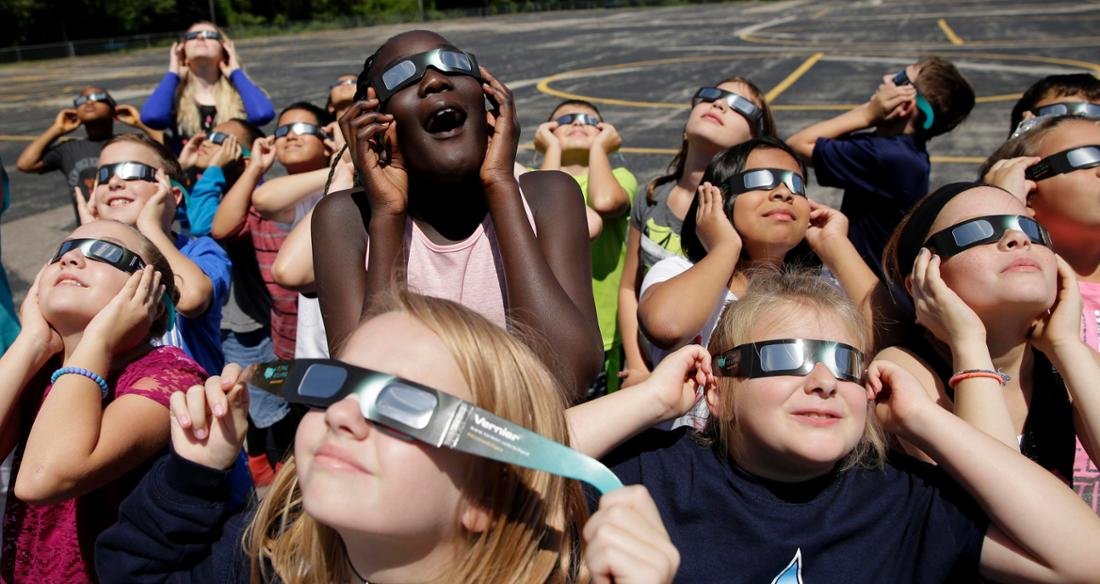
Munich – Anyone who wants to observe the partial solar eclipse over Germany on August 12, 2026 should take care of the appropriate eye protection in good time. On this day, the new moon moves in front of part of the sun – a fascinating natural spectacle, which, however, can quickly become a danger to your eyesight without suitable protective glasses.
Prof. Dr. med. Hans Hoerauf, specialist in ophthalmology and director of the eye clinic at Göttingen University Medical Center, warns in an interview Merkur.de from Ippen.Media about the risks: “The dangerous thing during a solar eclipse is that the pupil does not constrict sufficiently and lets in more light. This means that the sun’s rays with their UV components reach the retina unhindered.” Anyone who looks into the UV-rich light for longer runs the risk of phototoxic reactions on the retina.
Why protecting your eyes is so important during a solar eclipse
What’s particularly tricky is that the injury doesn’t cause any pain, which is why you only notice it when it’s too late. “The resulting heat effect is enough to cause thermal necrosis. The tissue swells, dies and a pigmented scar remains. The patient can no longer see anything at this point,” explains the doctor. Experts refer to this defect as a scotoma – a central visual field loss. Depending on the size, an entire word may disappear while reading. Hoerauf emphasizes: “This is irreversible.”
Conventional sunglasses do not offer sufficient protection from the intense sunlight, emphasizes Hoerauf. And the Federal Office for Radiation Protection (BfS) also makes it clear: Special solar eclipse glasses allow a maximum of 0.001 percent of sunlight to pass through. “This requirement goes far beyond the filter properties of normal sunglasses,” the authority said.
Buying solar eclipse glasses – these criteria are important
When purchasing solar eclipse glasses, consumers should pay attention to the following criteria:
- Protective film: Optical density (OD) of at least 5.0
- CE symbol: Current standard DIN EN ISO 12312-2:2015
- Usage and warnings: Must be present on the glasses
- No damage: Holes, scratches or cracks make the glasses unusable
- Fit: Extra-wide temples and a good fit on the face reduce scattered radiation
Where to buy special solar eclipse glasses
The special safety glasses only cost a few euros and are available from opticians and astronomy retailers. There are also filter attachments or filter films available from specialist retailers for telescopes, binoculars and cameras. Important: These filters must be placed in front of the device’s optics to protect both the sensitive device and the human eye. The BfS expressly warns: “These devices also concentrate the sun’s rays.”
Even if you only want to observe the spectacle of the solar eclipse “for a short time”, you should only use certified solar eclipse glasses or indirect methods such as a pinhole camera. Experts strongly advise against homemade protective products. “’Home remedies’ such as soot-blackened glasses, black film strips, CDs or the like are unsuitable and dangerous for solar observation!” warns the BfS on its website. The Good Vision Board of Trustees “strongly advises against it due to the unpredictability of the effect”. (Sources: conversation with Prof. Dr. Hoerauf, BfS communication, communication from the Good Vision Board) (tab)