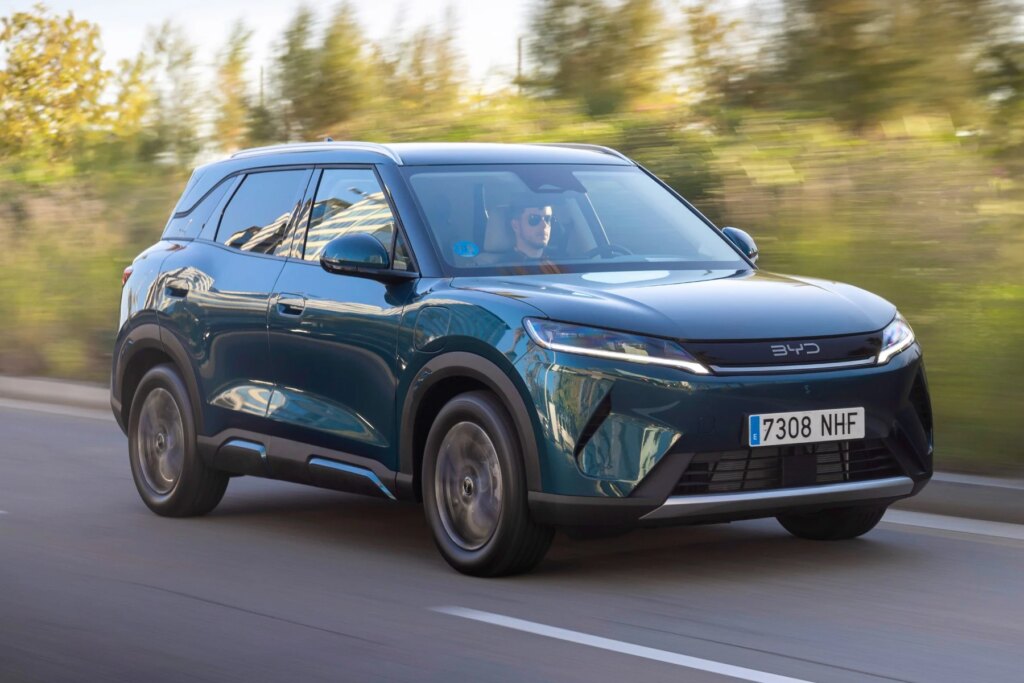
EU Trade Commissioner Maroš Šefčovič announced the agreement on Friday after two days of talks with Chinese Trade Minister Wang Wentao in Beijing. The deal is part of a broader package aimed at rebalancing trade relations between the two sides, and its impact extends beyond the auto industry. For the EU, it is also about curbing China’s growing trade surplus and protecting European industry from additional competitive pressures.
Šefčovič said: “In the case of hybrids and plug-in hybrids, we are talking about a reduction in exports from China to the European Union in four years by several million cars, which I think is quite significant.” However, the EU commissioner did not refer to the current level of imports, which recently stood at around 50,000 hybrids and plug-in hybrids from China per month. The EU Commission has likely forecast further growth in this segment and intends to halve future volumes, but Šefčovič declined to elaborate on this during a press round. The technical details of the agreement are also pending; The EU Trade Commissioner said he first wanted to inform heads of state and government, EU institutions and Member States.
EU leaders still have to review the deal
The agreement comes after a period of increasing tensions in the auto trade. After the EU introduced high anti-subsidy tariffs on all-electric cars from China in October 2024, in addition to the usual 10 percent tariff on cars, hybrid and plug-in hybrid models gained significant importance for Chinese manufacturers in Europe, and delivery numbers multiplied. This is because these vehicles are currently subject only to the standard 10 percent tariff, making imports significantly cheaper than purely electric vehicles.
Brussels therefore saw the risk that competitive pressure on European manufacturers would increasingly shift to this market segment. According to the European Automobile Manufacturers Association (ACEA), the market share of Chinese brands in Europe for hybrid vehicles reached 14 percent in the first half of 2026 (compared to 2 percent in 2024), and for plug-in hybrids, it was even 25 percent (also compared to 2 percent in 2024).
China had initially rejected a voluntary limit on its hybrid exports, after which the EU reportedly considered using the so-called Safeguard Instrument. This allows special tariff quotas to be established in the event of a sudden increase in imports of a category of products that results in or threatens to cause serious damage to European manufacturers. Within a defined import volume, existing tariffs apply, but an additional levy may be imposed beyond that limit. This is intended to stop imports of this category of products at a lower level. However, there was no official confirmation from the EU, while the timing of the agency’s report suggested that whistleblowers wanted to create public pressure during the negotiations.
The results of the negotiations with China will now be evaluated at the European Council on 15 and 16 October. According to Šefčovič, the Commission will initiate the necessary procedures if EU leaders support the agreement. He stressed that, while the negotiations represented an important first step, work must continue to achieve a more balanced trading relationship.
Concrete implementation remains to be seen
The European car industry welcomed the agreement. Industry association ACEA described it as a positive step toward easing trade tensions, but noted that concrete details still need to be clarified.
“An acute and sudden market destabilization in Europe, together with price wars reflecting the current market situation in China, would be very damaging for the European economy as a whole,” said Sigrid de Vries, Director General of ACEA. “Today’s announcement can help facilitate the transition to a new era of Chinese presence in the European market in an orderly manner and this is in the long-term interests of all parties.”
The key will be how the announced export reduction is implemented and monitored. EU Trade Commissioner Šefčovič described the talks as a first step towards a more balanced trading relationship. The EU and China intend to continue their consultations: another exchange at ministerial level is planned for January, and the next comprehensive round of trade and investment talks is scheduled for March 2027. Until then, the focus will likely be on the practical implementation of the hybrid agreement.
europa.eu (agreement), europa.eu (press conference), acea.auto