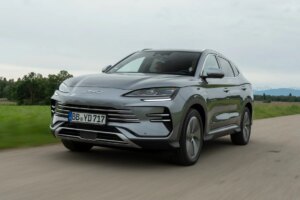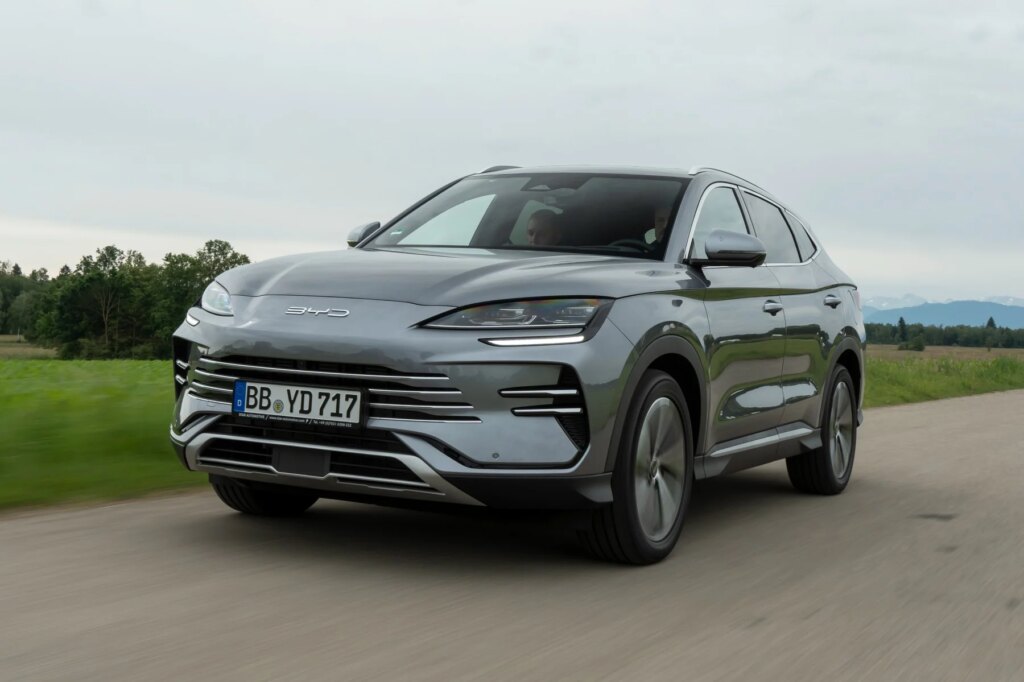
After the EU imposed special tariffs on electric cars from China of up to 35.3 percent (depending on the manufacturer) two years ago, a similar measure for hybrid vehicles now also looks increasingly likely. Since summer 2025, it has become clear that due to punitive tariffs, Chinese brands particularly active in Europe, such as BYD and MG Motor, are increasingly focusing on hybrids. These are subject only to the usual 10 percent auto tariff. While BYD focuses exclusively on plug-in hybrids (PHEVs), such as the best-selling BYD Seal U DM-i, which alone has achieved 11,291 new registrations in Germany since the beginning of the year (January to September), MG Motor also has successful full hybrids in its portfolio.
In other words: although the special tariff limits the import of emission-free BEVs locally, it does not apply to hybrid vehicles, which combine combustion and electric engines and therefore also emit CO.2 in the area. This is also detrimental to the EU’s climate goals.
For this reason: According to media reports, the European Union several weeks ago asked China to voluntarily limit its exports of hybrid vehicles to Europe, but China refused. In its initial response to the EU’s request to limit hybrid exports to the EU, China’s Ministry of Commerce stated that “so-called voluntary export restrictions seriously violate WTO rules and run counter to market principles and fair competition.” CNEV Publication He added that the ministry rejects “its use to resolve automotive trade disputes between China and the European Union.”
Quotas instead of special rates for the first hybrid vehicles
However, the EU does not seem to be fazed: according to BloombergThe European Commission is preparing measures to limit the import of Chinese hybrid vehicles into the European Union. Bloomberg cites sources familiar with the matter.
Unlike electric cars from China, there will apparently be no special tariff for each hybrid vehicle imported from China. Instead, the European Commission would be considering establishing quotas, as Canada has done with electric cars from China. This means that within a defined period, a certain number of hybrid vehicles from China could continue to be imported into the EU at the usual car tariff rate of 10 percent. However, if manufacturers want to import more Chinese hybrids, an additional special tariff of still unknown magnitude would apply.
Safeguard instrument can be implemented more quickly
In this case, Brussels will most likely rely on the EU safeguard instrument. This allows special tariff quotas to be established, among other measures, in the event of a sudden increase in imports and the resulting (or threatened) serious harm to European manufacturers. Within a given import volume, existing tariffs apply, although an additional levy may be imposed beyond that volume. However, these safeguards are usually not country-specific; rather, the EU usually applies them to imports of such products from third countries.
Thus, restrictions on the import of hybrid vehicles would represent a completely different measure than the special tariffs on electric cars from China. In the case of BEVs, the EU concluded, after a lengthy anti-subsidy investigation, that some car manufacturers in China receive excessively high subsidies from the Chinese government, allowing them to offer their products in Europe at lower prices than European companies, which do not receive equivalent support. Therefore, the so-called special tariffs are actually anti-subsidy duties, which vary depending on the manufacturer and the scope of the respective subsidies.
However, a safeguard measure, such as the one apparently now planned for hybrid vehicles, can be implemented much more quickly. The European Commission apparently considers the prerequisites for this to be met, as imports of hybrids from China have soared from 3,800 vehicles in October 2024 (when anti-subsidy tariffs on electric cars came into force) to around 50,000 units in July 2026.
Šefčovič in negotiations in Beijing
EU Trade Commissioner Maroš Šefčovič is expected to visit Beijing today (Thursday) and tomorrow (Friday) for talks with Chinese Trade Minister Wang Wentao. The result could influence plans. We will update this article as soon as there is news from Beijing.
According to information from HandelsblattŠefčovič and his team will try again during talks in Beijing to convince China to limit its exports of hybrid and electric vehicles to the EU. “The deal would at least temporarily curb the rise in Chinese car exports,” SPD politician Bernd Lange, chairman of the European Parliament’s Trade Committee, told the newspaper. “The goal is to flatten the import curve and give the European car industry time to do its homework.”
Japan agreement as a model?
According to the HandelsblattA possible model for such an agreement could be an agreement that Europe reached with Japan about 40 years ago. At the time, Japan limited exports of its emerging auto industry to Europe, but in exchange, Toyota, Nissan and Honda built plants in Europe. This created jobs not only in the factories themselves but also among suppliers. A similar path is already emerging for Chinese manufacturers: BYD will continue to start series production this year at its new plant in Szeged, Hungary; Chery produces together with Ebro in Barcelona; And Xpeng already assembles electric cars using the SKD process at Magna Steyr in Graz.
bloomberg.com, yahoo.com, handelsblatt.com (link in German)