Ford Trucks is preparing for the introduction of the EU digital battery passport. To this end, the Turkish commercial vehicle manufacturer Ford Otosan, a joint venture between Ford Motor and the Turkish Koç Holding, is collaborating with Circulor, a company specialized in supply chain transparency. Circulor’s platform aims to create the database necessary to transparently document the origin, processing and supply routes of materials used in traction batteries.
The project begins with a systematic recording of the battery supply chain based on supplier information. It involves documenting the companies and production centers involved, as well as the origin and processing of the materials used. For materials and supply chains with higher risks, additional testing and independent audits may be required.
Through the Circulor platform, Ford Otosan can request, collect and manage the relevant documentation. The scope of verification should be aligned with the specific risks associated with individual materials, production sites and supply relationships. The information collected will form the basis for creating and maintaining digital battery passports.
EU battery passport mandatory from 2027
The EU Battery Regulation (EU) 2023/1542 requires a digital battery passport for traction batteries in electric vehicles and other categories of batteries from February 18, 2027. This passport will be linked to the respective battery via a QR code and will provide information on technical characteristics, performance, durability, sustainability and recycling, among other details. Data access rights will vary depending on the type of information.
For electric commercial vehicle manufacturers, this means that information from different stages of the supply chain must be consolidated and managed throughout the battery life cycle. The collaboration with Circulor aims to help Ford Otosan establish the digital processes necessary for this purpose.
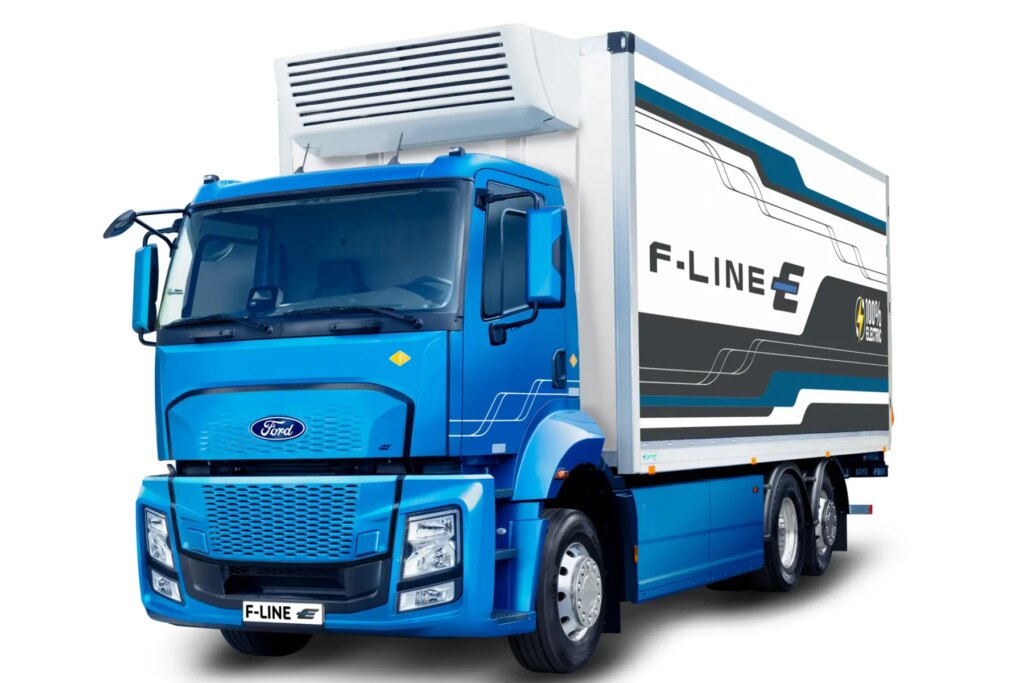
With the F-Line E, Ford Trucks has introduced its first series-ready electric truck. Developed and produced by Ford Otosan, the model was presented at Solutrans in Lyon in November 2025 and is expected to reach the German market in 2026. The battery-electric truck will be available in two weight classes: as a 19-ton model with a battery capacity of 294 kWh and a range of up to 250 km, and as a 26-ton model with 392 kWh gross and a range of up to 300 km. km. Both variants use NMC batteries.
Circulor already has experience with digital battery passports for electric vehicles. The British company, together with Volvo, developed a battery passport for the electric EX90, which will be introduced in 2024. The system allows traceability of battery materials throughout the supply chain and provides selected information via a QR code. According to the company, Circulor’s platform now supports material traceability for more than 1.4 million vehicles.
With this new cooperation, Ford Otosan aims to create a comparable database for its electric commercial vehicles and prepare for future EU documentation requirements.
circulor.com