
One year after the change: What consequences China’s luxury tax has for German car manufacturers
China was the promised land for Germany’s premium car manufacturer for years, but in recent years it has developed into a problem child. Sales have plummeted because customers’ money is no longer as easy as it used to be, for example due to the real estate crisis. Or because the choice falls on Chinese models.
A year ago there was also a change in the tax regulations for luxury cars. The limit at which the tax is due has been reduced from the previous 1.3 million yuan for new vehicles without VAT to 900,000 yuan (currently around 116,000 euros).
What consequences did this have for German premium manufacturers and the Chinese automobile market?
VDA: This had a particularly negative impact on German manufacturers
“The adjustment of the Chinese so-called luxury tax on vehicles last year was expected to have a particularly negative impact on European and especially German manufacturers, as it targets particularly valuable vehicles,” said a spokeswoman for the Association of the Automotive Industry (VDA) upon request.
The measure came at a time when the economic conditions in China were already challenging and still are. The tax adjustment further dampens consumer sentiment in China and also puts a strain on the bilateral trade climate between the EU and China. “An examination of the consequences of the measure would be necessary,” said the VDA spokeswoman.
Chinese association: Additional burden for German manufacturers
According to Cui Dongshu, secretary general of the Chinese Passenger Car Association (CPCA), the lowered luxury tax threshold has structurally changed the market. In particular, demand for combustion engines between 900,000 and 1.3 million yuan has “decreased significantly”. German manufacturers would either have to pass on the additional burden through higher final prices, thereby weakening their competitiveness, or bear it themselves at the expense of their margins. At the same time, expensive special equipment would be streamlined and prices would be specifically kept below the tax threshold. Consumers increasingly turned to Chinese luxury models with electric or hybrid drives as well as cheaper used luxury cars.
From Cui’s point of view, however, the tax is not the main problem for German manufacturers. He described the rise of Chinese premium brands as a “decisive blow”, while price wars and tax policy only created “short-term additional pressure”. The most pressing issue is the “serious backlog in the localization of intelligent vehicle technology and electrification.”
What the German manufacturers say about it
At BMW The tax affects “individual luxury models that are imported into China”. The vehicle price therefore relates to small volumes that are ordered by a group of customers with purchasing power. The lowered threshold therefore has “hardly any impact on our overall sales in the market,” said BMW.
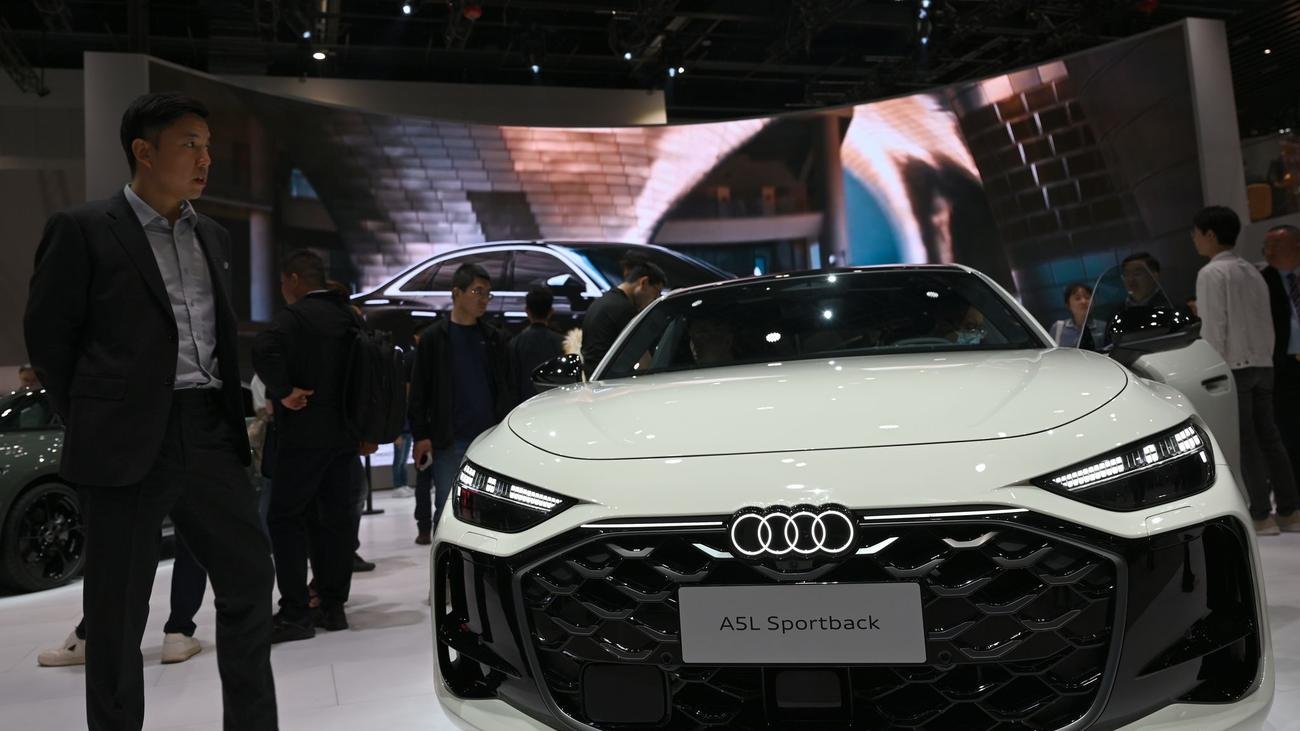
According to VW subsidiary Audi, the regulation only affects “a very limited number of Volkswagen Group models sold in China.” At the Stuttgart sports car manufacturer Porsche, also a VW subsidiary, individual derivatives were affected, a spokesman said.
A spokesman for Mercedes-Benz said it was difficult to view the specific effects in isolation. In general, competition has continued to intensify across all segments in recent quarters. This affects both international and local manufacturers. The proportion of affected vehicles at Mercedes in China is less than five percent of total sales. These vehicles are exclusively in the top-end segment, particularly in the S-Class and Mercedes-Maybach models.
The fact is: Sales have continued to decline recently. At Porsche, deliveries in China fell by 32 percent in the first half of the year compared to the same period last year. At Mercedes, car sales in China fell by 28 percent in the first half of the year. At BMW, sales fell by 20 percent in the same period, and at Audi by 19 percent.
© dpa-infocom, dpa:260720-930-409394/1