Volkswagen is losing competitiveness, not in Europe, but mainly in its markets outside Europe, according to recently released sales statistics for the third quarter. The Group delivered 240,200 battery electric vehicles (BEVs) worldwide between July and September, a decrease of 4.7% compared to the same period last year. Of these, 209,100 units were sold in Europe, representing an increase of 19.6%, while the Group’s BEV sales in the US, China and the rest of the world decreased significantly.
Looking at the year-to-date performance, it is clear that the Volkswagen Group’s global BEV deliveries from January to September 2026 fell by 5.4% to 678,700 vehicles. Also in this case, the disparity between Europe (+12.1%) and other regions is evident, with significant sales losses. This confirms a long-standing trend.
Volkswagen’s total sales fall by 14.3%
Breaking down all powertrains, Volkswagen sold approximately 1,885,300 vehicles in the third quarter, showing a significant drop of 14.3% compared to the third quarter of 2025. However, BEV sales decreased by a smaller margin of 4.7%, meaning that in the third quarter, one in eight of the Group’s vehicles worldwide had a purely electric powertrain (electric share: 12.7%). Extending this perspective to the year to date, Volkswagen recorded 6.01 million vehicles sold worldwide from January to September (-9% year-on-year) with an electric share of 11.3%. In particular, the Group is currently experiencing only modest growth across all powertrains in South America (+4%), Western Europe (+1%) and Central and Eastern Europe (+5%). These gains are insufficient to offset the declines in North America (-4%) and, in particular, the sharp decline in China (-30%).
Regional differences are also evident in BEV sales, but with varying patterns. The Volkswagen Group remains the BEV market leader in Europe with 209,100 sales in the third quarter (+19.4%). Volkswagen’s BEV share in Europe has thus increased from 18% to 20% after nine months of the year. On the contrary, the Chinese and US markets are losing importance. Sales of BEV cars plummeted by 30.1% and 86.4%, respectively. The only silver lining is that in the third quarter Volkswagen managed to slightly curb its losses in China compared to the first half of the year, although the decline in the United States has accelerated even further.
| Deliveries to customers for Markets |
July – September 2026 | July – September 2025 | Delta (%) | January – September 2026 | January – September 2025 | Delta (%) |
| Europe | 209,100 | 174,800 | +19.6 | 586,100 | 522,700 | +12.1 |
| USA | 5,100 | 37,400 | -86.4 | 14,900 | 68,700 | -78.4 |
| Porcelain | 18,000 | 25,800 | -30.1 | 48,900 | 85,100 | -42.5 |
| Rest of the world | 8,100 | 14,100 | -43.0 | 28,800 | 41,100 | -30.0 |
| World | 240,200 | 252,100 | -4.7 | 678,700 | 717,700 | -5.4 |
Volkswagen also notes that it is seeing positive momentum in China thanks to new locally developed electric models in a significantly declining market. However, the overall BEV market in the US has declined sharply following the expiration of government incentive programs. Additionally, current import tariffs have caused Volkswagen’s BEV deliveries there to fall by 78% in the first nine months of the year.
Plug-in hybrids are gaining ground in the portfolio
On a positive note for VW, plug-in hybrids (PHEV), which Volkswagen includes in its statistics along with range-extending vehicles (EREV), increased by 23% year-on-year in the first nine months of 2026 to 368,000 units. This represents 6.1% of all Group sales in the same period. In China, deliveries of electrified vehicles in the third quarter increased by about 30% compared to the same quarter last year. However, Volkswagen has not provided absolute figures, so the real impact on sales remains unclear. By the way, the first EREV model of the group is the ID. ERA 9X04 — also in China.
Volkswagen lists the following model series as its best-selling BEVs of the year:
- Škoda Elroq – 92,200 units
- Volkswagen ID.4/ID.5 – 81,900
- Škoda Enyaq (including Coupé) – 72,700
- Volkswagen ID.3 – 61.100
- Audi Q6 e-tron (SUV/Sportback) – 50,400
- Volkswagen ID.7 (including Tourer) – 47,500
- Audi Q4 e-tron (SUV/Sportback) – 47,000
- Volkswagen identification. Buzz (including charging): 42,000
- Born Cupra – 29,000
- Audi A6 e-tron (Avant/Sportback) – 27,600
The top four models are the same as in this summer’s mid-year report. The Q4 e-tron, however, has fallen to seventh place, while the Audi Q6 e-tron and VW ID.7 have risen one position each.
Škoda and SEAT/Cupra advance
Volkswagen has also published a detailed breakdown of how electric car sales have developed across its individual brands. The data reveals that BEV sales for Volkswagen Passenger Cars (-22.4%) and Audi (-21.5%) were particularly weak in the third quarter, while Porsche managed to recover (from -31% year-on-year in the first half of the year to +2.5% in the third quarter). Meanwhile, Škoda (+30% year-on-year) continues to emerge as a volume driver, as demonstrated by the ranking, which includes two Škoda BEVs among the top three electric cars. As a result, the gap between VW and Škoda in BEV sales narrowed to just under 15,000 units in the third quarter. A year earlier, the difference was still around 50,000.
| Deliveries to Clients for Brands |
July – September 2026 | July – September 2025 | Delta (%) | January – September 2026 | January – September 2025 | Delta (%) |
| Main brand group | 175,700 | 174,600 | +0.6 | 493,600 | 503,300 | -1.9 |
| Volkswagen Passenger Cars | 73,900 | 95,200 | -22.4 | 212,200 | 287,900 | -26.3 |
| Skoda | 59,300 | 45,600 | +30.0 | 167,400 | 118,500 | +41.3 |
| SEAT/CUPRA | 24,800 | 19,800 | +25.5 | 65,100 | 57,300 | +13.5 |
| Volkswagen Commercial Vehicles | 17,700 | 14,100 | +25.9 | 48,800 | 39,600 | +23.4 |
| Progressive Brand Group | 48,700 | 62,000 | -21.5 | 143,700 | 163,400 | -12.0 |
| Audi | 48,700 | 62,000 | -21.5 | 143,700 | 163,400 | -12.0 |
| bentley | – | – | – | – | – | – |
| Lamborghini | – | – | – | – | – | – |
| Group of luxury sports brands | 15,100 | 14,700 | +2.5 | 38,700 | 48,900 | -20.8 |
| porsche | 15,100 | 14,700 | +2.5 | 38,700 | 48,900 | -20.8 |
| Trucks / TRATON brand group | 800 | 800 | -4.9 | 2,700 | 2,100 | +29.2 |
| Scania | 250 | 160 | +55.3 | 640 | 380 | +68.9 |
| MAN | 380 | 290 | +32.3 | 1,480 | 1,090 | +35.5 |
| International | 100 | 360 | -72.2 | 490 | 540 | -8.3 |
| Volkswagen trucks and buses | 50 | 10 | +487.5 | 50 | 60 | -3.6 |
| Volkswagen Group (total) | 240,200 | 252,100 | -4.7 | 678,700 | 717,700 | -5.4 |
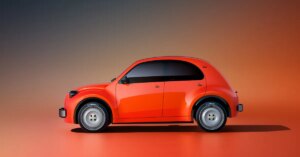
Despite these relatively sobering figures, Volkswagen emphasizes that demand for BEVs will soon increase. The order book for all-electric vehicles in Europe has reportedly increased by more than 60%. Volkswagen says the recently introduced family of electric city vehicles, including the VW ID. Polo and ID. Cross02, Škoda Epiq03 and CUPRA Raval, has already received nearly 150,000 customer orders. Across all powertrains, order intake after three out of four quarters in 2026 has increased by 4%, while the German auto group says the share of BEVs in the order book is rising to around 40%. This suggests an increasing share of electric vehicles in future sales statistics. The current 12.7% is a relatively low figure. In Mercedes-Benz Passenger Cars, one in every six new Mercedes passenger cars was already fully electric in the third quarter (16.8% electronic share).
Martin Sander, Member of the Board of Management for Enlarged Group Sales, comments: “In a persistently challenging market environment, the Volkswagen Group held its deliveries outside of China generally stable during the first nine months. We recorded growth in South America and Europe. In our home market, we are seeing a significantly accelerated trend towards fully electric vehicles. The main reasons for this are the current high fuel prices and the wider range of base models. […] Overall, one in five of the models we have delivered in Europe is fully electric and, in our order book, that proportion reaches around 40 percent.” Sander also noted that the overall market in China, in significant decline, remains a challenge for the entire industry.
volkswagen-group.com