Support CleanTechnica’s work through a Substack subscription, on Patreon, or on Stripe. Help us produce all the original, high-quality content we publish week after week despite the challenges of AI deleting content, anti-social media, inflation and other obstacles.
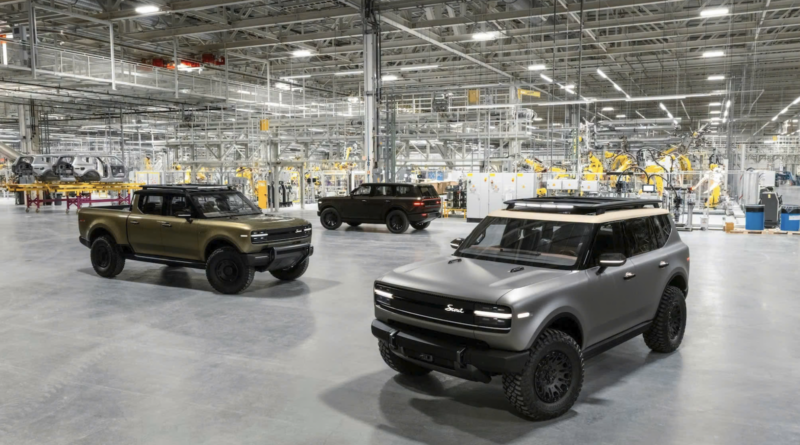
Scout Motors, the revived American brand now focusing on affordable, off-road capable electric trucks and SUVs, has apparently produced its first validation vehicles at its South Carolina factory. This is an important step forward towards mass production for the Volkswagen Group subsidiary.
We’ve seen many new electric vehicle companies come and go, including some that revived old and historic car brands, like Detroit Electric. However, in this case, Scout 1) offers something unique on the market, 2) focuses on affordability combined with utility, 3) is backed by automotive giant Volkswagen Group, and 4) currently has over 200,000 registered reservations! There are reportedly more than 212,000 reservations for Scout electric vehicles.
Oh, also, the company has a $2 billion factory in South Carolina, and it’s real. I’m sure there is a lot to do to complete it and operate it as desired, but getting to factory production of validation vehicles is a notable achievement that means we are pretty close to delivering actual production vehicles to customers. The validation versions are of the Traveler SUV and the Terra truck.
The company can now stamp, weld and paint at the Blythewood, South Carolina, factory, and CEO Scott Keogh says the factory is now 85% complete.
After validation builds, the next phase will be pre-production vehicles. Keogh forecasts that actual consumer car production will begin in 2027 and deliveries will begin in 2028 (thus, customer vehicle production should be scheduled for late next year). Construction of the factory began in 2023.
Initially, Scout was only going to produce 100% electric vehicles. However, it also went on to produce extended-range electric vehicles (vehicles that always run on electricity from a battery but whose battery can be recharged with a gasoline engine while driving). According to the company, 87% of those more than 212,000 reservations are for the extended range versions of the Traveler and Terra. Buyers also strongly prefer the Traveler SUV, which has attracted 75% of bookings so far.
Keogh believes the company could reach 400,000 reservations when it begins producing vehicles for customers. There were 160,000 in March and 50,000 in January. The factory should have an annual production capacity of 200,000 units. Having reserves for two years of production would be a strong and useful boost for the company.
All that said, one caveat to the reservation count is that it has one of the same problems that the Tesla Cybertruck had: reservations are fully refundable and only cost $100. That makes it very difficult to know how many people will actually go ahead and buy the vehicles once they go on sale. We will see.
Sign up for CleanTechnica’s Weekly Substack to get in-depth analysis and high-level recaps from Zach and Scott, subscribe to our daily newsletter, and follow us on Google News.
Do you have any tips for CleanTechnica? Do you want to advertise? Want to suggest a guest for our CleanTech Talk podcast? Contact us here.
Subscribe to our daily newsletter to receive 10-15 new cleantech stories per day. Or sign up to receive our weekly newsletter on the week’s top stories if the daily grind is too much.
CleanTechnica uses affiliate links. See our policy here.
CleanTechnica Comment Policy