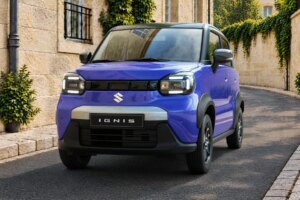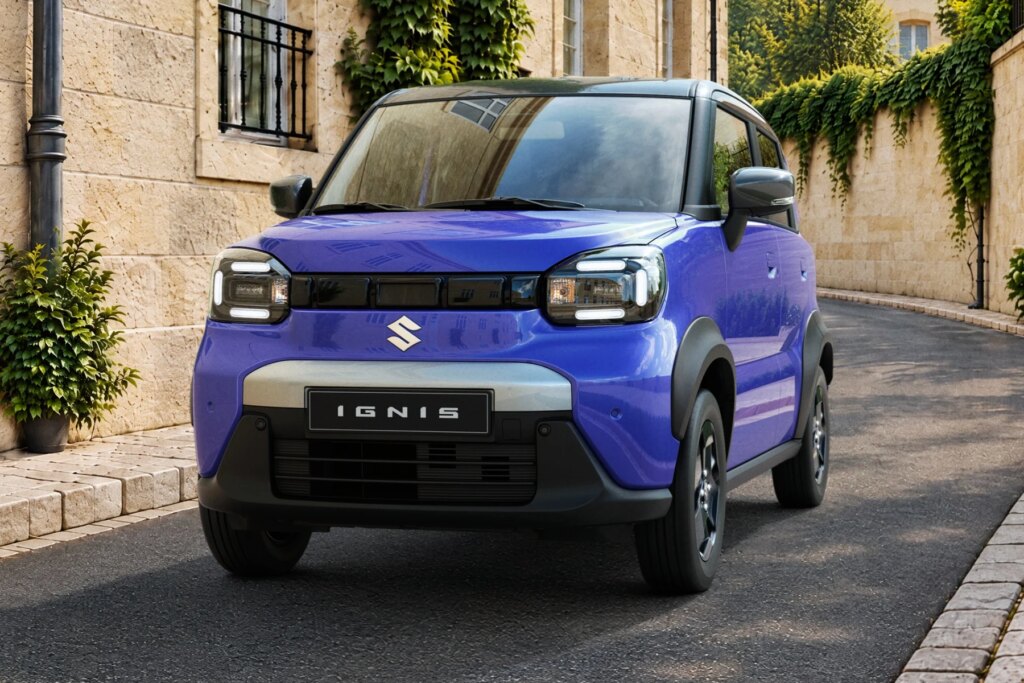
The Japanese manufacturer expands its electric portfolio with the new Suzuki Ignis microcar. Marketed as “Easy to Switch: The Best City Car for Your Neighborhood,” developers set out to design the small electric vehicle to ease the transition from fossil fuel-powered cars to electric ones, as well as the switch from larger to smaller vehicles.
In Germany, the European automotive heartland, Suzuki intends to position the Ignis as the smallest four-seat electric vehicle in the German market, where it will compete against models such as the Leapmotor T03 and the Dacia Spring. The battery-electric Ignis will be launched in Germany and other markets in summer 2027.
The small car measures 3.57 meters long, 1.57 meters wide, 1.64 meters high and has a wheelbase of 2.46 meters. To do this, Suzuki takes advantage of its long experience in the kei car segment in Japan. The Ignis is based on the Suzuki e Sky kei car recently introduced in Japan, although it is slightly larger and exceeds the length and width limits of ‘kei’ cars.
Toshihiro Suzuki, Representative Director and President, says: “The new Ignis introduced today is Suzuki’s first compact electric vehicle for global markets, bringing together the experience we have cultivated over decades of small car development, the knowledge gained from walking alongside customers around the world and Suzuki’s philosophy of ‘Sho-Sho-Kei-Tan-Bi’ (smaller, less, lighter, lower, beauty).”
The body of the new Ignis responds to the functional demands of urban traffic, presenting clean lines, short overhangs, 150 millimeters of ground clearance and excellent visibility. A turning radius of nine meters should give the small electric vehicle an advantage in urban driving.
The technical basis is the “Heartect-e” platform, designed for electric vehicles, also used in the e Sky in Japan and the e Vitara. The “eAxle” is the basis of the transmission, which combines the electric motor, inverter and reduction gear. The front-wheel drive system generates 67 kW and 133 Nm of maximum torque. The urban vehicle will have a 26 kWh lithium iron phosphate battery.
Inside, the dashboard features surfaces with integrated ceramic cupholders. The cockpit monitor, described by automobilrevue.ch as an LCD screen and the infotainment screen are together like a tablet on the dashboard. Thanks to the space-saving integration of the battery into the vehicle floor and the use of space similar to that of a kei car, the vehicle is designed to accommodate four passengers despite its compact exterior dimensions.
Braking is provided by ventilated discs at the front and drums at the rear. Depending on the equipment, regenerative braking can be adapted. As the approval for Germany is still pending, the manufacturer has not yet provided consumption or autonomy figures for the Ignis.
The e Sky could give us an idea, since it also has a 26 kWh battery. The kei car weighs 1,030 kilograms but only produces 47 kW. Its range is said to be just over 300 kilometers. Given the slightly higher consumption due to the increase in power, the Ignis could achieve a slightly lower electric range. The platform also suggests that the maximum charging power will likely be 50 kW. The Ignis is also expected to support one-pedal driving and vehicle-to-load (V2L) functionality.
globalsuzuki.com