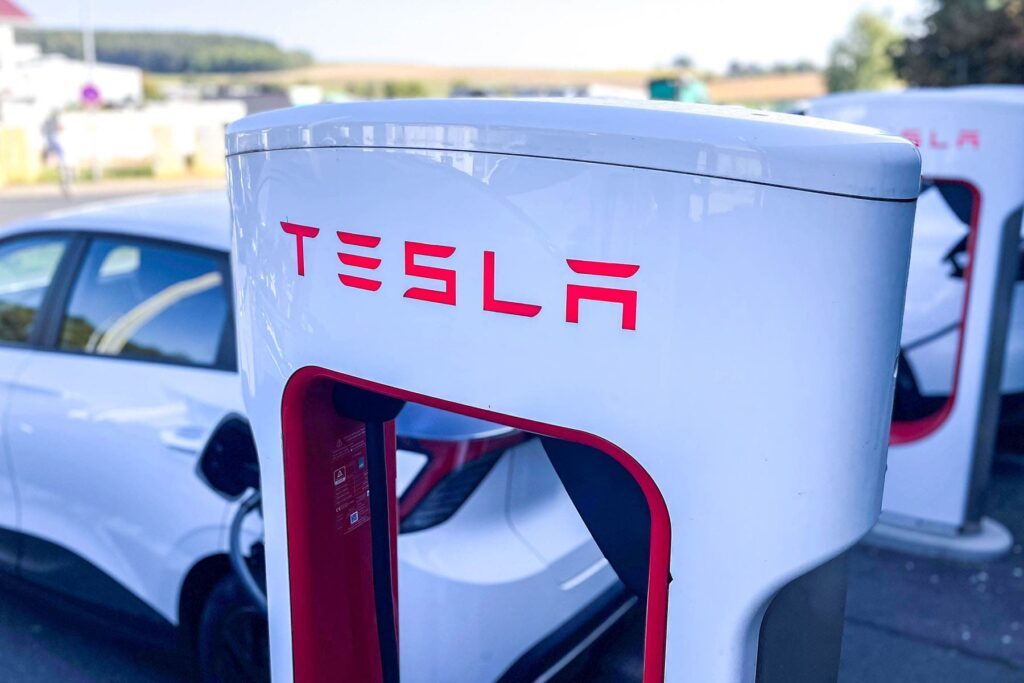
Social media posts about the Ballarat sabotage show new Tesla Supercharging bays, all with cables cut. “It’s worth saying up front that this isn’t really an EV story – it’s a copper story,” Evie Networks’ Geoff Brady told the Australian automotive publication. the driven. “The same thieves are stealing cables from telecom shafts, construction sites, rail corridors, etc. Charging sites are just a new target on the same list.”
Hussein Dia, professor of Transport Technology and Sustainability at Victoria’s Swinburn University, said Yahoo News Australia that the theft of electric vehicle charging cables “is becoming a more significant infrastructure problem in Australia.”
“We have seen incidents reported in different states, including Victoria, New South Wales and Queensland, and some places appear to have been attacked repeatedly,” he said.
Hussein noted that these continued copper theft attacks on EV chargers “undermine confidence in public charging” as the Antipodean nation electrifies its transportation sector. “Drivers should know that when a charger appears on a map, it will actually be available when they arrive,” he said.
Public outrage over the vandalism was heated, with one person calling the vandalism “political terrorism,” while another wrote that destroying critical infrastructure like gas stations and charging points should receive a prison sentence, according to news.com.au. With the start of the school holidays in Victoria, tourists driving electric cars may find themselves on a broader search for an available and functional charging point in the area.
In other attacks elsewhere in Australia, city councilors speak of budget shortfalls in having to repair charging points after similar attacks. Copper theft has become a major problem in Australia – as elsewhere – as the price of copper has soared with increasing electrification, coupled with a rapidly rising cost of living. In the last 12 months, the price of copper has increased in value by 37.8 percent and is now trading at more than US$14,000 per tonne.
According to numerous Australian publications, lighting, the installation of CCTV and alarms, as well as the use of aluminum covers for public electric car chargers, are being used to help solve the problem. Charging infrastructure providers are also coming up with their own solutions.
Evie Networks’ Brady said the driven that are integrating cable protection into their hardware with measures such as mesh and shielding, and identification ink, along with cameras and alarms in higher risk locations.
“For us, it has increased over the last 12 to 18 months, broadly following the price of copper and the growth in the number of available sites. It is still a small proportion of our network in any given month, but it is no longer rare.”
Brady said freight networks are working with police to put pressure on the scrap metal trade. “The most effective intervention is not at the shipper, but at the point of sale of the stolen metal,” he stated.
Damage has been estimated between 2,000 and 5,000 Australian dollars (approximately 1,200 and 3,000 euros) per loading port. All Tesla Superchargers are expected to be fully operational by the end of the week.
TheDriven, Yahoo, news.com.au