Tesla’s “fully autonomous (supervised) driving” exceeded the speed limit in 55% of the 30 km/h segments that a Belgian road safety group tested in Brussels, averaging 44 km/h when the legal limit is 30 km/h.
The results come less than two weeks before EU member states vote on whether to approve the FSD across the bloc. And speeding is exactly the problem that Sweden and France have already pointed out.
FSD could not distinguish a zone of 30 from a zone of 50
Johanna.be, a Brussels non-profit organization that advocates for pedestrian and cyclist safety, published its “FSD30” study today. Its testers spent three days in July and covered about 400 kilometers behind the wheel, sticking mainly to low-speed streets where people on foot and on bikes are most exposed.
Speed was the main problem. Beyond the 30 km/h zones, FSD also exceeded the 20 km/h limit on 42% of the “woonerven” (shared residential streets) the group tested.
Part of the reason is that the system often didn’t know the limit. According to Johanna, the car’s display showed a limit of 50 km/h in most of the 30 km/h zones it drove through.
Johanna cites WHO data showing that a pedestrian hit at 44 km/h is almost six times more likely to die than one at 30 km/h, which is why Brussels set the default speed of 30 km/h in most of the region in 2021.
The group also documented that the FSD repeatedly attempted to overtake cyclists on “fietsstraten” (bicycle streets), where Belgian traffic rules do not allow cars to overtake cyclists at all.
Johanna credits the FSD for yielding the right of way to pedestrians and cyclists, often before it was necessary. But in the group’s view, good crosswalk etiquette can’t make up for systematic speeding in places where a mistake is most likely to kill someone.
Johanna sent her conclusions to the Dutch RDW and the Flemish Ministry of Mobility on September 7 and asks both to reconsider their approvals before the EU vote.
Belgium already said yes
Flemish Mobility Minister Annick De Ridder approved the FSD (Supervised) on June 10, after Tesla completed 5,000 km of supervised testing on Flemish roads. This made Belgium one of the first countries to recognize the provisional approval of the RDW.
Asked by Reuters about the study, a Flemish government spokesperson said the system is “learning” and that drivers remain “100% responsible.” Tesla did not respond.
That’s the standard line for Level 2 driver assistance, and on paper, it’s correct. But it raises an obvious question: Why approve a system that displays the wrong speed limit in most of the 30 zones and then tell drivers that they are the ones to spot it?
EU vote depends on speeding
The RDW of the Netherlands granted FSD (Supervised) provisional approval under UN Regulation 171 in April. Since then, Denmark, Belgium, Estonia, Lithuania, Slovenia and, as of this week, Czechia have recognized it at the national level.
But Tesla’s real goal is EU-wide approval. The Technical Committee for Motor Vehicles (TCMV) is scheduled to vote on October 6. If approved, the European Commission would extend approval of the RDW to all 27 member states. It needs a qualified majority: at least 15 countries representing 65% of the EU population.
Excessive speed has been the biggest obstacle. In June, Sweden told the EU to reject the FSD unless Tesla removed its ability to exceed speed limits, and Norway and Finland expressed the same concern. A month later, France refused to recognize the Dutch approval, with Transport Minister Philippe Tabarot citing excessive speed and inattention by drivers in cities.
Tesla has responded with its own study stating that FSD vehicles “do not accelerate excessively” and match the speed of surrounding traffic. So Tesla’s argument is that the FSD accelerates as much as the humans around it. Not a great launch in a city that lowered its limits specifically because humans were driving too fast.
It is also not the first time that Tesla has relied on self-published figures in Europe. In June we reported that the safety data Tesla submitted to Dutch and Swedish regulators was based on an apples-to-oranges comparison that inflated FSD’s advantage.
Electrek’s opinion
Tesla has been telling European regulators for months that FSD is safe, mostly with its own data. Now, an independent group took it to the environment that matters most to Europe, dense city streets filled with pedestrians and bicycles, and found that it couldn’t reliably distinguish a zone 30 from a zone 50.
Reading a speed limit sign is a basic task. It’s not an extreme case, and anyone unbiased who uses FSD regularly will tell you that it’s absolutely terrible at it.
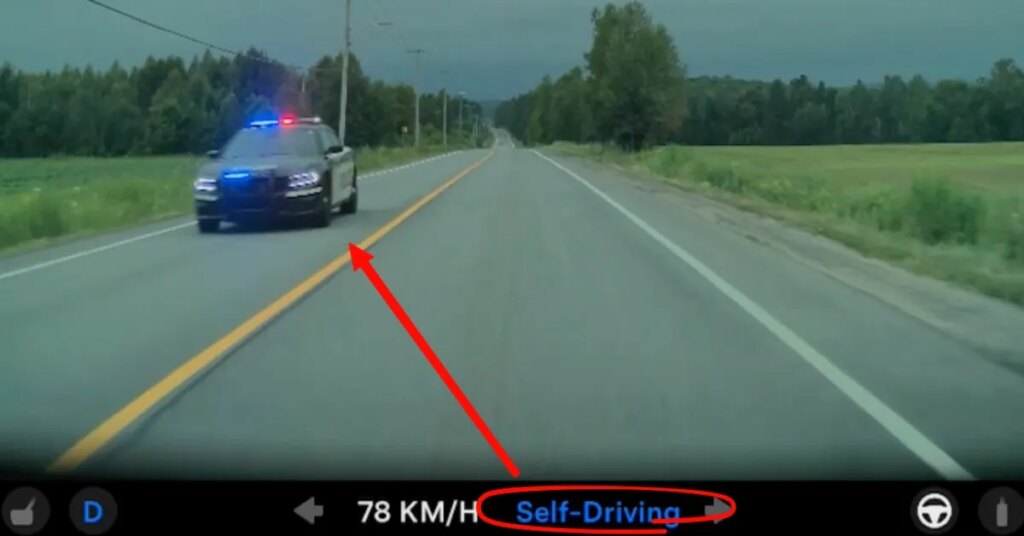
We’ve run into this ourselves. FSD gave us a speeding ticket in July after going 78 km/h in a 50 zone, and Tesla had removed the setting that would have prevented it. Belgium shows the same pattern. The software decides what speed seems appropriate and the driver pays for it, sometimes with a fine and sometimes with something much worse.
The Flemish government’s phrase that “the driver is 100% responsible” is an evasion. Regulators do not approve of the driver. They are approving the software and the software accelerated in most of the 30 areas tested.
If you drive an electric vehicle, the cheapest and cleanest miles are those you drive from your own roof. With electricity rates increasing nearly 10% last year and expected to continue rising, solar energy is one of the best ways to protect yourself against rising costs. And with leasing and PPA options, you can do it with no upfront cost and start saving right away. If you want to find the best deal, check out EnergySage. It’s a free service with hundreds of pre-vetted installers competing for your business, so you save 20-30% compared to going it alone. No sales calls until you choose an installer. Get your free quotes here. – advertisement*
FTC: We use automatic affiliate links that generate income. Further.