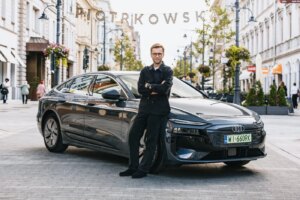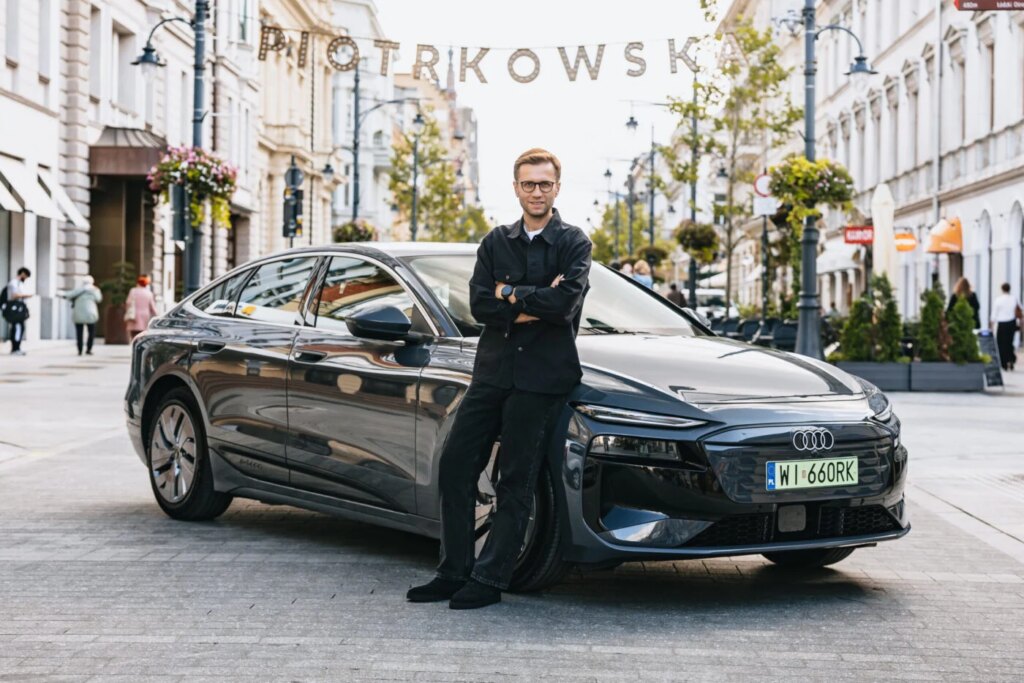
Normally, Miko Marczyk’s goal is to waste as little time as possible on the road. But for its latest outing in the Audi A6 Sportback e-tron Performance, the opposite was needed: accelerate, increase efficiency. On September 11 at 1:55 am, the Polish rally driver set out on a Guinness World Record attempt that took him along the Vistula River through Poland.
The route passed through Krakow, Sandomierz, Warsaw, Toruń and Grudziądz before reaching Hel on the Baltic coast, and then returning along the same route. But after more than 45 hours, the journey finally came to an end: between Toruń and Ciechocinek, after exactly 1,338 kilometers.
According to Audi, Marczyk was driving in regular traffic, even during rush hour, and was not allowed to recharge. The average temperature was around 15 degrees Celsius and early in the morning in Grudziądz it reached seven degrees.
The comparison with the standard range is surprising. The Audi A6 Sportback e-tron Performance officially offers up to 777 km according to WLTP. During the record attempt, he achieved an additional 561 kilometers.
Unsurprisingly, the key was not a secret second battery under the boot floor, but consistent efficiency on the part of the driver. Audi reports that energy consumption while driving was only 7.09 kWh per 100 kilometers. For comparison: The usable battery capacity of 94.9 kWh alone shows how far the car has moved away from typical daily consumption. Marczyk relied on the usual efficiency levers: constant speed, anticipatory driving, minimal unnecessary acceleration and braking, correct tire pressure and specific use of regenerative braking.
“The result of 1,338 kilometers was also a pleasant surprise for me,” says Marczyk. The record is attributed to the interaction between the transmission, the battery and low aerodynamic drag.
Aerodynamics prove their worth over long distances
Technically, the A6 Sportback e-tron is based on the Premium Electric (PPE) platform. The tested Performance variant features a battery with a gross capacity of 100 kWh and a net capacity of 94.9 kWh, as well as an 800-volt architecture.
For an attempt of such scope, aerodynamics will likely play an important role. The A6 Sportback e-tron achieves an aerodynamic coefficient (cW.) of 0.21, making it the most aerodynamic Audi production model to date, according to the manufacturer. At higher speeds, the proportion of air resistance in power consumption increases significantly. Audi claims that approximately 40 percent of the Sportback’s consumption is in the WLTP cycle.
Regenerative braking also contributes. The vehicle can recover up to 220 kW during deceleration. According to Audi, this allows around 95 percent of daily braking maneuvers to be carried out without using the mechanical brake.
However, this record should not be confused with a realistic new range figure. If you drive in the morning at 130 km/h, turn on the heating and want to have a ten percent charge at your destination, you will not travel 1,338 km with 94.9 kWh. But that’s not the point.
These record-breaking campaigns have less to do with daily testing and more to do with a technical stress test in the opposite direction. Instead of examining how much power an electric car can deliver, they explore how little power it needs under favorable conditions. That’s why the figure of 7.09 kWh/100 km is more interesting than just a kilometer count: it demonstrates the potential of aerodynamics, rolling resistance, regenerative braking and driving strategy when all factors work in the same direction.
This type of efficiency record is not entirely new for Marczyk. Already in March 2025, he traveled 2,831 kilometers on a single tank of fuel in a standard fourth-generation Škoda Superb with a 2.0 TDI engine. The average consumption at that time was 2.6 liters per 100 km. Now, it has transferred the same ambition to an electric car: this time, the focus was on extracting every last kilowatt-hour rather than maximizing kilometers per liter of diesel.
audi.com