There was a time when 750 watts seemed like a lot of power for an electric bike.
Nowadays, those are apparently rookie numbers.
Spend enough time browsing new e-bike releases and you’ll inevitably come across bikes advertising 1000W, 1500W, 2000W or even higher power. Dual-motor models have turned the spec sheet into an arms race, with manufacturers seemingly competing to see who can put the largest number on the product page.
In my opinion, the e-bike industry is developing a power problem.
To be clear, I am not against power. I’ve ridden everything from delicate 250W European bikes to electric motorcycles with enough power to rearrange your chest cavity. Powerful electric two-wheelers are fun, period.
But there’s a difference between building a powerful electric two-wheeler and pretending that every powerful electric two-wheeler is still an electric bike.
In the US, the widely adopted three-class e-bike system generally maxes out at 20 mph (32 km/h) for Class 1 and Class 2 e-bikes and 28 mph (45 km/h) for Class 3, with some minor exceptions, and 750 watts has long been a common benchmark for motor power limit.
However, if you search for e-bike retailers online today, you will find many machines advertised with motors exceeding that figure, often capable of reaching speeds well beyond normal e-bike ratings.
Sometimes there is a disclaimer explaining that the bike is designed for “off-road use.” Sometimes there is a software setting that supposedly limits you from riding on the street.
And sometimes people just squint at the pedals and agree to continue calling it an electric bike.
The problem is not that there are 2,000W two-wheeled electric vehicles. I love lightweight electric motorcycles and mopeds, or what some are starting to call ‘e-motos’, even though that terminology has its own problems. Those bikes sure are cool and there is a time and place for such power. The problem is that the industry seems increasingly afraid to call them what they are.
Part of the blame lies with consumers: with us.
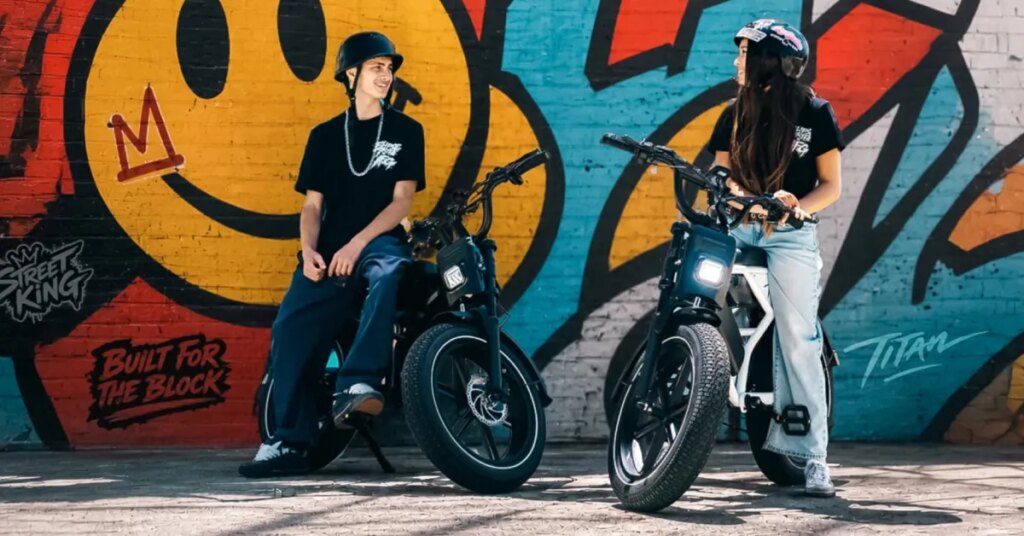
E-bike purchasing is increasingly based on spec sheets, with power providing an incredibly easy figure to compare. If ‘Bike A’ has a 750W motor and ‘Bike B’ costs the same but advertises 1500W, it’s easy to assume that ‘Bike B’ is twice as good. This is especially true for younger riders who lack a deeper understanding of how e-bikes work and just want something powerful and fast to impress their friends after school. They beg their parents to give them the latest models with the biggest engines and many parents relent.
The problem is that electric bikes don’t work like that: there’s a lot more to a bike than the rated power of the motor.
Motor design, driver current, battery voltage, thermal management, gearing, efficiency and software tuning influence performance. A beautifully tuned 500W or 750W system can be much nicer to drive (and sometimes more useful) than a poorly implemented motor that advertises twice the power.
But “excellent controller fit” doesn’t sound all that exciting in a giant font on an Amazon listing. Then manufacturers respond rationally based on what consumers demand: they increase the number.
The result is an e-bike power war that is ultimately hurting the entire industry.
When cyclists zip around bike lanes on high-performance machines marketed as “e-bikes,” pedestrians don’t care if the motor technically arrived in street-legal mode. Police officers will not inspect driver settings. And lawmakers aren’t known for tackling emerging transportation technology with surgical precision.
They see a fast machine with pedals, hear complaints about dangerous “e-bikes,” and start writing laws that affect everyone, including run-of-the-mill e-bike riders.
In my opinion, that’s the part that should concern anyone who enjoys riding an electric bike.
There is absolutely a place for high-powered electric two-wheelers. In fact, I want more of them. Lightweight electric mopeds and motorcycles could replace a huge amount of car travel using a fraction of the energy and space. These are high-capacity machines, but they need to be used properly, legally registered, and driven responsibly.
And we don’t help that cause by pretending they are bicycles.
Maybe the e-bike industry’s next big innovation won’t need another 500 watts.
Maybe I just need a little more honesty about what we’re really building. So let’s build more electric bikes. And yes, let’s build more electric motorcycles and electric motorcycles. But let’s not confuse them either.
FTC: We use automatic affiliate links that generate income. Further.