When people first learn the process, they naturally make mistakes and create defects. They need practical experience to improve.
The training itself also consumes fiber optic material because people have to practice the actual manufacturing process.
Therefore, developing qualified personnel is another part of scaling production. The goal is to develop the skills necessary to produce consistently high-quality reels with as few defects as possible.
Ars Technica: What makes it technically difficult to manufacture a fiber optic spool?
Oleksiy: You need to understand a lot about the fiber itself, about the winding process, and about what happens when the fiber unwinds from the spool during operation.
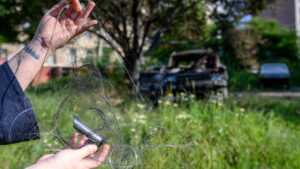
Fiber optic cable is fragile and can be damaged or broken relatively easily. If something goes wrong during manufacturing or while the fiber is unwinding, it can damage the fiber and lose the connection.
That is why practical experience is so important. The manufacturing process needs to be practiced, and that can require many miles of fiber just to train.
The equipment used for winding is also important. If you use low-quality equipment or the equipment is not set up correctly, you can introduce more defects into the finished reel.
Therefore, both the equipment and the people who operate it affect the quality of the final product.
Ars Technica: How automated is the print spooling process?
Oleksiy: It depends on the type of equipment. Some systems require more manual participation, while others are more automated.
But even with automated equipment, trained personnel are still needed. Someone has to set up the equipment correctly and understand how the process works. The way the system is set up also affects the quality of the finished product.
Therefore, automation does not eliminate the need for expertise.
Ars Technica: How do manufacturers test the quality of finished fiber optic spools?
Oleksiy: There are different levels of testing. Each finished reel should be checked to ensure the optical link is working properly.
But if you want to guarantee constant production quality, that is not enough. It is also necessary to take a part of the finished reels from a production batch, install them on real FPV drones and fly them in real conditions.
This allows you to test not only the optical connection itself, but also whether the finished reel works properly during a real flight.
Therefore, each reel must undergo link testing, while some of the finished reels from each production batch must also be tested in real flights. That combination is important if you want to maintain consistent quality in production.