Support CleanTechnica’s work through a Substack subscription, on Patreon, or on Stripe. Help us produce all the original, high-quality content we publish week after week despite the challenges of AI deleting content, anti-social media, inflation and other obstacles.
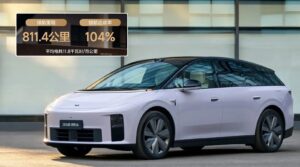
Li Auto’s new i6 electric vehicle looks very interesting. It makes me think of something out of some futuristic movie or The Jetsons. It certainly has an MPV (multi-purpose vehicle) design that is current in China, but not anywhere else. Anyway, apart from the futuristic and modern styling, the new i6 has excellent specifications and features.
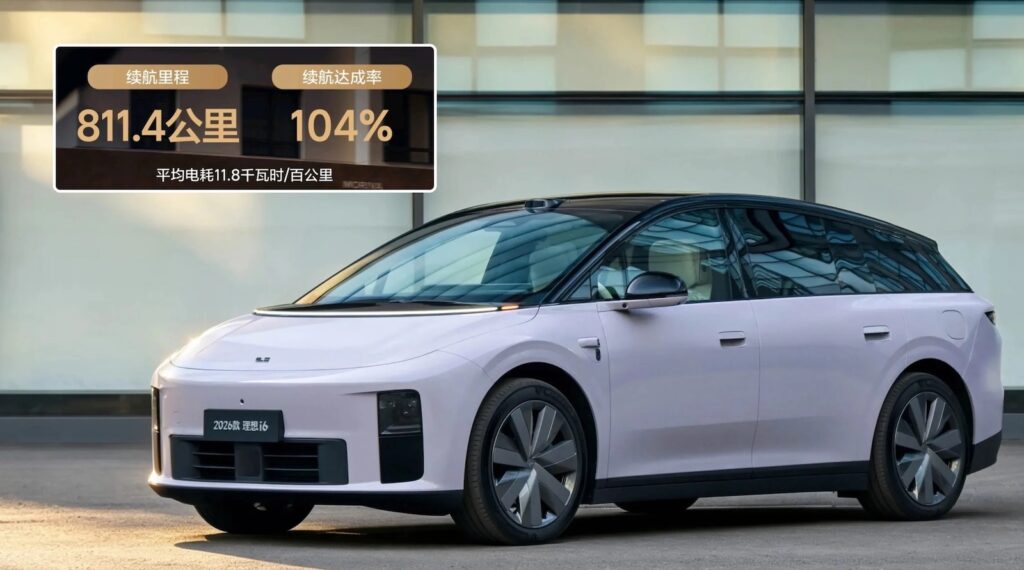
The i6 has a CLTC range of 780 km (485 miles), but the company recently livestreamed a drive in which the vehicle covered 811 km (504 miles) before reaching 0%. It consumed 11.8 kWh/100 km. The vehicle has a 96 kWh battery.
Interestingly, Li Auto has stopped using CATL batteries. It uses internal batteries that CALB and Sunwoda helped make. “Dian Dong Che Zhu RenA Chinese automotive outlet reports that this design change allows the i6 to carry an additional 3 kWh of cells. “It also claims that Li Auto’s latest SiC power modules feature revised current paths that reduce operating losses and add 30km of winter driving range.” CarNewsChina writes.
“The Lian Shan battery with 5C charging capacity is likely to be launched into Li Auto’s existing lineup, and the automaker is also betting big on its safety capabilities. It promises that Lian Shan packs will never ignite or burn in collisions, and like Xiaomi’s Dragonscale batteries, Li Auto is offering a free new car if they do.”
As far as the endurance test goes, it wasn’t one of those intense hypermiler attempts. It included realistic use of the car. “Li Auto says he conducted the test around Lake Tai (Taihu) in the Yangtze Delta, with temperatures between 13 and 20°C. The i6 carried four occupants, their luggage and 50 kg of additional luggage. The automaker notes that the air conditioning was on during the 18-hour trip.” CarNewsChina duck. Driving occurred in urban traffic conditions with speed limits between 40 and 80 km/h. So yes, the car went much further than it would have on the highway by driving much faster. Also note that the car did not stop when it reached 0%. So they simply stopped the test, without pressing to see how far the battery buffer would take them from 0% to dead point.
Sign up for CleanTechnica’s Weekly Substack to get in-depth analysis and high-level recaps from Zach and Scott, subscribe to our daily newsletter, and follow us on Google News.
Do you have any tips for CleanTechnica? Do you want to advertise? Want to suggest a guest for our CleanTech Talk podcast? Contact us here.
Subscribe to our daily newsletter to receive 10-15 new cleantech stories per day. Or sign up to receive our weekly newsletter on the week’s top stories if the daily grind is too much.
CleanTechnica uses affiliate links. See our policy here.
CleanTechnica Comment Policy