Support CleanTechnica’s work through a Substack subscription, on Patreon, or on Stripe. Help us produce all the original, high-quality content we publish week after week despite the challenges of AI deleting content, anti-social media, inflation and other obstacles.
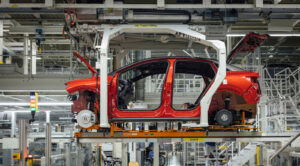
The Volkswagen Group is desperate to cut costs. In 2023, the company made an operating profit of €22.6 billion, but by 2025, that figure had dropped to €8.9 billion. 2026 may be half of that. In the current market, it has more manufacturing capacity in Germany than it needs, which has led to a proposal to close up to four of them and reduce its national workforce by 50,000. Globally, it plans to eliminate up to 100,000 jobs over the next four years. It expects its austerity plans to generate €20 billion in savings across its value chain by 2030, while reducing overall costs by €11 billion. It reportedly plans to stop manufacturing half of its existing models.
On September 30, 2026, the Volkswagen Group announced that it would end many of the pay provisions it agreed in December 2024 with IG Metall, the union that represents many of Volkswagen’s workers. According to Reuters, the rescinded provisions included wage agreements covering more than 100,000 workers at Volkswagen’s main factories in Germany. Those agreements govern aspects such as work hours and vacation pay, provisions that IG Metal considers benefits it won for workers after long and often contentious negotiations with the company.
The last time Volkswagen canceled parts of its collective bargaining framework with the union was in September 2024. That triggered a wave of strikes that culminated in a historic labor agreement in December 2024 that included 35,000 job cuts. Part of that agreement provided that either party could revise the terms of the agreement if there was a material change in circumstances.
The company says its deteriorating finances justify its decision to cancel previously agreed pay arrangements. Human resources chief Arne Meiswinkel said management was acting to ensure the company remained prepared for the future. “We must continue to work on our cost structures,” he said. Finalizing the agreements “gives us room to negotiate, so that we can then agree on the necessary measures.”
Despite this justification by the company, the union and workers are furious. IG Metall representative Thorsten Groeger thundered: “This is a despicable blow to the workforce. We will not accept it. Anyone who tries to reach into employees’ pockets should expect a fight.”
IG Metall is contractually obligated not to strike at the company until January 1, 2027, but is rattling its sabers and warning that strikes will begin as soon as that deadline passes if the company’s plan not to honor the 2024 agreement is not terminated by October 31. “We give the company until the end of October to withdraw this termination notice,” Thorsten Groeger said in Hanover, where unions and management met for a new round of talks last year. week. “Otherwise a massive process will be set in motion which, let me make it clear, will pave the way for industrial action at Volkswagen.”
“The economic situation has deteriorated dramatically since the collective agreement for the future in 2024 was concluded. This creates an urgent need for action,” said Arne Meiswinkel after both sides met in Hanover last week. After that meeting, the works council said that the company’s executive board plans to freeze the salaries of 660,000 employees worldwide until 2030. The union is not amused. “We know what operating conditions have changed, but we also know what was foreseeable, and we hope that the highest paid board of directors in this country will work with us to find a solution,” said works council head Daniela Cavallo.
The two sides agreed to begin collective bargaining talks in Emden on November 24, with a second round of negotiations scheduled for December 15 in Zwickau. In a blog post, the company said its priorities are:
- maximum use of voluntary exit options.
- As an additional measure, the creation of transfer companies that can qualify for public financing. Employees can join these companies to open up new prospects on the labor market, for example by acquiring additional qualifications. The company’s goal is to manage these changes in a way that offers employees insights, options and support for their next steps.
- a reduction in labor costs.
If the second point sounds like a way to shift some of the company’s financial burden onto German taxpayers, you may be on to something.
“[This] The far-reaching transformation program sets out a course of action for the Group and its subsidiaries to adapt to the changing conditions of the automotive industry. In essence, there is a more agile product portfolio, firmly focused on customers and markets, and an organization realigned accordingly,” Volkswagen’s blog post said.
Audi eyes Georgia
While all this is happening in Germany, the Volkswagen Group’s Audi division is about to begin construction of a new factory in Georgia. Of course, the so-called president couldn’t resist taking all the credit, but there’s no doubt that the punitive tariffs he imposed on German-made cars have hit both Audi and Porsche in the form of lower sales. BMW and Mercedes have had assembly plants in the United States for years, but Volkswagen currently builds only the Atlas SUV at its Chattanooga factory. Volkswagen has had limited success making cars in the United States since it acquired a former Chrysler factory in Westmoreland County, Pennsylvania, in the 1970s.
According to the New York Times, Audi will invest $4 billion to build a factory south of Macon, Georgia. When completed, it will have the capacity to manufacture 200,000 cars per year. Clearing and leveling of the land where the factory will be built is expected to begin this year, with production planned for 2031. Audi will produce sport utility vehicles at the new factory, said Audi CEO Gernot Döllner.
BMW and Mercedes-Benz, Audi’s main rivals, have long had factories in the United States (BMW in South Carolina and Mercedes in Alabama) where they mainly produce sport utility vehicles. Given the transactional nature of today’s U.S. ayatollah president, the Volkswagen group can expect some relief from current tariffs on its cars in exchange for investing in a new factory.
Back in Germany, Volkswagen workers and their union may not be too happy that the company is talking about closing factories there while investing in new factories elsewhere. The parent company is also financing a new factory in South Carolina, where it hopes to build “robust” electric and plug-in hybrid vehicles to compete with the Ford Bronco and several Jeep models.
It’s clear that Volkswagen is in desperate trouble in Germany, but no one is suggesting that it can’t survive this emergency, at least not yet.
Sign up for CleanTechnica’s Weekly Substack to get in-depth analysis and high-level recaps from Zach and Scott, subscribe to our daily newsletter, and follow us on Google News.
Do you have any tips for CleanTechnica? Do you want to advertise? Want to suggest a guest for our CleanTech Talk podcast? Contact us here.
Subscribe to our daily newsletter to receive 10-15 new cleantech stories per day. Or sign up to receive our weekly newsletter on the week’s top stories if the daily grind is too much.
CleanTechnica uses affiliate links. See our policy here.
CleanTechnica Comment Policy