The Chair of Production Engineering for Electric Mobility Components (PEM) at RWTH Aachen, together with several partners, first launched the ProMeBa research project in June 2026. The project will run until May 2029 and is carried out as part of a plan by the German Federal Ministry for Economic Affairs and Climate Action (BMWK).
Multilayer electrodes offer significant advantages, but are much more difficult to manufacture than conventional single-layer structures. ProMeBa therefore aims to demonstrate how such electrodes can be produced stably and reproducibly on an industrial scale. Layers with different structures are intended to improve ion transport, improve the mechanical stability of the electrode, and increase the performance and life of the battery.
Suitable materials and layer architecture for anodes and cathodes will be investigated early in the project. The focus will be on aspects such as the number of layers, the thickness of the individual layers and possible compositional gradients. The derived electrode concepts will then be implemented and characterized in the laboratory using tailored suspension formulations as well as coating and drying parameters.
Multilayer electrodes on the way to pilot scale
PEM is primarily responsible for the formulation and development of multilayer anode processes, as well as their characterization at laboratory scale. The knowledge acquired will later be transferred to a pilot scale.
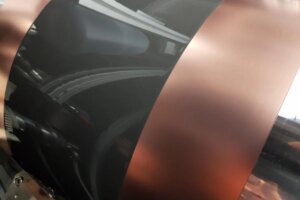
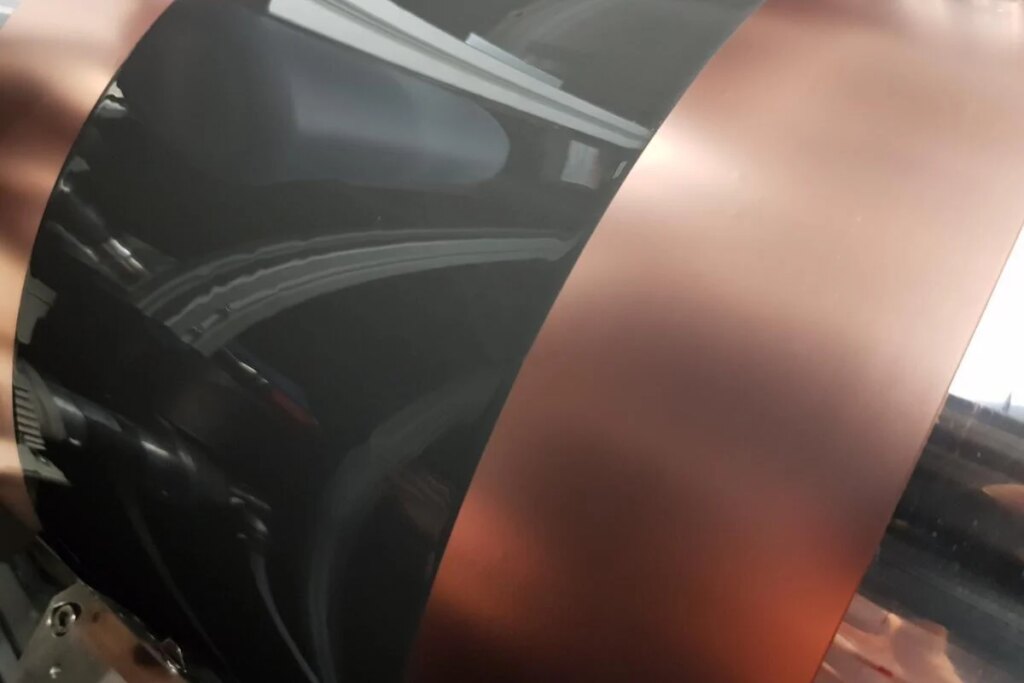
To do this, a modular coating module will be developed that can be integrated into existing pilot plants. Two processes will be examined under industrially relevant roll-to-roll conditions: multi-layer coating using a two-layer slotted die and multi-layer curtain coating. The decisive factor is which solution combines high coating quality, stable process conditions and good scalability.
In parallel, an online measurement technique for the continuous determination of the viscosity of electrode slurries will continue to be developed. This is intended to detect deviations in the process at an early stage and ensure reproducible quality of the electrodes.
The fabricated electrodes and test cells will also be examined electrochemically. This should provide information on the performance, stability and lifetime of the developed multilayer structures.
The project coordinator is Netzsch-Gerätebau GmbH. In addition to PEM, other partners include the ISEA Chair at RWTH Aachen, Fraunhofer IKTS, the iPAT Institute at the Technische Universität Braunschweig and 8inks Germany.
The industrial added value lies mainly in the fact that ProMeBa not only develops new electrode structures, but also considers their manufacturing from the beginning. The project partners aim to create a “drop-in” technology that allows for the selective expansion of existing production infrastructures, rather than building completely new production lines for multilayer electrodes.
ProMeBa thus joins a series of research projects that more closely link materials development and industrial scaling. For example, the AIT-led MoSiLIB project is working on a composite anode made of silicon and tin sulfide, while also investigating the semi-industrial scale of the synthesis and manufacturing of water-based electrodes. While MoSiLIB primarily develops new anode materials, ProMeBa focuses more on the question of how complex electrode architectures can be reproducibly integrated into existing production processes.
pem.rwth-aachen.de