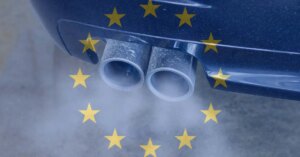
Amid multiple historic fuel crises and a climate crisis that left tens of thousands dead across Europe this summer, the bloc is reportedly close to a deal that would allow its automakers to produce more of the vehicles that directly caused each of those problems.
Doing so would only ensure that its automakers are not prepared to compete against the country that is actually providing solutions to those problems: China.
In 2021, Europe announced a goal to phase out sales of new gas cars by 2035, in order to meet the overall goal of a 55% emissions reduction by 2030 and full climate neutrality by 2050.
These goals are important given the climate crisis the world is currently experiencing and how negatively it will continue to affect all living things on Earth until humans act to solve the problem we are causing. Governments cannot negotiate these effects: they are a matter of physics.
In particular, that climate crisis caused record heat waves that killed 35,000 people this summer alone on what used to be a traditionally temperate continent.
This crisis has been largely driven by the Western world’s overuse of resources, although Europe has made some progress in reducing the rate at which it pumps deadly emissions into the atmosphere. And the faster we fix it, the easier it will be to solve.
Cars are a major contributor to this crisis: in rich countries, transportation is the highest-emitting sector, and the majority of transportation emissions come from gasoline-powered personal vehicles. This means that they are also among the most important things to regulate, given their enormous effect.
But over the past two years, Europe has taken several foolish steps to relax those EV targets. And he’s looking to do another one.
Europe’s goals are not serious if they keep changing
The first was in March 2025, when the EU gave car manufacturers “breathing room” (ironically, polluting more of the air and therefore giving those of us who actually breathe, humans and all other animals, less breathing room) by reducing the amount of emissions reductions they would have to make in the short term.
Europe said at the time that “the [long term] the objectives remain the same”, but that did not last long.
Just nine months later, the EU reversed those targets, allowing automakers to continue making polluting vehicles after 2035, and requiring only a 90% emissions reduction instead of 100%. This 90% target was further diluted by an excess of optional credits, including permission for so-called “e-fuels”, which are not an ecological solution.
At the time, I argued that European regulations mean nothing if they change every time automakers clear their throats, suggesting:
Since Europe has shown that it can change its mind every nine months on regulations that were supposed to last 14 years, perhaps within nine months it can return to the initial regulations that should have remained in place anyway.
And here we are, ten months later, almost as if on cue, and… the automakers have supposedly complained other relaxation of regulations. Just the kind of regulatory whiplash that makes every goal meaningless, because companies know they can cry a little and change it, as always.
France and Germany want other 10% of pollution
Clean Energy Wire reported this week that France and Germany have reached a deal that would reduce emissions reductions to 80%, from the current 90%, and once again weaken interim targets, such as in the “breathing room” announcement.
Previously, France had opposed Germany’s proposal to relax car rules (at the behest of its large car industry) and Germany had opposed French demands to “Buy European”, but now the countries have agreed to back each other’s proposals and will present them to the EU on October 15. Six other countries opposed easing car rules, but with France switching sides, the vote is likely to further pollute European air.
The measure could also have repercussions outside Europe’s borders. Europe is currently trying to pressure the UK to impose a tariff on Chinese electric vehicles, as a requirement for the UK to join the “Buy European” deal and allow its products the same preferential treatment in the EU market.
The UK has so far not applied tariffs on Chinese EVs, making EVs cheaper than petrol vehicles in the country and BEVs the most popular powertrain there. If the UK joins the group, the EU could encourage it to slow down its own electric vehicle targets, something the UK government is already considering.
“Market conditions” suggest targets should strengthen, not retreat
Previous iterations of these rollbacks have used the excuse that they are simply trying to even out “market conditions,” suggesting that EV sales were not increasing as quickly as expected.
But not only did EV sales hit the target then, Europe leads the world in EV sales growth now.
So what’s the excuse now? If you change your mind every 9 months and market conditions have shown that your last pullback was the wrong move, what is the current response? another reversalinstead of a more reasonable answer of going back to the original rules in the first place?
Furthermore, “market conditions” are not the reason for these objectives. They were set 14 years in advance not because anyone knew what market conditions would be like in 2035, but because it’s the government’s job to get everyone on the same page about the big, long-term issues facing society.
Reducing oil use, solving climate change and maintaining domestic high-tech manufacturing are the priorities of the government, which does not react to its quarterly reports.
It is absurd that we are talking about this during multiple oil wars.
And if we consider current “market conditions”, EVs are a perfect match for the market conditions of the multiple (self-inflicted) crises facing global oil markets.
One such crisis is an ongoing war of aggression in Europe, perpetrated by Russia and financed by oil, the country’s main export (well, until Ukraine started blowing up oil refineries). Since oil is a global market, every oil-burning vehicle sold in Europe keeps the price of oil afloat and finances war within its borders.
Because of all those oil crises, the price of oil is quite high right now. It seems like a good time to learn the lesson that it is a bad idea to depend on this resource that everyone has known about for decades and that we should stop depending on it.
Which, by the way, is short term and a long-term consideration at the moment, so it is ripe for everyone to come together around a solution that involves less oil, no furtheras Germany and France plan to propose.
China is taking advantage of all this.
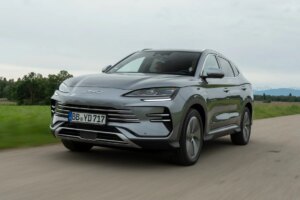
And what actually is Is it increasing in popularity in European markets at the moment? It’s not about European EVs, as automakers are wrong to cancel models and cut investments in EVs. It is Chinese electric vehicles that are rapidly gaining share.
They’re gaining share because the Chinese auto industry isn’t going through all this nonsense of complaining about having to make electric cars, it’s just making them. As a result, it is making them cheaper and better than the European ones.
This has led to sales of Chinese electric vehicles continuing to skyrocket in Europe and around the world: China is making tons of money from these exports, and the rest of the world’s auto industries seem content to let them have it.
And if Europe proves that it will once again relax its targets at the slightest hint of complaint from its automakers, its automakers will continue down the same path they are on, refusing to acknowledge the reality of the world around them, refusing to offer the products needed to reduce current problems, and end up falling even further behind the rising Chinese rivals that are currently eating their lunch. Tariffs won’t help, only waking up will. So enough with these stupid setbacks.
Charge your electric vehicle at home using rooftop solar panels. Find a reliable, competitively priced solar installer near you at energywisefree. They have pre-vetted installers competing for your business, ensuring high-quality solutions and 20-30% savings. It’s free, with no sales calls until you choose an installer. Compare personalized solar quotes online and receive guidance from unbiased energy advisors. begin here. – advertisement*
FTC: We use automatic affiliate links that generate income. Further.