

a new method manages to transform them into clean hydrogen
A team of researchers from Ewha Womans University (South Korea) has just presented a new low-emissions technology that is capable of recycle mixed plastic wastewithout the need to separate them previously, to convert them into green hydrogen.
The scientists have presented the results of their work in the scientific journal Proceedings of the National Academy of Sciences, where they explain the keys to this scalable and sustainable method that could help solve two of the main environmental challenges: the treatment of plastic products at the end of their useful life and the production of clean energy.
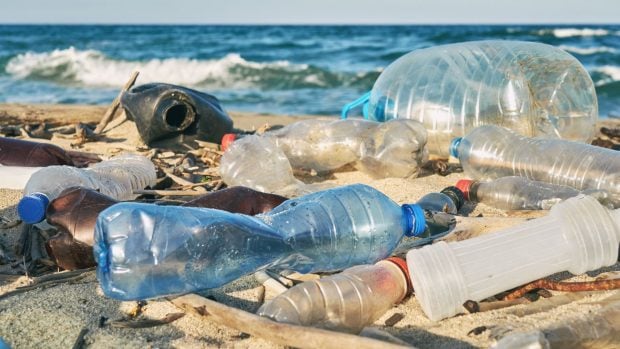
At the moment, Only 9% of plastic waste worldwide is recycled, while 79% accumulates in landfills and 12% is incinerated. All of this causes a worrying problem of environmental pollution. “Consequently, the development of sustainable and efficient plastic waste recycling technologies is an urgent priority,” the researchers warn.
Different plastics
One of the main obstacles to achieving this goal is precisely that many plastic products They are made with different types of polymers.
When recycled, plastics are heated to be melted and made new materials. The problem is that each polymer has a different melting point and characteristics, so when processed together, the material obtained loses quality and limits its reuse to manufacture new products.
energy vector
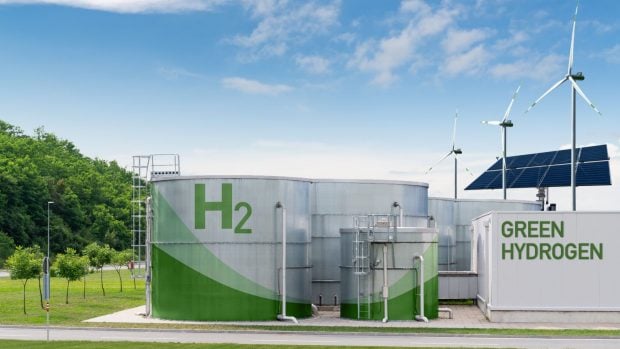
For its part, hydrogen is called to play a fundamental role in the energy transition. We must clarify that this is not an energy source that we can extract directly from nature, like oil or gas, but rather a energy vector that it is possible to produce and store it for later use as fuel or to generate electricity.
The truly disruptive thing is that hydrogen can be obtained in different ways: from natural gas, through a steam reforming process; either thanks to the electrolysis of waterusing electricity from renewable sources, so it hardly generates greenhouse gas emissions during its production.
Pyrolysis and gasification
Another option is to produce hydrogen using plastic waste. For this, thermochemical processes are usually used such as pyrolysis and gasification. The first consists of heating plastics in the absence of oxygen to decompose them and obtain oils, gases and carbon.
Although it generates less CO₂ emissions than other treatments, it usually requires prior separation of the different types of plastic, as well as a later refining to obtain quality products.
High temperatures
Gasification, for its part, subjects the waste to very high temperatures in the presence of a controlled amount of oxygen or water vapor to produce a synthesis gas rich in hydrogen and carbon monoxide.
Its main advantage is that it can process plastic mixtures without the need for exhaustive classificationwhich makes it a more viable option from an industrial point of view.
The biggest drawback of gasification is that the extreme temperatures it requires end up involving a high energy consumption and the generation of carbon dioxide emissionsin addition to relying on additional gas cleaning systems to eliminate impurities.

Alkaline heat treatment
Faced with these limitations of the usual procedures, the team from the Korean university, led by Professor Woo-Jae Kim, from the Department of Chemical Engineering and Materials Science, has developed a process of alkaline heat treatment (ATT) to convert common mixed plastics, such as polyethylene terephthalate (PET), polyethylene (PE), and polypropylene (PP), into high-purity hydrogen.
As its name indicates, alkaline heat treatment combines the application of heat with the use of alkaline substances to facilitate the decomposition of plastics. In this case, researchers use sodium hydroxide, a substance better known as caustic soda.
And the high alkalinity of caustic soda makes it a very corrosive and chemically very reactive substance. These properties favor the breaking of some of the bonds that hold together the long molecular chains of plastics, allowing materials to decompose which are otherwise very resistant to degradation.
Less energy and carbon
What this new technology achieves is to transform both individual plastic waste and mixtures of different plastics into high purity hydrogen, without the need to separate them previously.
Furthermore, it does so at temperatures and pressures much lower than those used in conventional gasification, thereby reducing energy consumption and carbon dioxide emissions associated with the process.
Wasted biomass
In previous studies, Professor Kim’s team also developed the technological capacity of alkaline heat treatment processes to produce hydrogen from discarded biomass.
Researchers have shown, for example, that it is feasible to transform seaweed, wood scraps and rice husks into high purity hydrogen and virtually no carbon dioxide emissions through ATT processes.