

After 40, walking is not enough, you have to “do a little Pilates and train hard”
Today we have very interesting news. The debate about how to care women’s health after 40 has gained strength in recent weeks, after the coach Isabel del Barrio shared on social networks a reflection on the importance of adapting exercise habits to the physiological changes associated with perimenopause and the menopause.
Isabel del Barrio maintains that walking or practicing “a little Pilates” It is no longer enough for many women and it is necessary to incorporate strength training in a structured way. Before continuing we must make one thing clear: not all cases are the sameit is important to listen to your body before making a decision.
The substance of the debate puts on the table a reality widely supported by health and physical exercise specialists: the body undergoes important changes starting from the fourth decade of life and these require different strategies to care for muscle mass and bone health.
Finding a balance: the key to success
In recent years, self-care has gained importance. However, many specialists warn that there is a very fine line between encourage healthy habits and convey the idea that any result depends exclusively on individual willpower.
Reality shows that numerous factors are beyond people’s control. A bad night’s sleep caused by heat, caring for a sick family member, or hormonal alterations themselves can affect rest, decrease available energy during the day and make it more difficult to maintain a balanced diet or complete a planned workout.
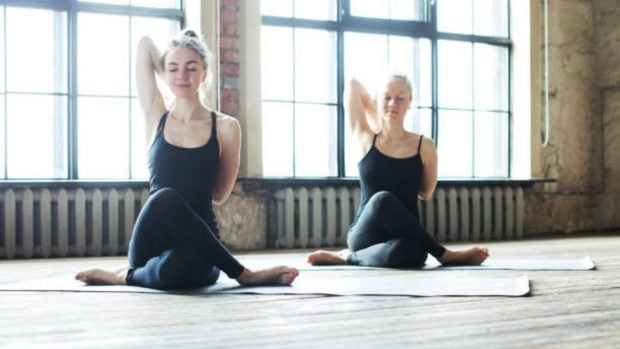 Two women doing yoga. (Photo: Instagram)
This type of situation does not necessarily imply a lack of commitment to health. On the contrary, they are part of a complex context that directly influences daily behavior. Therefore, many professionals They argue that understanding these circumstances is essential to prevent personal care from becoming a permanent source of frustration.
However, there is also another perspective that advocates not resigning ourselves to these inevitable changes. From this approach it is recognized that the hormonal scenario modifies the functioning of the bodybut it is insisted that there is still a wide margin for action to improve physical condition through appropriate habits.
The arrival of perimenopause
Isabel del Barrio He has spoken very clearly about perimenopause. The trainer recognizes that hormonal changes are complicated, but believes that they should not be interpreted as an obstacle when exercising.
As he says, age and physiological changes They alter the starting point, although he insists that this does not mean giving up on improving physical condition. The real challenge is to adapt the strategy to that new stage of life instead of maintaining the same habits that could have been enough years ago.
The scientific evidence suggests that the progressive decrease in estrogen favors loss of muscle mass and increases the risk of reduced bone density, two processes that can be slowed by appropriate strength exercise programs.
For this reason, Isabel del Barrio maintains that «In this time it is not that you have to take care of yourself very much“You have to take good care of yourself.” Along the same lines, he adds that “it’s not enough for us to go for a walk or do a little Pilates. You have to train hard and you have to train in an orderly, scheduled way. And the most important thing is to be very consistent.
Strength exercises
The recommendations of numerous specialists agree that walking continues to be a very beneficial activity for cardiovascular healthstress control and maintaining an active lifestyle. Likewise, disciplines such as Pilates provide improvements in mobility, stability, posture and balance.
However, when The objective is to preserve muscle mass and reduce the impact of hormonal changes on metabolism, strength training takes on a special role. Work with loads adapted to the capabilities of each person It helps stimulate muscle, contributes to the maintenance of bone mineral density and promotes more efficient energy expenditure.
Professionals also emphasize that it is not enough to lift weight improvisedly. Training planning, load progression and supervision by specialists are fundamental elements for obtain benefits and minimize the risk of injury.
Food and rest They complete this comprehensive approach. Proper nutrition provides the nutrients necessary to maintain muscle mass and facilitates recovery after exercise, while sufficient sleep is essential to regulate numerous hormonal processes related to metabolism and tissue repair.
In short, the magic formula is not just about following a rule. The key to success It is about carrying out a complete plan that combines everything that your body is demanding from you.