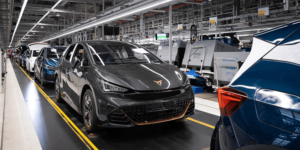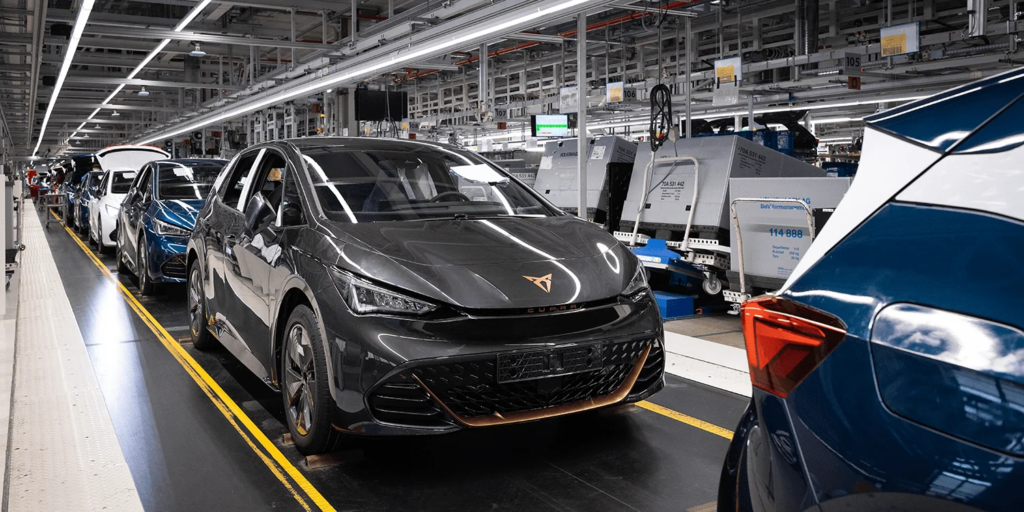
At the center of the procedure (Case No. 2 O 356/25) is a Cupra Born affected by a recall of its potentially defective battery (Campaign 93S4). According to the recall notice, certain battery modules may experience reduced battery life and trigger a warning light. Additionally, there is a risk of fire. In total, the recall announced in March 2026 affects almost 100,000 electric vehicles of the Volkswagen Group, specifically 74,579 units worldwide of the ID.3, ID.4, ID.5, ID.Buzz and ID.Buzz Cargo ranges, as well as 19,452 Cupra Born vehicles.
The plaintiff therefore intends to rescind the purchase of her Cupra Born and files claims with the Offenburg Regional Court against both the seller and Seat, Cupra’s parent company, as manufacturer.
In particular, the Regional Court explicitly cites Article 37 of EU Regulation 2023/988 (EU Product Safety Regulation) with respect to possible claims against Seat. This provision regulates corrective measures in the event of product recalls. Responsible companies must fundamentally offer affected consumers an effective, free and timely solution. As a general rule, at least two options should be available: repair, replacement with an equivalent safe product, or refund of the purchase price.
If a repair or replacement cannot be carried out within a reasonable time and without significant inconvenience to consumers, Article 37 provides for the right to a refund under certain conditions. Therefore, this regulation could also be relevant for owners of electric vehicles where a battery problem cannot be resolved quickly and permanently despite a recall.
However, the application of the regulation in this specific case remains to be clarified. It has only been in force since December 13, 2024. Therefore, whether and to what extent Article 37 applies to older vehicles and vehicle retirement scenarios is an important legal question.
There is still no decision on the return of vehicles
The order of the Offenburg Regional Court does not yet constitute a ruling. The court has limited itself to offering a preliminary legal evaluation. The defendants have until November 6, 2026 to respond. In addition to possible claims under EU law, the court also considers possible claims under sales law against the seller and claims under German product safety law.
For the consumer law firm Dr. Stoll & Sauer, which is handling the case, this could provide a legal basis for affected electric vehicle buyers, provided that the Offenburg regional court issues the corresponding ruling. The firm refers to two first instance rulings in favor of car buyers due to problems with Mercedes-Benz batteries. These cases involve recalls due to battery issues with the EQA and EQB. Today a Mercedes EQB caught fire while charging in Hamburg. According to NDR, the firefighters used a special extinguishing lance, with which the firefighters pierced the burning battery from the outside and then extinguished it from the inside.
However, this does not automatically entitle all owners of an electric vehicle affected by a battery recall to return their car. The decisive factors remain the specific danger, the applicability of the EU regulations and the corrective measures offered by the manufacturer. Termination of the vehicle purchase is likely to be considered primarily if the manufacturer is unable to remedy the defect within a reasonable time.
presseportal.de (DE), ed.de (DE)