According to orbital intelligence firm LeoLabs, a Russian military satellite maneuvered an unauthorized rendezvous in low Earth orbit in “extreme proximity” to a commercial Earth observation satellite in recent days, in the first known example.
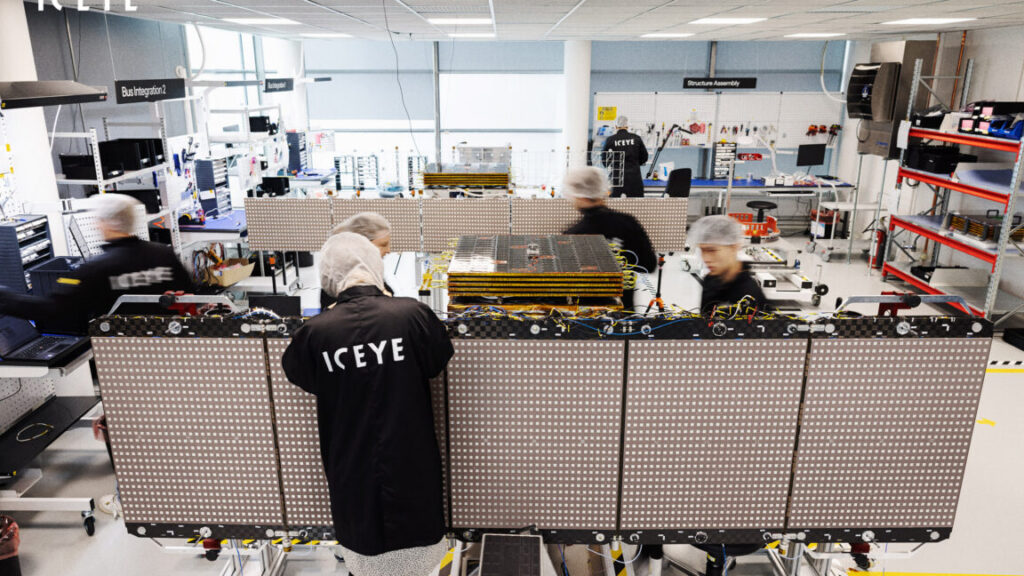
The Russian spacecraft Kosmos 2612 “performed a deliberate series of maneuvers toward ICEYE-X36, a U.S.-operated commercial imaging satellite,” LeoLabs said. “Kosmos 2612 approached ICEYE-X36 extremely close from hundreds of kilometers away. It then maneuvered around ICEYE-X36, stayed close for an extended period of time, and then began to move away.”
U.S. military officials and independent analysts have been tracking Kosmos 2612 since its launch in April on a Soyuz rocket from a spaceport in northern Russia. Within weeks, it emerged that at least four of the six satellites in this launch were tracking ICEYE-X36 after adjusting their orbits to match the orbit of the ICEYE spacecraft.
Russia’s way of working
The situation remained stable until last week, when Kosmos 2612 began moving rapidly towards ICEYE-X36. On Friday, Kosmos 2612 held its position two to three kilometers away before changing position in front of and behind the ICEYE satellite, LeoLabs said. The satellites were less than 500 meters (1,640 feet) apart over the weekend and “probably much closer,” said Adam Marsh, vice president of technical solutions at LeoLabs.
LeoLabs operates a global radar network to track objects as small as 2 centimeters, about the size of a marble, in low Earth orbit. The proximity of Kosmos 2612 and ICEYE-X36 “on occasion made it difficult to distinguish the two spacecraft independently,” LeoLabs said.
“This was not a routine conjunction or ‘flyby,'” LeoLabs said. “The sequence included a controlled approach, changes in relative position, loitering in close proximity, additional small maneuvers and a controlled departure. The behavior is consistent with demanding rendezvous and approach operations (RPO).”