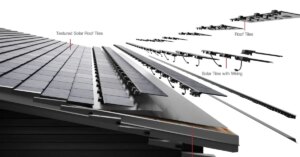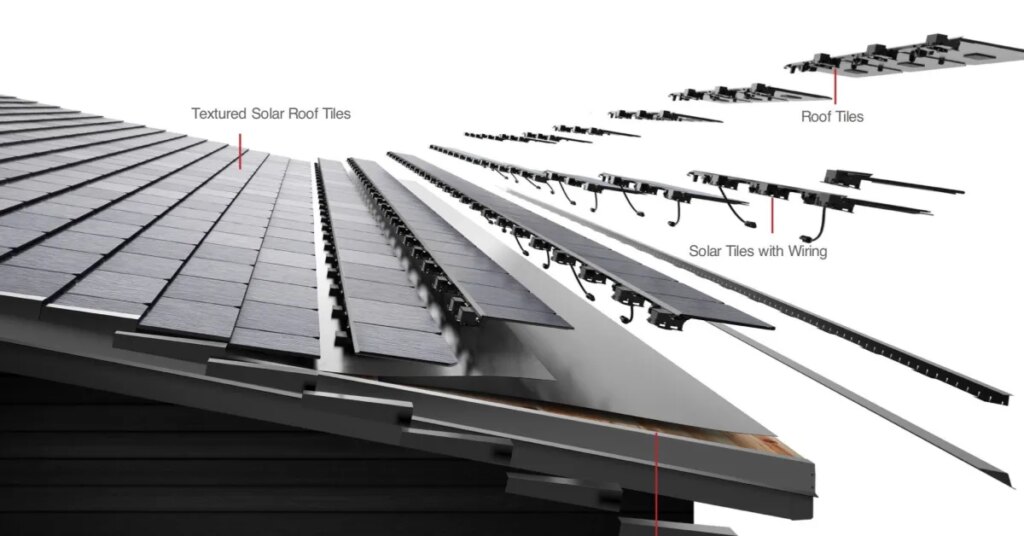
A California judge found Tesla liable for fraud in a Solar Roof lawsuit after the company repeatedly failed to present evidence. Tesla had already admitted that it breached the contract, the warranty and was negligent in the work.
The owner says repairing the damage will cost “more than $2.5 million.” Tesla once offered him $5,000.
the case is Conroy v. Teslafiled in 2022 in the North County Division of San Diego Superior Court (Case No. 37-2022-00043670). Electrek reviewed the court orders, complaint, and the parties’ joint trial preparation report. This is what they contain.
Tesla has already admitted its responsibility
Ambrose Conroy, who lives in Rancho Santa Fe, signed up for a Tesla solar roof in March 2020. The original contract was for $82,210 for a 13.1 kW system. As of February 2021, after two amendments, it had increased to approximately $110,000 for an 18.2 kW roof and six Powerwalls.
The roof was never finished. It never passed a county inspection and never produced a single kWh for the house.
Tesla no longer questions most of that. In the joint report filed by both sides last month, Tesla stipulated liability in three of the five claims.
In the other two claims, fraud and negligent misrepresentation, things went wrong for Tesla.
Two sanctions, then the big one
Judge Cynthia Freeland sanctioned Tesla twice for discovery before going further. He ordered him to pay $15,467.50 in February and another $13,500 in June, both times for failing to file an adequate privilege log and responsive documents, and both times warning that sanctions could be imposed.
Anyway, Tesla missed the next deadline. Then, on September 11, the court found Tesla liable for fraud and negligent misrepresentation, limiting judgment on those claims to compensatory and punitive damages.
The judge found “ample evidence supporting that the defendants have acted intentionally.” Among the missing records were Microsoft Teams messages (Tesla’s own corporate witness testified that they are preserved “for infinity”), OSHA logs, emails with San Diego County inspectors, and more than 20 quality, installation and safety reports from Tesla’s internal Bolt system.
She also wrote this:
Tesla asked him to reconsider, arguing that he had already produced everything since then. She said no in a ruling dated Oct. 27, writing that late documents could support Conroy’s theory that Tesla “knowingly used plaintiff’s home as an experiment knowing that they lacked the expertise to perform as promised.”
“Experimenting” at home and daily reports to Elon Musk
And the word “experiment” appears in Tesla’s own messages, according to the trial’s list of tests. Exhibit 224 is described as text messages from January 13, 2021 between Tesla Model Engineering Director Bobby Yang and other Tesla employees.
To be clear, this is how Conroy’s side describes the messages in the evidence list. We have not seen the texts themselves. But Elon Musk is on Conroy’s witness list, and internal emails cited in the complaint point in the same direction.
On February 9, 2021, Yang wrote internally that the house was in the “99.5th percentile in terms of complexity” and that “if we can do this job well, we should be able to do any job well.” RJ Johnson, then head of Tesla’s energy business, responded that the project would “skew the numbers” but that Tesla needed to “correct it.”
Then he added one more line.
Johnson was fired in April 2021. The roof had at least 59 assembly drawings and one employee called it the largest job Tesla had attempted at the time, according to the complaint.
A two-week job that never ended.
Conroy’s account of the installation reads like a list of everything that can go wrong on a roof. These are their accusations, but Tesla has now admitted breach and negligence.
The outage was supposed to last two days and it took two weeks. Tesla left in November 2020 with the roof deck uncovered and then had crews work overtime on Dec. 27 to get the foundation in place ahead of a storm. The shingles arrived scratched and damaged and went up to the roof anyway. Glass tiles shattered in the driveway and grass, and the family says they still can’t walk barefoot.
In March 2021, Johnson had agreed in writing that paying “when you are satisfied with the result is entirely reasonable.” Tesla’s billing department kept calling anyway.
In August 2021, an internal email weighed as soon as it left.
The project went through at least seven project managers. In November 2021, Tesla told Conroy that the people behind its repair plan were gone and that it had no one in the area to do the work.
In April 2022, Tesla offered $5,000 to fix everything.
It didn’t end there. In February 2025, more than two years after the lawsuit, Tesla failed another San Diego County inspection after showing up without plans for the ventilation system. And this summer, Conroy’s electrical expert opened part of the roof and concluded that the way Tesla ran wiring and conduits under the shingles created a short-circuit and fire hazard in heavy rain. The roof is now falling in. Tesla’s lawyers point out that even Conroy’s lawyer called that fire risk “counterintuitive.”
Tesla wants the Court of Appeal to intervene
Tesla is fighting hard against the sanction. In an Oct. 29 filing, he asked the court to freeze the case while he petitions the California Court of Appeals, arguing that the order is “unduly punitive,” violates due process and amounts to a directed verdict on fraud before trial.
Tesla also says the fight over the discovery had no connection to the fraud allegations and has now produced everything relevant. The judge already rejected that argument once.
The Nov. 20 trial date is canceled. A trial preparation conference is scheduled for Dec. 4 and Conroy’s attorneys want to go to trial in December.
This is not the first Solar Roof horror story on this docket. Conroy’s complaint attaches our 2020 report about a solar roof buyer who was left with tarps over his home after Tesla tested an untested subfloor on his home. It also cites a 2025 California Contractors State Licensing Board action that seeks to revoke Tesla contractor licenses over abandoned solar roof jobs.
Electrek’s opinion
What a nightmare. This is the most damaging Solar Roof case I’ve ever seen, and I’ve been covering this product since Elon Musk introduced it on a Universal Studios backlot in 2016.
A failed installation is not new in itself. Tesla only installed about 3,000 of these roofs before phasing out the product this year, and many of them went awry. What’s different here is the paper trail: internal emails calling a customer’s home to test whether Tesla could do “any work,” texts describing the job as an “experiment” with daily reports sent to Musk, and then years of Tesla not turning over its own records until a judge ran out of patience.
And Tesla’s response to all this was $5,000.
Look, it’s normal for things to not go as planned with a new product, and early adopters need to be flexible. However, here we are literally talking about the roof over someone’s head and a billion dollar company. Tesla could and should have gotten this right a long time ago.
The issue of sanction may not survive the Court of Appeals. Courts don’t like to decide fraud through discovery orders, and Tesla’s due process argument is not frivolous. But even if it is reversed, Tesla still admitted that it breached the contract and was negligent, and the jury will see how this customer was treated.
This also says a lot about how Tesla ran the Solar Roof business. He sold a product he knew was difficult to install, into homes he knew were complex, while the people running the program kept leaving. Conroy’s house was one of the worst cases, but installers are still dealing with the fallout from Tesla abandoning the product earlier this year.
The real question is what is in those Teams messages and texts that Tesla fought so hard to keep out of this case. If this goes to trial in December, we might find out.
Solar Roof was supposed to make solar energy effortless. For most homeowners, conventional panels from a reputable local installer are the safest bet. With electricity rates increasing nearly 10% last year and expected to continue rising, solar energy is one of the best ways to protect yourself against rising costs. And with leasing and PPA options, you can do it with no upfront cost and start saving right away. If you want to find the best deal, check out EnergySage. It’s a free service with hundreds of pre-vetted installers competing for your business, so you save 20-30% compared to going it alone. No sales calls until you choose an installer. Get your free quotes here.
FTC: We use automatic affiliate links that generate income. Further.