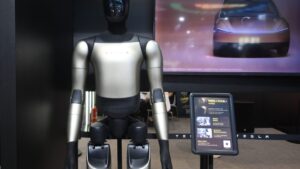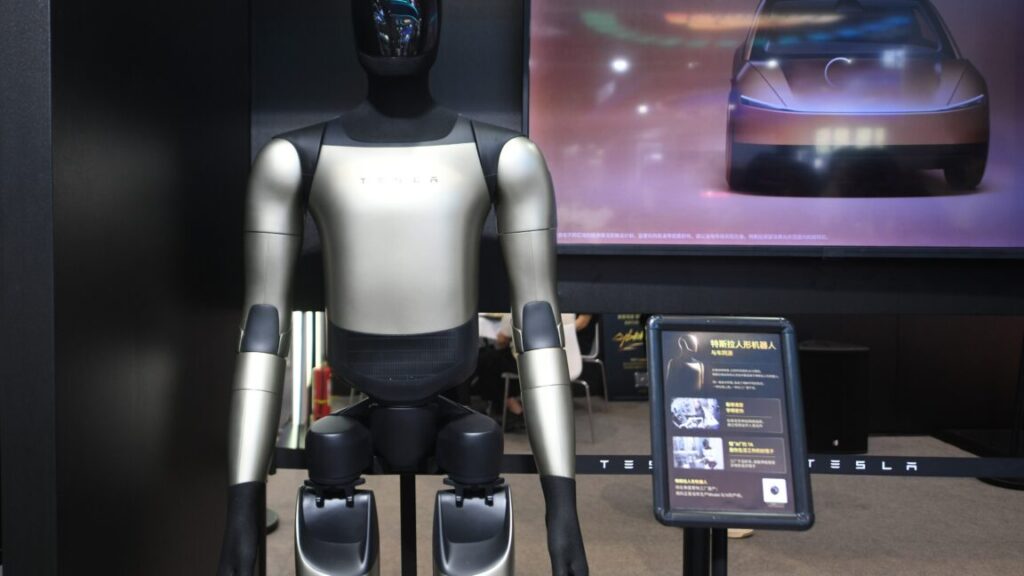
The imperfect and manual-intensive manufacturing process has resulted in newly produced robots that require immediate repairs. The touch sensors for the robot’s hands have also proven to be unreliable enough that Tesla has developed a glove-like layer of sensors that can be replaced without replacing the entire robot hand.
The robot’s AI capabilities reportedly remain insufficient for general-purpose operations, which is not surprising given the challenges every robotics company faces on that front. Instead, one of The Information’s sources described that Tesla’s Optimus robots currently require programming to perform specific tasks in carefully controlled environments.
One of the biggest challenges facing all robotics companies is obtaining enough training data to help robots visually learn a wide variety of manual tasks. The heavy reliance on imitation learning led Tesla to have factory workers in Texas and California wear special suits designed to record their physical movements as they worked.
However, The Information described some workers complaining because “they knew the robots were designed to eventually replace them.” So Tesla has apparently transferred responsibility for data collection to dedicated teams and has also set up “training centers” for said teams.
Competition to manufacture robots.
The information also highlights Tesla’s continued dependence on Chinese suppliers to manufacture various robot components. The Information previously reported on Silicon Valley startups bringing robotic parts from China to the United States in their luggage.
The U.S. robotics industry’s supply chain dependence on China has persisted even as the Trump administration attempted to boost domestic supply chains and robotics production. In July, the Federal Communications Commission banned new foreign-made robots, such as humanoid robots and four-legged robot dogs, along with robot vacuum cleaners.
Many of the challenges reported by Tesla in manufacturing humanoid robots are not unique. But that may be little consolation when Tesla also faces stiff competition on multiple fronts, as automakers in China, Japan and South Korea are also developing humanoid robots, not to mention robotics companies dedicated to the pursuit of humanoids. Toyota plans to invest billions of dollars in upgrading factories with robots, including some humanoids, while Hyundai plans to deploy up to 25,000 Atlas humanoid robots developed by US subsidiary Boston Dynamics over the next few years.
One of the companies that has made the most progress in commercially deploying humanoid robots is Oregon-based Agility Robotics, which first put them to work in an Atlanta-area warehouse owned by GXO Logistics in 2024. But the overall business case for humanoid robots still needs to be proven through more sustained and profitable deployments, not to mention proving that such robots can work safely around humans.