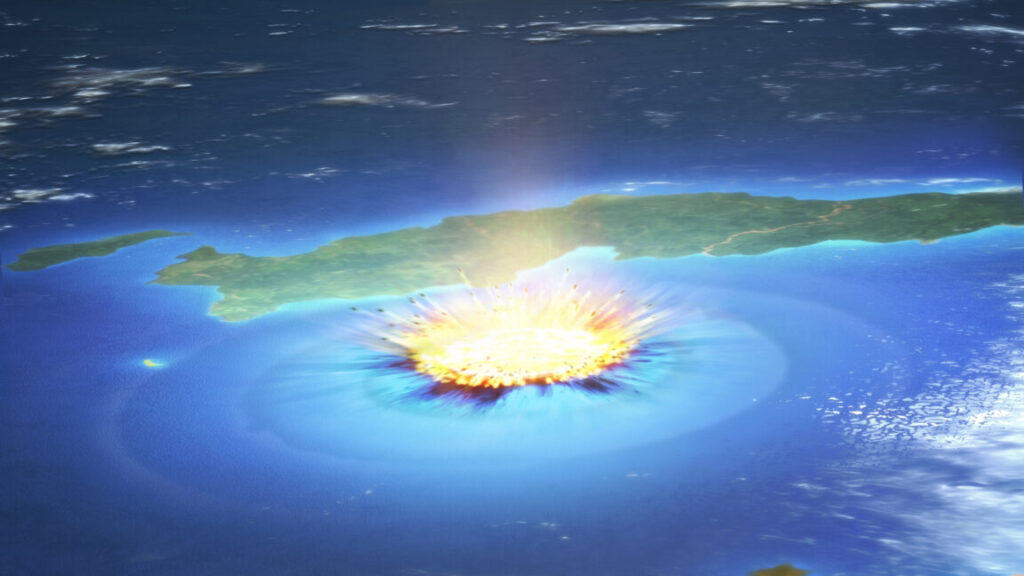
“Longer periods of hydrothermal activity will create extended windows of opportunity for prebiotic chemical reactions to occur, life to develop, and microorganisms to thrive and multiply beyond their point of origin,” Pickersgill said in a study published in Communications Earth & Environment.
Fathoms beneath us and eons ago
All over the planet there are hydrothermal systems that were created by other influences. Although these systems are considered habitable because of the heat and nutrients, signs of life are difficult to find, and it is even more difficult to link the timing of an impact to processes that helped life thrive. Microbes were found to colonize only eight of the 70 underwater impact craters with hydrothermal activity.
What Pickersgill and her team wanted to find out was whether the Chicxulub impact could have created habitable conditions, so she analyzed rock samples to find out when habitability was most likely. The work does not answer whether the hydrothermal system in this crater was actually inhabited.
The researchers examined how long the impact crater produced temperatures and additional conditions that would have been ideal for attracting and sustaining life. Living conditions that persist over a longer period of time allow more time to attract organisms that form colonies around a hydrothermal vent.
To determine the duration of the Chicxulub hydrothermal system, Pickersgill took samples from the site and drilled 1 km down. She then took radioisotope measurements on feldspar samples recovered from the site. Feldspar contains potassium, and the decay of this potassium into argon can reveal how old the rock is. Moon rocks and volcanic formations have been dated this way.