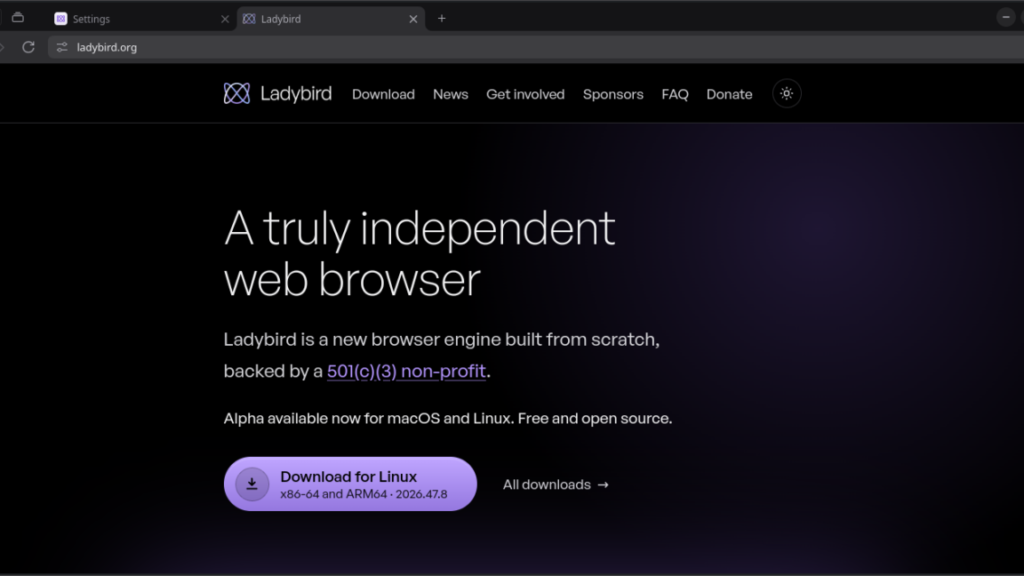
After four years of work to build a browser engine from scratch, the Ladybird project released its first downloadable alpha on November 23, offering pre-built versions for macOS and Linux. Previously, curious users had to compile the browser themselves from its source code. It is now an installable package with automatic updating.
Ladybird stands out for what it is not: another browser fork. While Chrome, Edge, Brave, and Opera run on Google’s Blink engine and Firefox relies on Gecko, Ladybird’s rendering engine and its LibJS JavaScript engine were written from scratch. “The engine is ours, built from scratch, not a fork,” wrote project leader Andreas Kling in Monday’s announcement. “The surrounding browser is modest, but functional.”
A fourth engine
Almost the entire modern web today runs on three browser engines. There’s WebKit (Safari), Gecko (Firefox) and the biggest of them all, Blink (Chromium). Those limited options mean that web developers often end up optimizing sites specifically for Chromium, since that’s where most of the traffic is located, and as a result, the entire web platform tends to follow suit with whatever the dominant engine supports.
An independent implementation of web standards has value not only because it provides additional competition in the market, but because it can’t help but reveal places where sites rely on Chromium behaviors rather than published specifications. The fact that Ladybird exists isn’t likely to change the tides of the market any time soon, but each new browser engine increases the number of implementations that standards can be tested against, which may bring to light Chromium-specific assumptions and push the ecosystem toward the specification.
Some background
The Ladybird project emerged from Kling’s SerenityOS project, an attempt to develop a new standalone operating system from scratch, before being split off as a separate project. Kling formed the Ladybird Browser Initiative, a 501(c)(3) nonprofit organization funded through sponsorships and donations. The project site highlights that there are no sponsored search engine agreements supporting the project like many other popular browsers, and the sponsoring entities have no say in the project roadmap.