A sleep switch
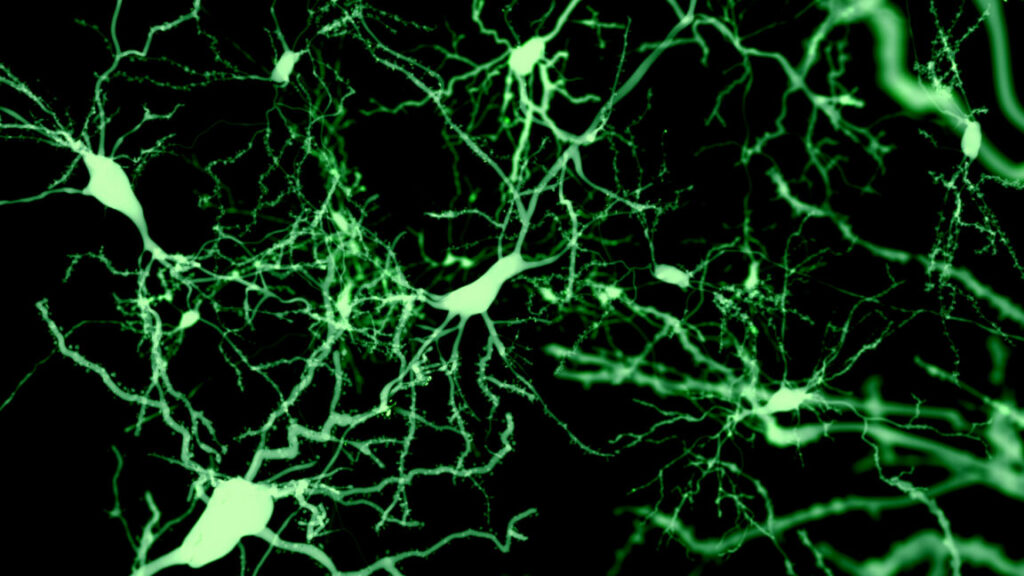
Activating cells in the cortex of freely moving mice increased slow-wave and REM sleep, shortened the time it took to fall asleep, and sent the animals to their nests during the day. The team then tried it during the dark period, when nocturnal mice are mostly awake.
“We could make them sleep more during the time they are awake than they normally do during the day,” Batista-Brito said. “I never thought this experiment would work. We manipulate one percent of the inhibitory neurons with local injections so that we only hit a fraction of those cells. And we were able to see an effect that was really quite impressive.”
This effect, Batista-Brito argues, points to the idea that these neurons could be the cortex’s sleep pressure sensors, which was first proposed by Thomas Kilduff, the director of the Center for Neuroscience at SRI International and co-author of the study.
Sleep, explains Batista-Brito, comes in two varieties: circadian sleep, which follows light sleep, and homeostatic sleep, the accumulated fatigue that eventually makes us sleep whether we want to or not. Kilduff, Batista-Brito said, showed that these are the most active cells in the cortex after sleep deprivation.
However, one question that Batist-Brito and her colleagues still don’t have an answer to is what activates these cells.
What flips the switch?
“One caveat to our work is that it was done in the visual cortex,” Batista-Brito said.
The team says the findings about the coordinating role of Sst-Chodl neurons should be generalizable to different brain regions, but the actual wiring may not be. Batista-Brito’s lab is now repeating the anatomical part of his work in the prefrontal cortex. Their prediction is that we will see input there from other areas such as the hypothalamus and the thalamus, and this will trigger the network specifically for sleep.
The cells are conserved from salamanders to humans, which is why the paper argues that they could be an entry point for the sleep disorders that occur in so many psychiatric illnesses.
The team is now focusing on three remaining questions: what activates these cells, whether they actually sense sleep pressure, and why they drive delta energy.
Nature, 2026. DOI: 10.1038/s41586-026-10876-y