
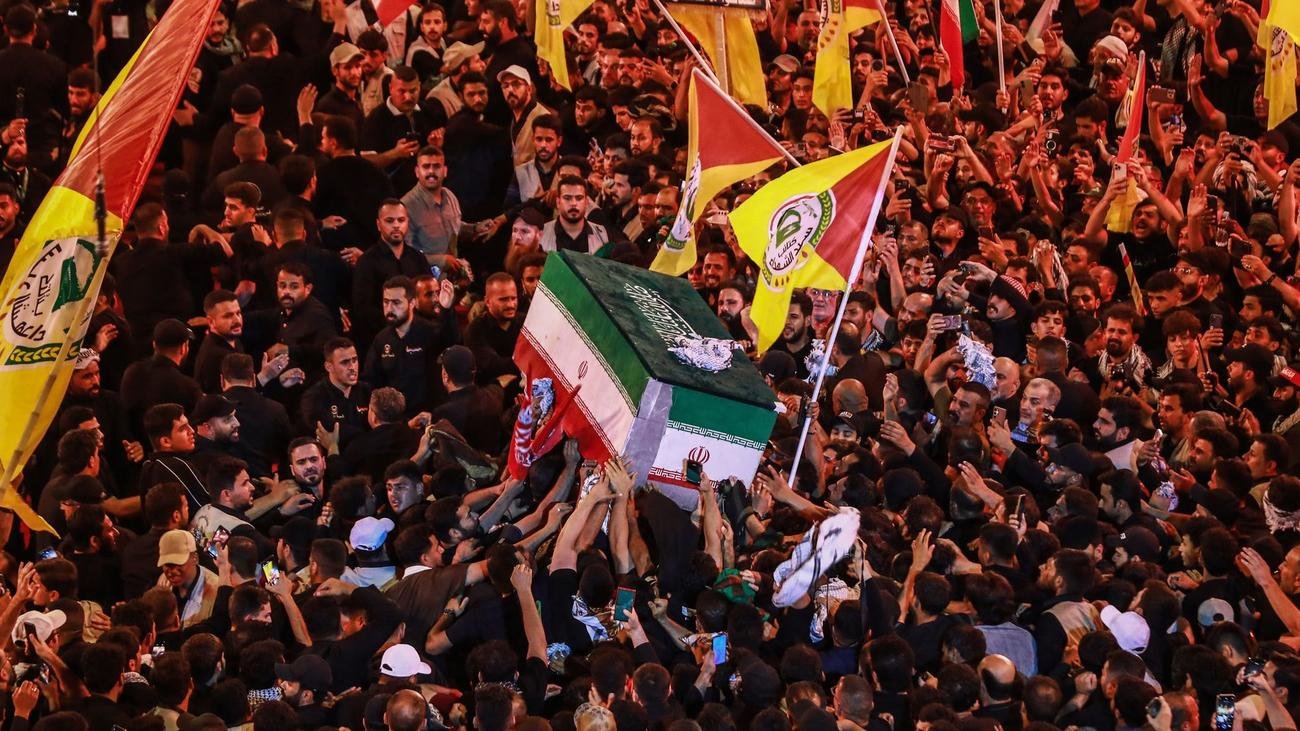
The situation at a glance: USA wants to talk to Iran despite attacks – Khamenei is buried
Despite the recent military escalation between the US and the Iran In the Strait of Hormuz dispute, efforts to resolve hostilities continue. “The United States remains committed to a solution and technical discussions continue,” a US government official told the German Press Agency. According to information from the US news portal Axios, Qatar, Pakistan and other regional mediators are trying to reduce tensions and revive negotiations on a nuclear agreement.
In recent days, the US military has carried out several waves of attacks against targets in Iran. This was justified by attacks on merchant ships in the Strait of Hormuz, for which the USA blame Tehran. Iran responded with its own attacks. Kuwait, Bahrain and Jordan, which host important US military bases, also came under fire again.
The Iranian leadership’s behavior represents a violation of “unacceptable proportions” against the framework agreement agreed in June, the US official told dpa. The agreement was intended to allow for a 60-day negotiation period and pave the way to a lasting settlement of the conflict.
Iran’s supreme leader Khamenei buried
The latest escalation overshadowed the state funeral for former Iranian head of state Ayatollah Ali Khamenei. More than four months after his killing, he was buried in camera in the Imam Reza shrine in his hometown of Mashhad in the northeast of the country, several Iranian media outlets unanimously reported that night.
The mourning ceremonies have been going on for around a week. Khamenei was killed in an Israeli airstrike on his official residence on February 28th Tehran been killed. The US and Israel then waged war against Iran for more than five weeks until a ceasefire was agreed in early April. Khamenei’s son Moschtaba was appointed as the new head of state in Iran, but he has not made any public appearances since then.
Reports: Israel warned Trump about Iranian assassination plot
As the Wall Street Journal and the US television channel CNN reported, citing unnamed sources, Israel has warned the US government of Iranian plans to assassinate President Donald Trump warned. Accordingly, the leadership in Tehran only recently developed the alleged plan. The US government has recently received such warnings frequently, but the one from Israel was new and related to a specific attack plan, CNN quoted a US government official as saying.
Other US representatives have expressed the suspicion that Israel’s warning could be an attempt to influence Trump regarding his further course of action in the conflict with Iran, the US broadcaster also reported. Israeli Prime Minister Benjamin Netanyahu recently advocated a much tougher course towards Tehran and clashed with Trump over this. Trump did not use the new Air Force One as expected on the return flight from the NATO summit in Ankara, fueling speculation about security risks posed by the gift from the Gulf emirate of Qatar. “I am number one on Iran’s hit list,” the president later said.
What will happen to the negotiations?
Trump recently threatened Iran with even more violent attacks if Tehran continued to fire on ships in the Strait of Hormuz. On the sidelines of the NATO summit, he openly questioned the ceasefire and expressed doubts about continuing negotiations. “I think it’s over,” he said.
Meanwhile, “Axios” quoted a source saying that the mediators assumed that the recent Iranian attacks in the strait, which is important for the global trade in oil, gas and fertilizer, were initiated by forces within the Iranian leadership that rejected the framework agreement and wanted to undermine it.
The Strait of Hormuz has turned out to be Iran’s strongest economic and military means of pressure in the conflict. The reopening of the strait is a central element of the framework agreement. Iran’s military leadership insists it is solely responsible for managing the strait under the deal. Shipping traffic there remains severely restricted. From Tehran’s perspective, surrender is “not a realistic option,” wrote Israeli Iran expert Danny Citrinowicz on X.
Expert: Iran is holding on to pressure
Iran’s decision-makers assumed they still had options for escalation, including the ability to increase pressure in the Red Sea and around the strategically important Bab al-Mandab strait at the entrance to the Red Sea, the expert wrote. Disruptions to regional shipping traffic had led to rising oil prices. From Tehran’s perspective, the energy markets could therefore continue to represent a means of pressure, it was said. Tehran will hardly be willing to give up this tool voluntarily.
This means that the USA is “faced with a difficult strategic decision,” wrote Citrinowicz. Either they continue on their course, risking further escalation in the region and renewed pressure on global energy markets – or Washington returns to the negotiating table and addresses certain security issues in separate diplomatic channels.
According to Axios, the mediators are of the opinion that – despite the recent escalation – the two parties to the conflict have made progress towards a nuclear agreement in previous rounds of talks. It was said that the mediating states also wanted to prevent the framework agreement from failing. In connection with what he said were ongoing technical discussions, the US official confirmed to the dpa news agency that Iran should never have a nuclear weapon.
© dpa-infocom, dpa:260710-930-362410/1