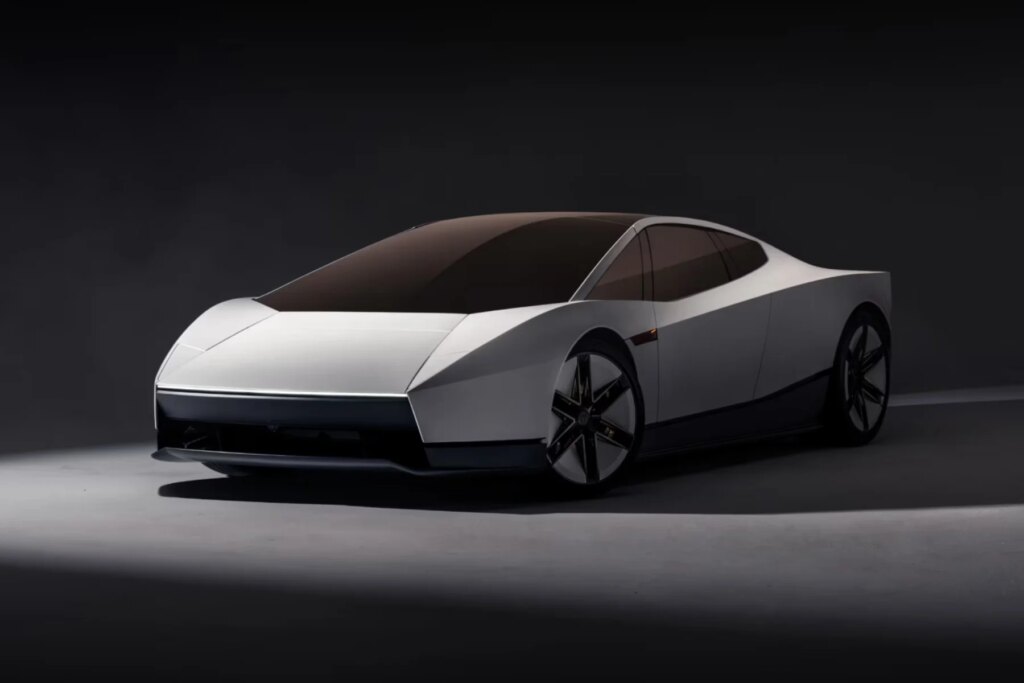
Nine years ago, Tesla introduced a new Roadster as a successor to its legendary first model. Since then, there have been repeated announcements and delays. Even the big reveal event in mid-October 2026, where the latest version of the Roadster finally made its debut, took place 14 days late.
However, those seriously interested in a new Tesla model and eager to know technical details will unfortunately have to wait a little longer. Concrete information about the production vehicle, which will probably soon be seen on the roads, remains scarce.
The reason is that the presentation of the next Tesla Roadster was more focused on what Elon Musk had envisioned and, in collaboration with SpaceX, actually made a reality. From a technological perspective (and for all the sci-fi fans with their inner child) it’s an impressive achievement (more on that later), but not so much from a driver’s perspective.
Spectacular presentation of the new Tesla Roadster
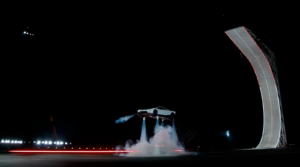
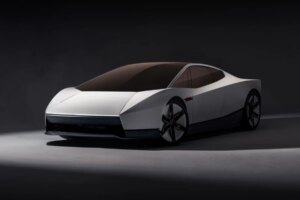
So what happened out in the open at the SpaceX test site in McGregor, Texas, on October 15, 2026? After presentations that included the announcement that production would begin “actually in 2028,” the Roadster, now as angular as the Cybertruck, rolled in, activated its 10 cold-gas compressed air thrusters and lifted off the ground.
It is capable of rotating around its longitudinal axis in the air before landing back on the ground with as much precision as a SpaceX rocket. The cold gas thrusters work with all-electric actuators for micro-adjustments that stabilize the vehicle in the air. The flying prototype is controlled by a steer-by-wire system with a yoke steering wheel.
Another feature that Elon Musk presented to the public is the suction system in the underbody. A multi-stage fan, combined with a sealed floor, draws air from beneath the vehicle, allowing the Roadster to stick to the roof upside down even when stationary.
However, the Roadster is not the first car to achieve this. The pioneer of this “aerodynamic loading trick” is McMurtry Spéirling, which presented the technology in April 2025. However, even from the inverted position, the Tesla activated its thrusters, turned and landed on all four wheels. The “flight” of the vehicle over a line of Tesla vehicles (Model 3, Model Y, Cybertruck, Cybercab and Semi) was also accomplished without a scratch.
When the Roadster remains on the ground, it can achieve another feat: accelerating from 0 to 60 mph (96.5 km/h) in -0.81 seconds – according to Elon Musk, who commented on the action live. During this acceleration, up to 3.3 G of force pushes the vehicle occupants. Additional features include active spoilers and a special track mode that significantly lowers the vehicle.
Technical specifications differ from the 2017 announcements.
As for the actual technical specifications of a road-legal vehicle, not only is there a lack of information, but the available details also differ drastically from what Tesla announced for its new Roadster in 2017. Back then there was talk of a huge 200 kWh battery for a range of up to 1,000 km. In the interest of saving weight, the current configuration is said to max out at 480 km.
The originally rounded GT design with 2+2 seating has also given way to a Cyber style body with just two seats (or even one seat in the Rocket package). In addition, the planned maximum speed has been slightly adjusted from over 400 km/h to around 370 km/h.
Musk and chief designer Franz von Holzhausen also emphasized that the new design is inspired not only by the Cybertruck but also by stealth fighter jets such as the SR-71 Blackbird and the F-35. This is evident in the hidden headlights, a continuous light strip at the rear, the special “Ano White” paint and the gold-tinted lenses reminiscent of the visors of astronauts’ helmets.
To keep the weight down despite the complex technology, Tesla uses magnesium, titanium and carbon fiber, as well as fixed seats. Inside, occupants are greeted by a minimalist white and gray microfiber cabin with a central touchscreen and two smaller screens in the driver’s line of sight.
Three versions of the Tesla Roadster planned
The new Tesla Roadster is now available in the configurator in three variants. The basic road-legal Performance model, with two seats and aspiration system, reaches the sprint in approximately 1.6 seconds and requires a reservation payment of 50,000 euros (5,000 euros immediately, 45,000 euros within 10 days).
The track-optimized Thrust variant features cold gas rear thrusters for times under 0.9 seconds, with a total booking fee of €250,000. Additionally, this variant is limited to one unit per customer.
The most extreme model, with the Rocket package (a seat with 10 cold gas boosters), cannot be ordered publicly, but will be assigned exclusively by personal invitation from Tesla to selected customers. It includes the features of the Performance and Thrust models plus the “flight capability system,” as it is called in the Tesla configurator. Target sprint time: 0.59 seconds.
x.com/tesla, tesla.com, teslarati.com, carscoops.com