
Five years after the flood, the topic of precaution is becoming increasingly important
Follow us on Google
Five years after the flood in parts of Rhineland-Palatinate and North Rhine-Westphalia, the consequences of the disaster are still being felt. Prevention and flood protection are now increasingly in focus.
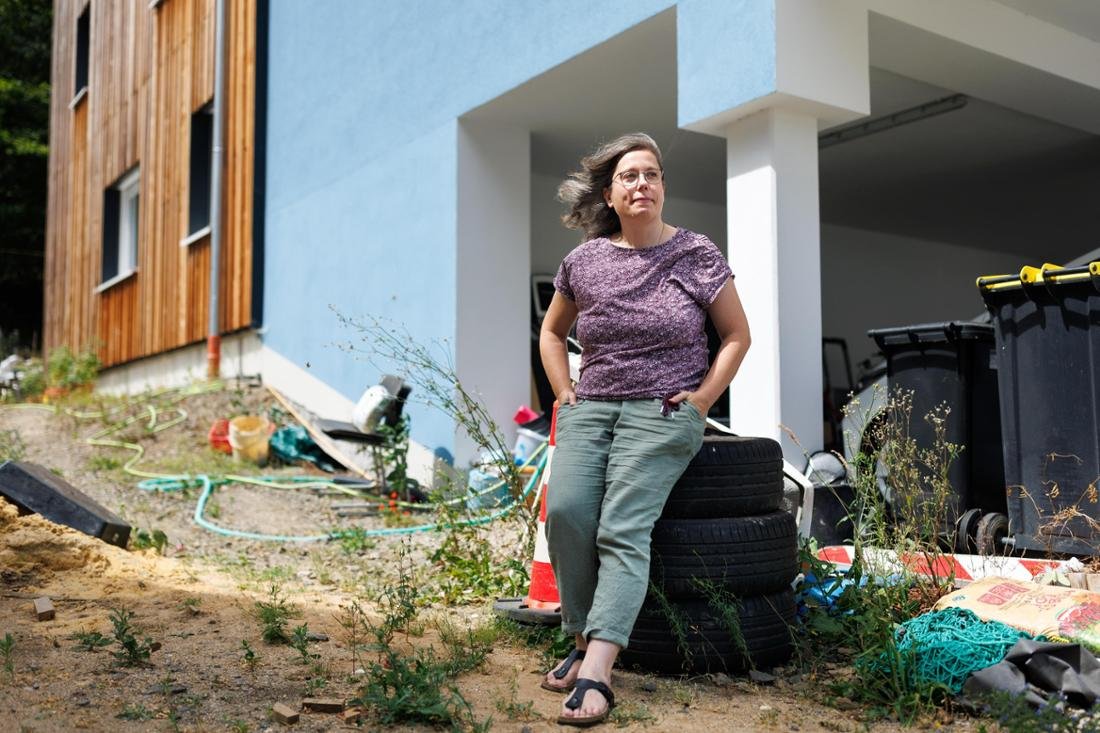
Altenahr/Düsseldorf – On July 14, 2021, Daniela Paffenholz crouched with her family on a dormer window and watched her home sink into the floods. After the water has drained away, it turns out that the family home in Altenahr-Altenburg can no longer be saved. For around three years, the Paffenholz family lived in a rental house in the Eifel that was furnished with donated furniture. She has now done it: her new home is now on her property – built on stilts to be flood-proof.
Content partnership
This article was created in a content partnership with the Evangelical Press Service (epd).
Nevertheless, the consequences of the disaster for the family are still noticeable even after five years. “It’s still grueling,” says Daniela Paffenholz. She and her husband had to take out a loan. The money from the insurance was not enough to cover the new building and the sharp cost increases during the construction period. The state reconstruction fund stepped in. But like many other applicants, she also has problems with the recognition of costs and expenses, says Paffenholz.
Look forward
The reason is that, according to the provisions of the reconstruction aid, the new building must not exceed the standard of the lost house. But this is often hardly possible, says Paffenholz and gives an example from his own experience: underfloor heating is now the norm in new buildings. However, since they deviated from the standard of the previous building from the 1960s, the reconstruction fund has not yet recognized this expense.
Nevertheless, Paffenholz is now looking ahead. “I’m happy to live in the Ahr Valley,” she says. At the same time, she doesn’t close her eyes to the risks of living on the river. Together with some local colleagues, she is therefore looking for practical solutions on how to better prepare for future flood events. “You shouldn’t just rely on those up there, you should do something yourself,” is her conclusion about the catastrophe that cost a total of 185 people their lives.
Prevention is being promoted
“Civil society needs to be given more consideration when it comes to prevention in Germany,” confirms Markus Koth, National Disaster Aid Coordinator at Diakonie Catastrophe Aid (DKH). The aid organization completed most of the projects in the flood areas after five years. The donations amounting to 47.9 million euros have been spent or are tied up in projects. The DKH now sees its task as promoting prevention together with those affected.
Three neighborhood projects in the North Rhine-Westphalian cities of Erftstadt and Eschweiler and in the Rhineland-Palatinate municipality of Hönningen an der Ahr are working to strengthen disaster protection with the help of civic engagement. Disaster protection contact points are being set up, explains Koth. For example, a shelter in the Ahr Valley is being prepared with the support of the DKH so that it can serve as a contact point for the population in the event of a flood.
Many have not yet come to terms with the trauma of the night of the flood
Daniela Paffenholz would also like to have a contact point near her in the event of a flood – but so far in vain. However, the 46-year-old assesses the preventative measures on the riverbank as positive. She and her colleagues in her initiative were able to advise the municipality and planning offices on where the bank should be flattened to give the river more space. “We knew, for example, where the water always runs over the street first when the water level rises,” says Paffenholz. When it rained for a long time in the winter, the measures had already proven their worth. “When it rains heavily, the fear is still there,” she admits.
There are still many people in the Ahr Valley who have not yet come to terms with the trauma of the night of the flood. “The need for psychotherapy remains high,” says Katharina Scharping, head of the trauma support center in the Ahr Valley. In addition to the people who are still being treated, there are also those affected who are seeking help for the first time. These people often manage to compensate for the problems until another stress or a stroke of fate causes “the last straw,” explains Scharping. There are often long waiting times for a therapy place: “In my opinion, the need for psychotherapeutic help is far from being met.”
Different view of life
After five years, Daniela Paffenholz has largely come to terms with the traumatic hours on the roof. In addition to psychotherapeutic support, an art therapy project also helped her. “I have made peace with it,” she says of the events. “I now have a different view of what is important to me in life.” Paffenholz is deliberately celebrating the fifth anniversary of the flood by taking part in a memorial event in town. “It’s a day to reflect and pause.” (by Claudia Rometsch)