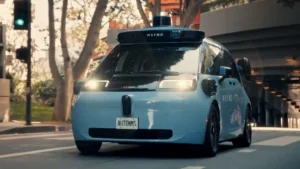
Autonomous electric taxis not only have the potential to make urban traffic more efficient and environmentally friendly, but could also reduce costs per kilometer by up to 60 percent compared to conventional taxis, a Stanford University report shows. However, a major challenge in operating autonomous taxis is fleet coordination.
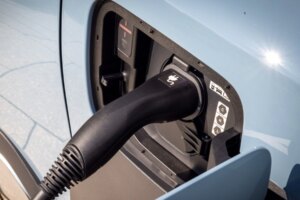
One of the main daily problems is traffic during rush hours: in the morning many passengers want to travel to the city center and in the evening they want to go out. Therefore, autonomous vehicles often have to return empty to be available again at the starting points. In the case of electric cars, the necessary intermediate charging adds another layer of complexity. Without forward-thinking planning, this risks leading to congested roads, long waiting times and unbalanced use of charging stations.
To address this bottleneck, a research team at Chalmers University in Sweden, in collaboration with Volvo Cars, is using a combination of machine learning and classical optimization. To predict passenger demand and available charging stations, the team employs Bayesian neural networks (BNN), which have been trained using historical taxi data from San Francisco and Chicago.
The key advantage of this machine learning method is that BNNs not only calculate pure probabilities, but also provide estimates of how uncertain their own predictions are. If passenger behavior changes spontaneously (due to factors such as sudden rain), the fleet management system remains stable.
AI does not make autonomous decisions, but rather serves only as a database. The actual driving and charging planning is managed by a mathematical optimization model with fixed rules. Since a major city has too many variables, the algorithm divides the overall task into smaller sections and combines them into an overall plan. This allows decisions to be made in fractions of a second, even in very large vehicle fleets.
Additionally, the team examined three different types of electric vehicles with different battery sizes and efficiency values. The results show the extent to which the chosen vehicle technology affects fleet availability. With the right balance between battery size, charging planning and data forecasting, daily use of autonomous electric taxis can be much more reliable.
news.cision.com