
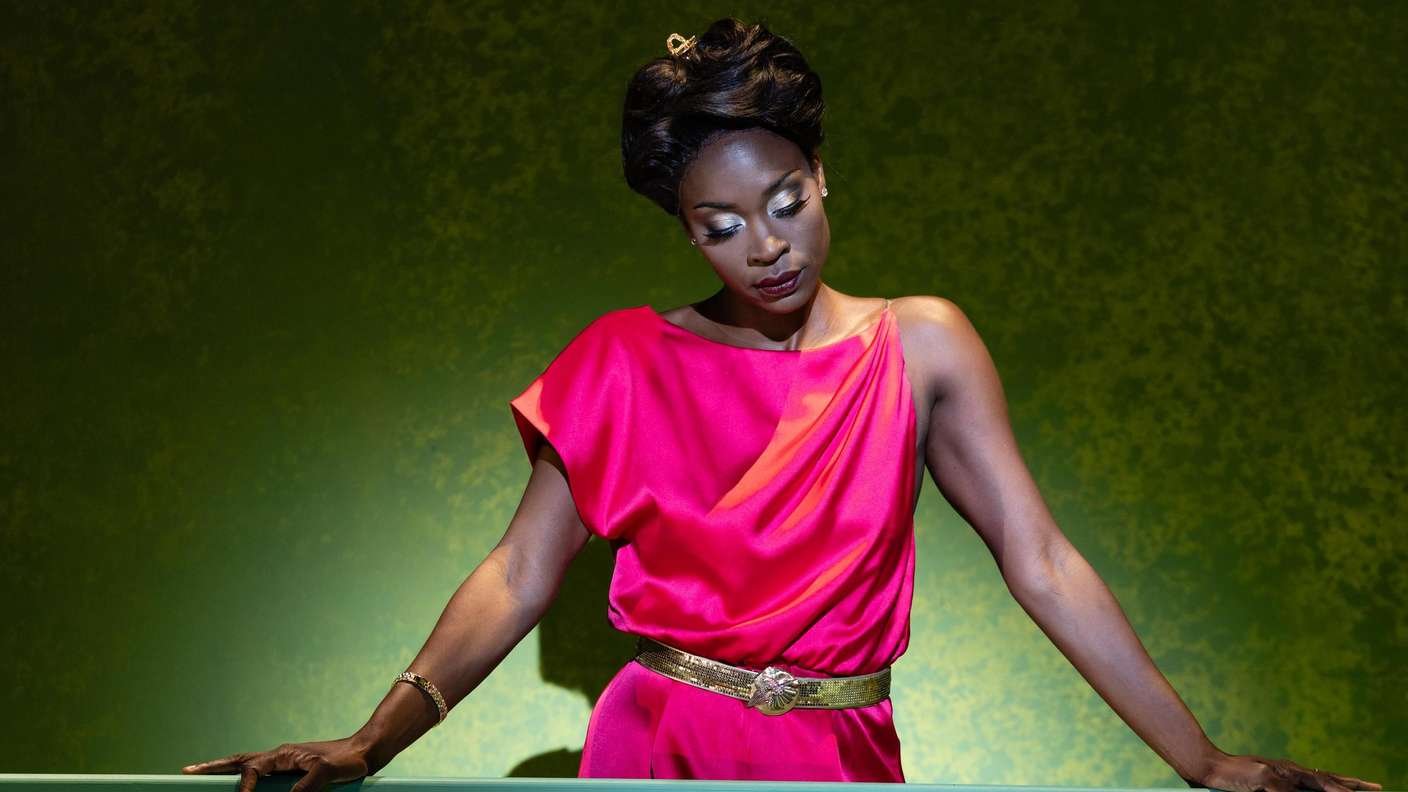
“Alcina” at the Munich Opera Festival
Follow us on Google
Handel was once Munich’s fourth opera saint. With this “Alcina” the Bavarian State Opera cannot continue this tradition. Vocally and scenically a disappointing premiere.
The flowers, the vase, the chairs, everything has to believe in it. Smashed, fired into the corner, thrown from the gallery. If this sorceress doesn’t get what she wants, usually a guy, then things get choleric. It could be a premiere according to the old Hollywood rule – first the explosion, then slowly increase. But the second half was forgotten in the Prinzregententheater: after Alcina’s attack, there is hardly anything left.
George Frideric Handel’s Sorceress Opera is currently enjoying a boom to the point of overdose. Nuremberg, Gärtnerplatz, Regensburg, all Bavarian state theaters, and the most renowned of them all chose “Alcina” as the last season premiere; traditionally, it is not in the main building at the Munich Opera Festival. Handel never came closer to Mozart, the soul researcher, than here. The fine character drawing, the wise depth of insight, the combination of tragedy with bitter smiles, the three-dimensionality of the title character in particular: A sorceress is the one who goes to extremes towards men. But at the same time she is a damaged woman for whom Handel’s musical understanding goes as far as justification.
For director Johanna Wehner and Benjamin Schönecker (stage), their island is a high salon, somewhere in Africa, perhaps in a colony, Latin America would also be close. After the break we play “Naked in the Museum”, act number three is negotiated between male gold statues. They are Alcina’s discarded and enchanted men and, we immediately suspect, they come to life. The staff (costumes: Ellen Hofmann) wear pale, glittery clothing, someone has dug into the ESC fund of the eighties.
Semi-concertante with equipment
A setting that doesn’t hide the holes in the production for long: there are two to two and a half ideas, otherwise this “Alcina” drifts into the semi-concertante with equipment. But when Handel’s delicate drama becomes a parade of musical numbers, as here, it’s not just the profound that falls by the wayside. Even connoisseurs quickly lose the thread – although this play, despite the dramaturgy of confusion, is less complicated than similar baroque dramas.
Because there is one person, Knight Ruggiero, who is particularly fond of Alcina. His fiancée Bradamante wants him back and tries to go undercover as a man in disguise – which causes hormonal rash and extra confusion with aria consequences for the ladies. Abandoned by all love spirits, Alcina herself freezes that evening as part of a painting. As their own, best museum piece, so to speak.
On the home stretch of this premiere, Jeanine De Bique lets her former miracle soprano echo for a few moments. But something must have happened to this ideal baroque and Mozart voice: from the upper middle range onwards, the tones become harder, everything no longer sounds in balance and technically secure, acidic values mix into the timbre. To conceal this, De Bique takes refuge in mannerisms.
Outstanding: Conductor Stefano Montanari
In general there is a problem. The solo band sings about meaning and sensuality, a claim: you can hardly hear it. John Holiday as Ruggiero is a character counter who seeks salvation in robust outbursts. Avery Amereau would be ideal for the baroque subject, but Bradamante is a bit too deep for her. Only Elsa Benoit (Morgana), but especially Julian Prégardien as Oronte, are excellent stylists. The latter acts far beyond just coping, seems to be playing with the game – timing, nuances and agogics are exemplary.
Something similar happens in the ditch. Three years ago, Stefano Montanari attracted unpleasant attention at the National Theater with an arbitrarily and vainly designed Mozart “Figaro”. Now he is proving to be an ideal Handel conductor. Intensity, strong color application, expressivity, glow, a constant urging, all with the greatest possible flexibility and lightened sound, that is a listening pleasure. Montanari provides the nuances and subtexts that the stage lacks. Music is played on original instruments; the state orchestra has hired a few experts. Handel was once Munich’s fourth saint, alongside Wagner, Strauss and Mozart. The house has a lot to lose, it happened with this “Alcina”.