
Fischbachau is building a second deep well – despite emergency supplies
Follow us on Google
The local council has decided to build a second deep well in Aurach. However, this should only increase the price of water slightly. There was still criticism.
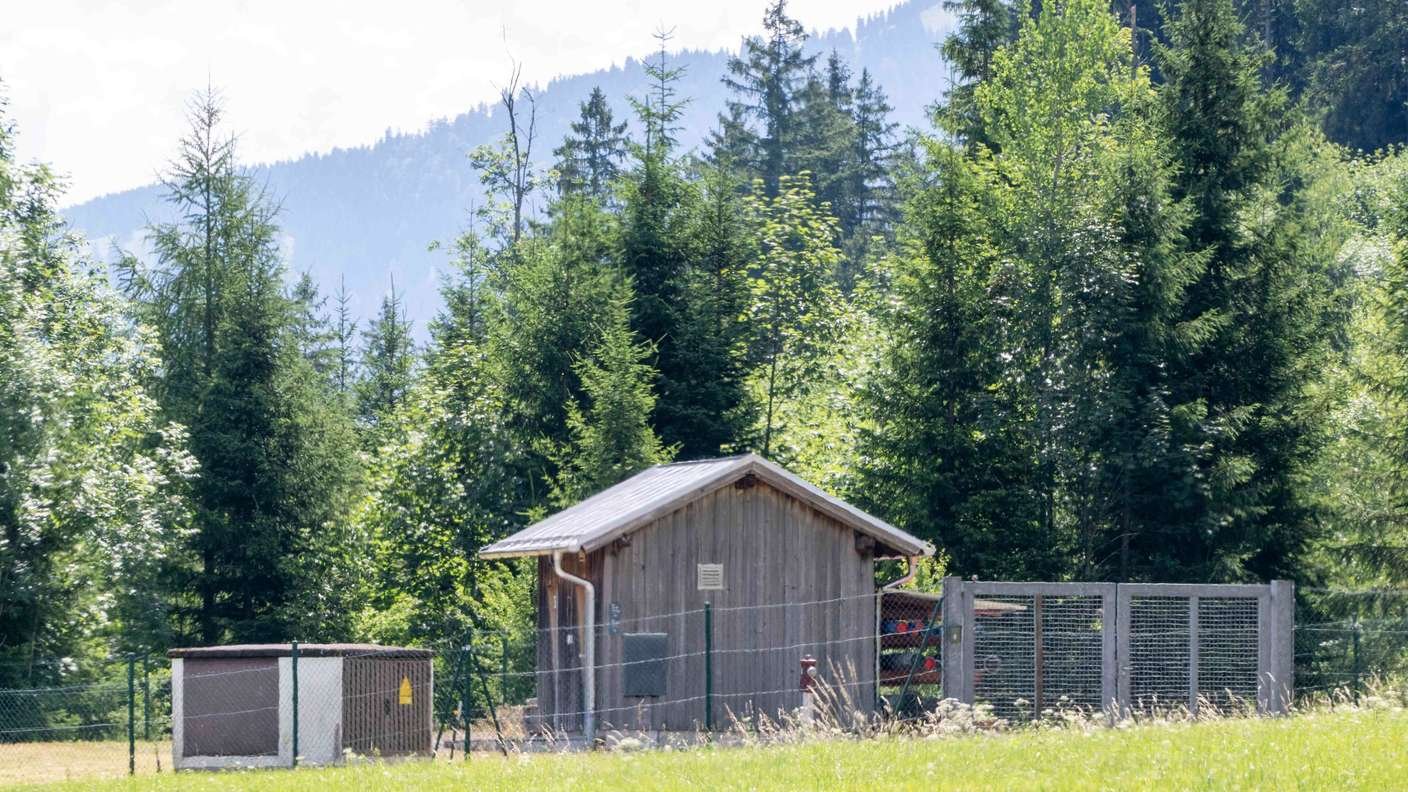
Fischbachau – Many people in the town know from their own painful experience that the water in Fischbachau has what it takes to become a political explosive. It was all the more important for Peter Rauffer (FaB) recently in the local council that his criticism of the plans for a second deep well in Aurach was not misunderstood. He had even prepared a short factual presentation with several infographics to support his arguments with facts. Ultimately, Rauffer was concerned with two points: the question of the general need for a second well given the existing emergency supply from the Birkenstein hydroelectric power plant and whether a location just 50 meters from the current reservoir would even make sense.
Mayor Stefan Deingruber (CSU) had previously explained the administration’s point of view. As early as 2022, the need for a second well for Fischbachau was discussed during a community tour and budget funds were planned for it. The average water consumption in the entire municipality is around 2,200 cubic meters per day. However, during a four-day study of the current emergency supply in Birkenstein, only a good 2,000 cubic meters per day were measured – despite the deactivated turbine in the power plant and heavy rainfall. The result, according to Deingruber: If the pump at the existing deep well at Steckenbaum in Aurach fails, the water supply would only be secured for two days.
Even if the current equipment is sufficient for nine to ten months of the year, the municipality is legally obliged to make provisions for rare emergency situations. This is not least because consumption increases in the dry months and savings are not enough to compensate for the lack of emergency water.
Since a merger with Schliersee, Bayrischzell or Miesbach is not possible due to a lack of chemical compatibility of the water, the water law department at the district office has approved the construction of a second well at Steckenbaum, Deingruber informed. An engineering office estimated the cost of the drilling at a good 339,000 euros. If you take into account the well house and other expenses, you get an investment volume of more than one million euros. With the necessary levy on the connection recipients, the water price will rise from the current 1.38 to 1.56 euros per cubic meter with a constant basic fee, Deingruber announced.
New well too close to the old location?
Rauffer missed the sense of proportion here. He doesn’t think it makes sense to invest a million euros in a new well just 50 meters away from the existing one. If there is a forest fire or contamination, “we have two holes and two pumps, but still no clean water.” It would be better to simply replace the existing pump in good time to prevent a failure. At the same time, one should stick to the emergency supply in Birkenstein, whose water via a bypass is as productive as many other communities would like.
Deingruber pointed out the great responsibility of the community. If the committee decides otherwise, “then the citizens should also turn to you in the event of a failure.” The search for a new water protection area would take years. The costs for a second well at the current location would be just 7.20 euros per citizen – per year.
“Water is our greatest asset”
“Water is our most valuable commodity, it should be worth this price to us,” said Deputy Mayor Martin Bacher (FWG). “Because if something does happen, there’s a lot of screaming.” Ultimately, it’s like the fire department, said Michael Gartmaier (CSU): “We also keep equipment there, even though we don’t know if and when there will be a fire.” Sawmill operator Marinus Gasteiger (FaB) knew from his own experience that over the years less and less water flows from the source in Birkenstein into the valley.
Rauffer received support from the Greens Alexander Baic and Gisela Göttfried, who wanted to postpone the decision until further figures on the development of discharge volumes were available over a longer period of time. The majority of the local council members rejected this (3:17). The tender for the construction of the second deep well at Steckenbaum, however, received a clear yes with 18:2 votes. According to the wishes of Andreas Gschwendtner (CSU) and Bernhard Padeller (FaB), the previously decided emergency care in Birkenstein should be maintained independently and, if necessary, upgraded.